
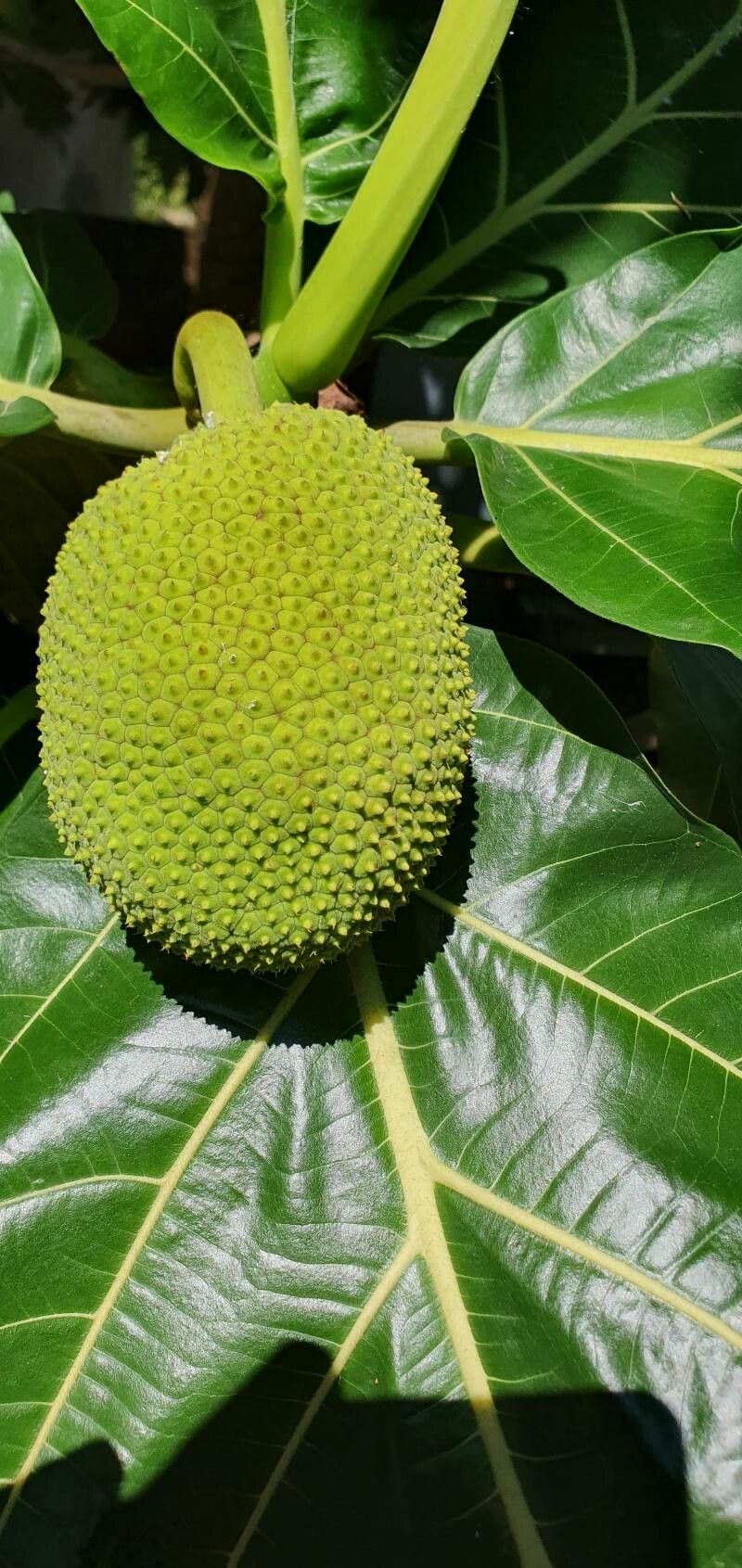
Propagating the Breadfruit Tree (Artocarpus altilis): A Gardener’s Guide
Introduction
Artocarpus altilis, better known as the breadfruit tree, is a remarkable tropical fruit tree celebrated for its starchy, nutritious fruit and its wide-ranging horticultural significance. This versatile tree, native to Oceania, holds cultural and economic importance in many tropical regions. Its large, deeply lobed leaves and impressive size make it a striking addition to any landscape, contributing to its popularity among gardeners. However, propagating breadfruit presents unique challenges compared to many other fruiting trees. Its propagation methods are not always straightforward, leading to variations in success rates depending on the chosen technique.
Seed Germination:
While breadfruit trees produce seeds, germination from seed is not a reliable method for propagation. The seeds are often short-lived and have low viability, making consistent germination difficult. Moreover, seed-grown trees can exhibit significant variations in fruit characteristics from the parent plant, making it an unreliable method for maintaining desired traits like fruit size and taste. Therefore, relying on seed germination for the propagation of breadfruit is generally discouraged.
Cuttings:
Propagation via cuttings is a more commonly used and often more successful method than seed germination for breadfruit.
Challenges: Successful propagation using cuttings requires careful attention to timing, maintaining high humidity, and preventing fungal infections. The rooting process can be slow and the success rate can vary based on the type of cutting (hardwood or softwood), environmental conditions, and the use of rooting hormones.
Practical Tips: Semi-hardwood cuttings taken from young, actively growing shoots are generally preferred. The cuttings should be about 6-12 inches long, with the lower leaves removed. Dip the cut end in a rooting hormone powder before planting in a well-draining medium, such as a mix of perlite and peat moss. Maintaining high humidity (using a humidity dome or plastic bag) and consistent temperatures (around 75-80°F) is crucial for success. Regular misting can help to maintain moisture levels.
- Rewards: Cuttings provide a reliable way to create genetically identical plants to the parent tree, ensuring consistent fruit quality. This method is suitable for large-scale propagation if done correctly.
Division:
Division is not a viable method for propagating breadfruit trees. The root system is not easily divided, and doing so would likely severely damage the plant.
Tissue Culture:
Tissue culture offers a highly efficient and precise method for propagating breadfruit.
Challenges: Tissue culture requires specialized equipment, a sterile environment, and expertise in plant tissue culture techniques. It is more complex and costly than other methods. Finding a suitable medium and establishing optimal growth conditions can also be challenging.
Practical Tips: This method requires a controlled laboratory setting with sterile equipment and media. The process involves taking small tissue samples from the plant (explants), sterilizing them, and then culturing them on a nutrient-rich agar medium to induce the formation of new shoots and roots. Once these plantlets are developed, they are transferred to individual pots for further growth.
- Rewards: Tissue culture provides the highest potential for rapid and large-scale propagation of genetically uniform plants. This approach is particularly valuable for conserving rare or desirable cultivars.
Conclusion
Propagating Artocarpus altilis presents various challenges, with cuttings offering a relatively practical approach for the home gardener, while tissue culture provides a high-efficiency solution for large-scale production and conservation efforts. Seed germination is unreliable, and division is not feasible. Despite the difficulties involved, the reward of successfully nurturing a breadfruit tree from a cutting or via tissue culture is immense. Witnessing the majestic growth of this iconic tree, eventually bearing its bountiful fruit, offers a deeply satisfying experience for any dedicated gardener. For aspiring propagators, perseverance, attention to detail, and a willingness to learn from successes and failures will pave the way to cultivating this remarkable plant. Remember to research local climate conditions and adapt techniques accordingly.