
Propagating Cuscuta suksdorfii: A Challenging but Rewarding Endeavor
Introduction:
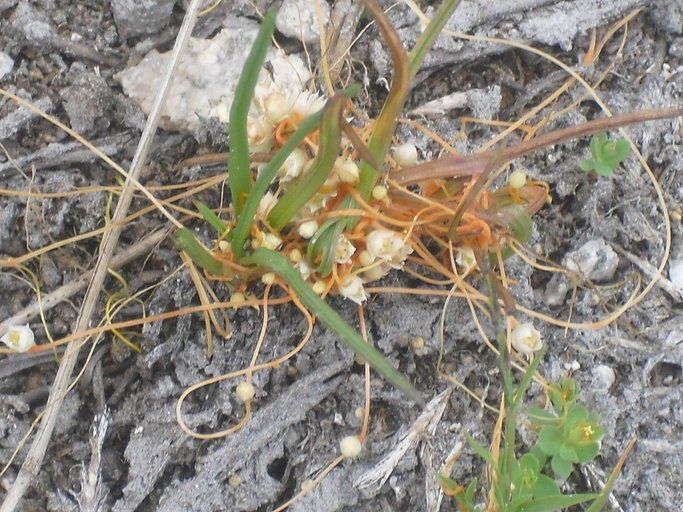
Cuscuta suksdorfii, known as Suksdorf’s dodder, is a parasitic plant belonging to the Convolvulaceae family. Unlike most plants, it lacks chlorophyll and obtains nutrients by attaching itself to a host plant using specialized haustoria. Its thread-like, orange-yellow stems twining around the host are quite striking, making it a unique, albeit controversial, addition to some specialized gardens. While its parasitic nature precludes it from being a welcomed addition to most gardens, its unusual characteristics have earned it a niche following among botanical enthusiasts. Propagating Cuscuta suksdorfii presents unique challenges absent in propagating "normal" plants, primarily due to its parasitic lifestyle and dependence on a host.
Seed Germination:
Currently, there are no known reliable methods for seed germination propagation of Cuscuta suksdorfii. The tiny seeds possess a complex germination process heavily influenced by environmental cues and host presence, which remains largely unstudied. While some anecdotal reports suggest germination under specific, yet unreproducible conditions, there is no consistent protocol for successful seed-based propagation.
Cuttings:
Currently, there are no known reliable methods for propagating Cuscuta suksdorfii via cuttings. The plant’s complete dependence on a host for sustenance makes it impossible to develop roots or sustain itself independently, even with extensive hormonal treatments. Removal from the host invariably leads to death.
Division:
Division of Cuscuta suksdorfii is theoretically possible, essentially meaning separating a section of the vine already attached to a host. However, this is not considered propagation in the true sense, but rather a method of expanding its presence on a host plant. One could carefully remove a portion of the vine with attached haustoria and place it on a new area or branch of the host. Success depends entirely upon the health of the host and the established connection to the parent vine. It offers no increase in genetic diversity and is limited by the size and health of the original plant.
Tissue Culture:
Research on Cuscuta suksdorfii tissue culture propagation is scarce. The plant’s parasitic nature and reliance on a host for its nutritional needs pose significant challenges. While tissue culture techniques have succeeded with some other parasitic plants, adapting these techniques to Cuscuta suksdorfii would require extensive research and experimentation to establish appropriate nutrient media and hormonal treatments that mimic the host-parasite interaction. Currently, this method remains unproven for this species.
Conclusion:
Propagating Cuscuta suksdorfii presents a considerable challenge, with no readily available or reliable methods for successful propagation. Seed germination and cuttings have proven unfeasible, while division only allows for localized expansion on the same host plant. Tissue culture offers theoretical possibility but is currently unexplored. The difficulty inherent in cultivating this unusual plant is directly related to its unique biology. The rewards for successful propagation, however, are substantial for researchers, potentially offering insights into its biology and the intricacies of plant parasitism. For the botanical enthusiast, succeeding offers a unique sense of accomplishment, underscoring the appreciation for the perseverance and meticulousness required in cultivating this captivating but challenging species. Further research is crucial in developing techniques to effectively propagate this intriguing plant. Aspiring propagators should approach this endeavor with patience, meticulous observation, and a willingness to experiment, understanding that failure may be more common than success.