
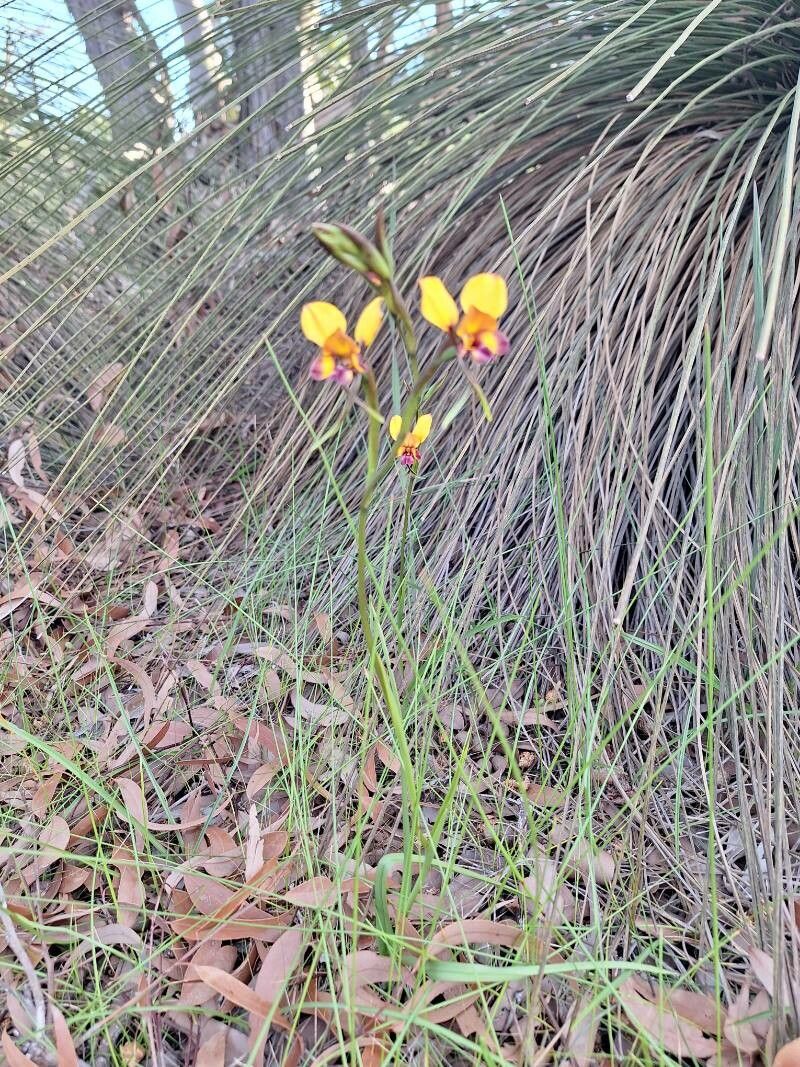
Propagating the Common Yellow Diuris: A Gardener’s Guide to Diuris corymbosa
Introduction:
Diuris corymbosa, commonly known as the Common Yellow Diuris or the Yellow Sundew Orchid, is a captivating terrestrial orchid native to Australia. Its vibrant yellow flowers, often marked with reddish-brown, appear in spring, adding a splash of colour to meadows and woodlands. Its relative ease of cultivation in appropriate conditions has made it a popular choice among orchid enthusiasts and gardeners. However, propagating Diuris corymbosa presents unique challenges, differing from many other garden plants due to its specific ecological requirements and delicate nature. This article explores various propagation methods, weighing their viability and offering guidance to those seeking to cultivate this beautiful Australian native.
Seed Germination:
Seed germination for Diuris corymbosa is challenging but not impossible. The seeds are minute and require highly specific conditions for successful germination. These conditions often mimic the natural symbiotic relationship with mycorrhizal fungi present in their native habitat.
Challenges: The primary challenge lies in providing the necessary mycorrhizal fungi. Seeds need this fungus to germinate and establish a healthy root system. Obtaining and cultivating suitable mycorrhizal fungi in a controlled environment is difficult. Sterile conditions are crucial to prevent contamination.
Practical Tips: While commercially available orchid seed germination media may offer some success, inoculation with the appropriate mycorrhizal fungi greatly increases the chances of germination. Research into isolating the appropriate fungi from the natural habitat of Diuris corymbosa may be necessary for optimal results. Sowing should be on the surface of a sterile, well-draining medium such as a mix of perlite and sphagnum peat moss. Keep the medium moist but not waterlogged. A warm, bright (but not directly sunny) location is ideal.
Rewards: Successful seed germination offers the reward of increased genetic diversity within a population. This is crucial for maintaining the health and resilience of cultivated Diuris corymbosa populations. It also has the potential for large-scale propagation if the techniques are mastered.
Cuttings:
Currently, there are no known reliable methods for propagation of Diuris corymbosa using cuttings. The orchid’s growth habit does not lend itself to successful propagation from stem or leaf cuttings.
Division:
Challenges: Division is the most common and often successful method for propagating Diuris corymbosa. However, it requires careful handling of the rhizomes to avoid damage. Over-division can weaken the parent plant and reduce its flowering potential.
Practical Tips: Division is best performed during dormancy, typically in late summer or early autumn. Carefully dig up the plant and gently separate the rhizomes, ensuring each division has a healthy section of rhizome and several healthy roots. Replant immediately into a well-drained, slightly acidic soil mix in a location mimicking its native habitat – full sun or partial shade.
Rewards: Division is relatively straightforward, producing new plants quickly, though the number generated is limited by the size of the parent plant.
Tissue Culture:
Tissue culture is a viable option for large-scale propagation of Diuris corymbosa, particularly for conservation efforts and commercial plant production.
Challenges: This method demands a sterile laboratory environment and specialized equipment. Developing an appropriate culture medium and understanding the specific hormonal requirements for optimal growth is essential and may require considerable expertise.
Practical Tips: Sterile techniques are paramount. Explants (small sections of plant tissue) are taken from healthy growing shoots. These are then cultured on a growth medium containing hormones to encourage shoot and root development. Subculturing is needed periodically to maintain healthy growth.
Rewards: Tissue culture offers the potential for rapid and mass propagation, allowing for increased availability of plants for gardens and conservation programs.
Conclusion:
Propagating Diuris corymbosa presents unique challenges depending on the chosen method. While seed germination is possible but requires specialized knowledge and conditions, division offers a more accessible, though limited, option for the home gardener. Tissue culture offers a considerable advantage for large-scale propagation but requires considerable expertise and specialized equipment. The rewards, however, are significant: the satisfaction of successfully cultivating this beautiful orchid and contributing, even in a small way, to its conservation and appreciation. Don’t be discouraged by the initial difficulties – each successful propagation represents a significant achievement, and the vibrant blooms of the Common Yellow Diuris are a reward richly deserving of the effort.