
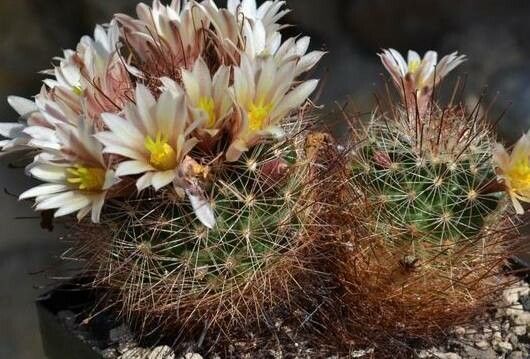
Propagating Mammillaria carretii: A Gardener’s Guide
Introduction:
Mammillaria carretii, also known as the Fishhook Cactus, is a captivating member of the Cactaceae family, prized for its densely packed, cylindrical tubercles and its exquisite, relatively large, white flowers that bloom in spring or summer. Its compact size and attractive appearance make it a popular choice among cacti enthusiasts, whether displayed as a solitary specimen or as part of a larger succulent collection. Its propagation, however, presents unique challenges and rewards, making it a rewarding yet sometimes demanding undertaking for even experienced cultivators. This article explores various methods of propagating Mammillaria carretii, weighing their advantages and disadvantages.
Seed Germination:
Seed germination is a viable method for propagating Mammillaria carretii, albeit one that requires patience and precision. The small seeds have a relatively low germination rate and require specific conditions to thrive.
Challenges: The primary challenge is achieving sufficient and consistent moisture without creating conditions conducive to fungal growth, which can easily decimate seedlings. Mammillaria carretii seeds don’t typically require stratification (a cold period to break dormancy), but ensuring optimal warmth (around 70-75°F / 21-24°C) and consistent humidity is crucial.
Practical Tips: Sow seeds on a well-draining seed-starting mix, barely covering them with fine grit. Maintain high humidity using a humidity dome or plastic bag, ensuring good ventilation to prevent damping off. Bottom watering is recommended to avoid disturbing the delicate seeds. Germination can take several weeks to several months.
Rewards: Seed-grown plants offer the greatest genetic diversity, resulting in potentially unique variations within the species. This method also allows for large-scale propagation if successful.
Cuttings:
Cuttings are generally not a successful propagation method for Mammillaria carretii. Unlike some cacti that readily root from stem cuttings, this species rarely develops roots from detached segments. Attempts at propagation via cuttings often result in rotting before root formation.
Division:
Division is another viable, albeit limited, method of propagation. As Mammillaria carretii often forms offsets (pups) at its base, these can be carefully separated from the mother plant.
Challenges: Successful division hinges upon cleanly separating the offsets, ensuring each has its own root system or a substantial portion of root tissue. Any damage to the offsets or inadequate sterilization of tools can lead to rot.
Practical Tips: Use a sharp, sterilized knife or scalpel to separate the offsets. Allow the cut surfaces to callus for a few days before planting in well-draining cactus soil. Gentle handling is essential to avoid causing damage.
Rewards: Division offers a quicker and easier way to increase the number of plants compared to seed germination, though it is limited by the number of offsets produced by the mother plant.
Tissue Culture:
Tissue culture is a potentially effective method for mass propagation of Mammillaria carretii, allowing for the rapid production of numerous clones from a small sample of plant tissue.
Challenges: This method requires specialized equipment, a sterile environment, and expertise in plant tissue culture techniques. It is not a practical method for the home cultivator.
Practical Tips: This method is generally undertaken by nurseries or research facilities specializing in plant propagation.
Rewards: Tissue culture permits rapid and large-scale production of genetically identical plants, ensuring uniformity and consistency in the resulting plants.
Conclusion:
Propagating Mammillaria carretii presents distinct challenges depending on the chosen method. Seed germination offers genetic diversity but demands patience and meticulous care. Division is a quicker alternative if offsets are present, but success relies on careful handling. Cuttings are generally unsuccessful, and tissue culture is best left to professionals. Despite the difficulty, successfully propagating Mammillaria carretii – whether from seed or through division – provides a unique sense of accomplishment, a testament to the gardener’s dedication and skill. The satisfaction of nurturing a tiny seed into a mature flowering cactus, or carefully separating an offset to create a new plant, far surpasses the challenges encountered along the way. So, aspiring propagators, embrace the challenges and celebrate the victories; the rewards of successfully cultivating this delightful cactus are well worth the effort.