
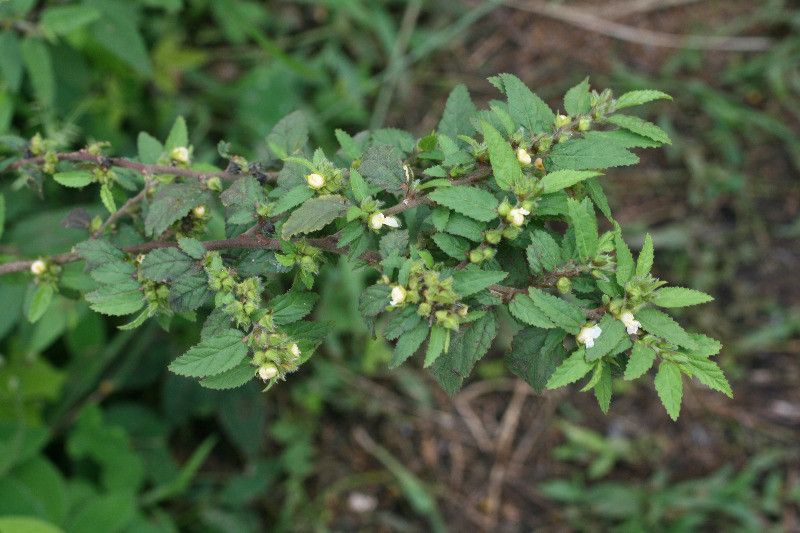
Propagating Sida glomerata: A Gardener’s Guide to the Globose Sida
Introduction:
Sida glomerata, commonly known as globose sida, is a resilient, flowering shrub native to tropical and subtropical regions. Characterized by its bushy habit, small, yellow flowers, and slightly hairy foliage, it’s gaining popularity among gardeners for its drought tolerance and relatively low maintenance requirements. However, propagating this attractive plant can present some challenges. This article explores various propagation methods, outlining their viability, difficulties, and rewards.
Seed Germination:
Currently, there are no known reliable methods for seed germination propagation of Sida glomerata. While seeds may be produced, their germination rates are reportedly very low, and success is largely unpredictable. Further research is needed to determine optimal germination conditions, such as specific temperature and light requirements, potential stratification needs, or the use of germination stimulants.
Cuttings:
Cuttings offer a more reliable method for propagating Sida glomerata than seed germination.
Challenges: While relatively straightforward, success rates depend on several factors. Using semi-hardwood cuttings taken during late spring or early summer generally yields the best results. However, even with optimal conditions, rot can be an issue if cuttings aren’t properly treated with a fungicide and allowed to properly callus.
Practical Tips: Take 4-6 inch cuttings from healthy, non-flowering stems. Remove lower leaves to prevent rot and dip the cut ends in rooting hormone powder. Plant cuttings in a well-draining potting mix, maintaining consistently moist (but not waterlogged) conditions. High humidity, achieved through propagation domes or misting, significantly improves rooting success.
- Rewards: Cuttings provide a rapid and efficient way to generate multiple plants that are genetically identical to the parent plant, ensuring consistency in desired traits.
Division:
Division is a viable option for established plants, particularly those that have grown quite large and bushy.
Challenges: Division can be slightly invasive, requiring careful handling of the root system to avoid damage. It’s important to ensure each division includes healthy roots and sufficient upper growth for successful establishment.
Practical Tips: Divide the plant in spring or early autumn when the soil is moist. Dig up the entire plant, carefully separating it into smaller sections, making sure each section has several stems and a good root system. Replant the divisions immediately, ensuring adequate spacing and watering.
- Rewards: Division is a simple, low-cost method to multiply plants. It also offers the advantage of immediately obtaining larger, more mature plants compared to cuttings.
Tissue Culture:
Tissue culture is a viable, albeit complex and potentially expensive, method for propagating Sida glomerata, offering potential advantages over other methods.
Challenges: Tissue culture requires specialized equipment, a clean environment, and knowledge of sterile techniques. Developing optimal growth media and hormonal mixtures for efficient shoot multiplication and rooting can be challenging and require experimentation.
Practical Tips: This method is best performed in a laboratory setting. Success depends on using aseptic techniques and carefully chosen plant growth regulators. Micropropagation of Sida glomerata may offer efficient large-scale propagation and pathogen-free stock.
- Rewards: Tissue culture allows for the rapid, mass propagation of genetically uniform plants, providing possibilities for commercial production and conservation efforts.
Conclusion:
While seed propagation is currently unreliable for Sida glomerata, cuttings offer a readily accessible and efficient method for most gardeners. Division works well for mature plants and offers rapid results. Tissue culture presents a powerful, high-tech, yet complex possibility for large-scale propagation that may prove valuable in horticultural applications. Overcoming the challenges in propagating Sida glomerata, regardless of the chosen technique, offers a deep sense of satisfaction. The patience and dedication required make the success of cultivating this beautiful shrub all the more rewarding. For aspiring propagators, I advise starting with cuttings and gradually exploring more complex methods, always acknowledging the specific needs and sensitivities of this interesting plant.