
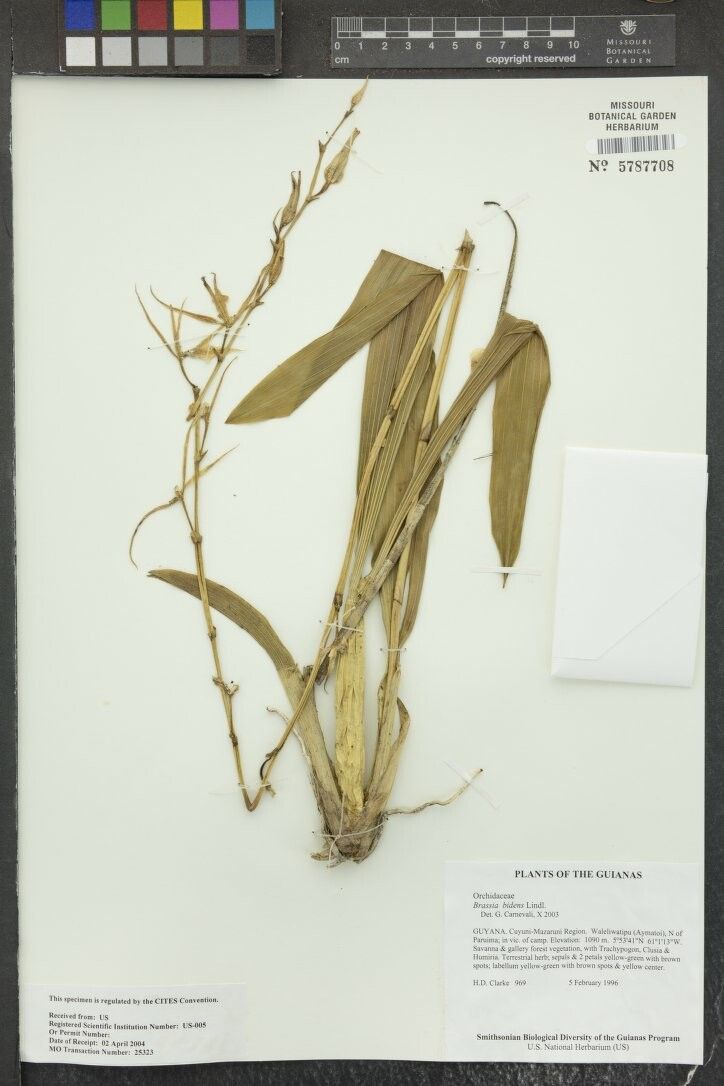
Propagating the Spider Orchid: A Guide to Brassia bidens
Introduction
Brassia bidens, commonly known as the Spider Orchid, is a captivating epiphytic orchid prized for its strikingly unusual flowers. The blooms, resembling long-legged spiders with slender, spidery petals, are often yellow-green with brown markings, adding an air of exotic elegance to any collection. Its relatively easy cultivation – compared to some of its orchid relatives – and its prolific flowering make it a popular choice among orchid enthusiasts, both beginner and experienced. However, propagation can present challenges, requiring patience and attention to detail. This article explores various methods for propagating Brassia bidens, outlining the successes and setbacks associated with each.
Seed Germination
Currently, there are no known reliable methods for seed germination propagation of Brassia bidens. Orchid seeds are famously tiny and lack endosperm (the nutritive tissue that nourishes the developing embryo in many other plants). They require a symbiotic relationship with specific mycorrhizal fungi for germination, a difficult-to-replicate condition in a home environment. While laboratory-based asymbiotic germination techniques exist for some orchids, they are complex and not readily accessible to hobbyists.
Cuttings
Cuttings are not a viable method for propagating Brassia bidens. Unlike some other plants, orchids generally do not readily root from stem or leaf cuttings. The specialized physiology of orchids prevents them from forming adventitious roots easily.
Division
Division is the most commonly used and reliable method for propagating Brassia bidens. This involves carefully separating a mature plant into smaller divisions, each containing its own roots and several pseudobulbs (the swollen stems that store water and nutrients).
Challenges: The main challenge is ensuring each division has a robust root system and sufficient pseudobulbs to support its growth. Dividing a plant that is too small weakens it and may result in the death of both the parent and offspring plants.
Practical Tips: Divide Brassia bidens during or after the flowering period, when the plant is actively growing. Use a sharp, sterile knife or scissors to cleanly separate the plant. Ensure each division has at least 3-4 pseudobulbs and a healthy root system. Pot each division in a well-draining orchid potting mix. Handle the roots carefully to avoid damage.
Rewards: Division is relatively straightforward, offers a quick method for increasing the number of plants, and results in genetically identical offspring, preserving desirable traits.
Tissue Culture
Tissue culture offers a sophisticated approach to propagating Brassia bidens. This laboratory-based method involves growing plantlets from small pieces of plant tissue under sterile conditions on a nutrient-rich agar medium.
Challenges: This method requires specialized equipment, sterile techniques, and a detailed understanding of plant tissue culture protocols. It’s generally not suitable for home propagation. Furthermore getting access to the correct nutrient media is also a challenge.
Practical Tips: This method is best suited for professionals or experienced hobbyists with access to the necessary resources and know-how.
Rewards: Tissue culture allows for large-scale propagation, rapid multiplication of desirable genotypes, and the elimination of diseases, offering the potential for obtaining many genetically uniform plants.
Conclusion
Propagating Brassia bidens presents a mix of challenges and rewards. While seed germination and cuttings are not practical options, division offers a relatively straightforward method for the home hobbyist, while tissue culture provides a powerful, albeit more complex, avenue for large-scale propagation. The unique satisfaction of nurturing these spider orchids from divisions, carefully tending them until they blossom again, is a rewarding experience that outweighs the effort involved. For aspiring propagators, mastering the art of division is a fine starting point. Remember patience, attention to detail, and a well-draining medium are key ingredients to the successful cultivation of these beautiful orchids.