
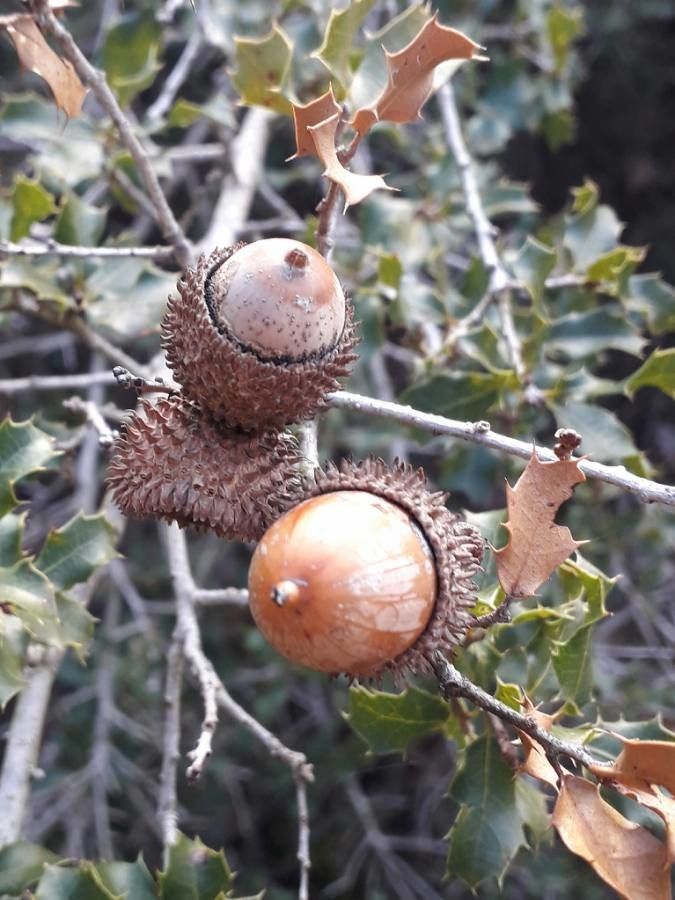
Propagating the Kermes Oak: A Guide to Quercus coccifera Cultivation
Introduction:
Quercus coccifera, commonly known as the Kermes Oak, is a captivating evergreen shrub or small tree prized for its tough, leathery leaves, spiny margins, and charming, albeit small, acorns. Its drought tolerance and adaptability make it a popular choice among gardeners seeking low-maintenance, Mediterranean-style landscaping. While readily available commercially, propagating Quercus coccifera from seed or cuttings can offer a unique horticultural challenge and reward, contributing to the genetic diversity of this fascinating species. The relatively slow growth rate should be considered before embarking on propagation endeavors.
Seed Germination:
Seed germination in Quercus coccifera is possible but presents significant challenges due to the hard seed coat and dormancy mechanisms. Successful germination often necessitates a period of stratification – mimicking the natural winter conditions that break dormancy.
Challenges: Low germination rates are common even with stratification. Germination can be erratic and slow, sometimes taking months or even years.
Practical Tips: Collect acorns in autumn after they have fully ripened and show signs of loosening from the cupule. Stratify the acorns by mixing them with moist peat moss or vermiculite and storing them in a cool (3-5°C), moist environment for 2-4 months. After stratification, sow the seeds in a well-draining seed-starting mix, keeping them moist but not waterlogged. A warm, sunny location after sowing assists germination.
Rewards: Successfully germinating Quercus coccifera seeds provides access to a wider range of genetic diversity than other propagation methods, potentially yielding plants with improved drought tolerance or aesthetic qualities. This is a useful pathway for large-scale propagation in suitable environments.
Cuttings:
Challenges: Hardwood cuttings of Quercus coccifera are notoriously difficult to root. The low success rate is largely due to the plant’s naturally slow growth and inherent difficulty in forming adventitious roots.
Practical Tips: Semi-hardwood cuttings taken in late summer or early autumn may offer a slightly higher success rate than hardwood cuttings. Use rooting hormone and provide a humid environment, ideally a propagation chamber with bottom heat. Even with optimal conditions, success is not guaranteed.
Rewards: Successfully rooting cuttings allows for the propagation of plants that are true-to-type, preserving desirable characteristics of the parent plant. This method is quicker than seed propagation when successful.
Division:
Currently, there are no known reliable methods for propagation of Quercus coccifera through division. The plant’s root system and growth habit do not lend themselves well to this method.
Tissue Culture:
Tissue culture offers the potential for large-scale propagation, especially for preserving specific genetic lines, or overcoming the challenges of seed or cutting propagation. However, it requires specialized equipment, skills, and a sterile laboratory environment.
Challenges: The development of an effective tissue culture protocol for Quercus coccifera might necessitate significant research and experimentation. Contamination is a major risk.
Practical Tips: Establishing a successful tissue culture protocol would involve experimenting with different growth media, phytohormones, and sterilization techniques. This is best undertaken by experienced plant tissue culturists.
Rewards: Tissue culture offers the highest potential for large-scale, rapid propagation, maintaining genetic uniformity and providing a standardized plant material for commercial purposes.
Conclusion:
Propagating Quercus coccifera presents a significant but rewarding challenge for the dedicated horticulturalist. While seed germination offers genetic diversity, it’s a slow and unpredictable process. Cuttings are likewise difficult to root successfully. Division is currently not a viable method. Tissue culture holds the most potential for large-scale propagation, but requires substantial expertise and resources.
The satisfaction of successfully cultivating these plants, after navigating the challenges inherent in their propagation, is immense. The tenacity and patience required mirror the plant’s own hardiness and resilience. To aspiring propagators, we suggest starting with seed germination or cuttings, acknowledging that success is not guaranteed, and being prepared to persevere through setbacks. The journey is as valuable as the final accomplishment.