
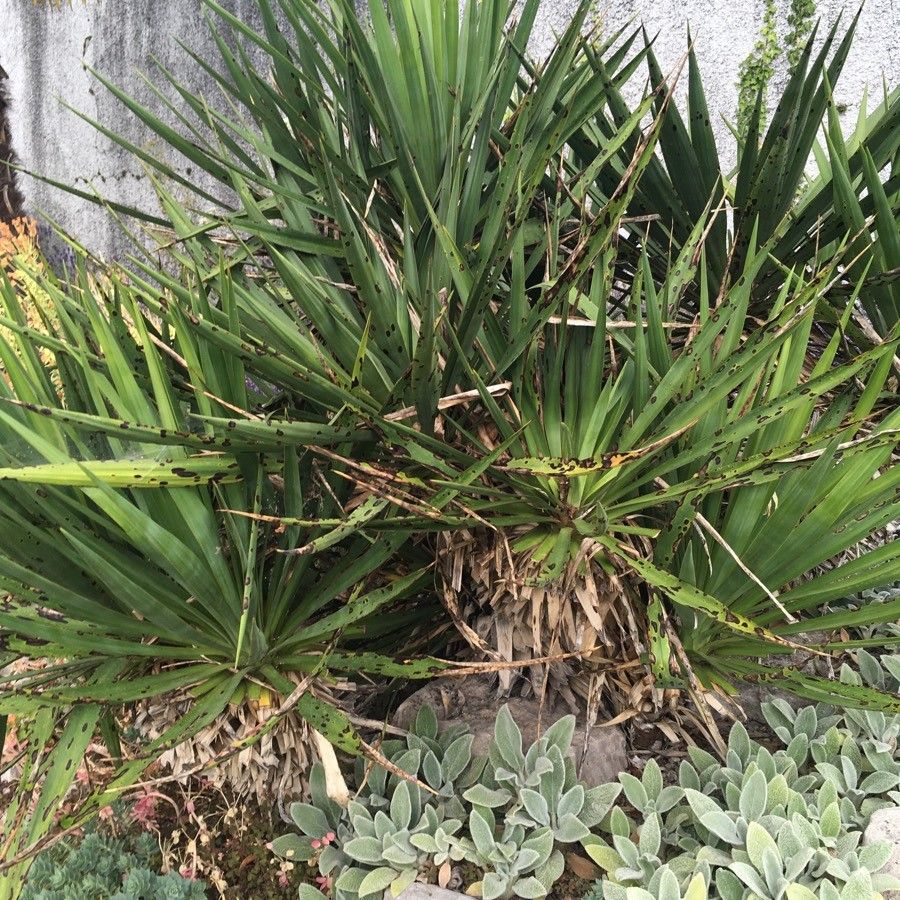
Propagating Yucca rupicola: Challenges and Rewards of Cultivating the Twisted-Leaf Yucca
Introduction
Yucca rupicola, commonly known as the Twisted-Leaf Yucca or Rock Yucca, is a striking succulent native to the southwestern United States. Its rigid, twisted leaves form a dramatic rosette, culminating in a towering flower stalk adorned with creamy-white blossoms. This architectural beauty has earned it a prized place in xeriscaping and rock garden designs, making it a popular choice among gardeners seeking low-maintenance, drought-tolerant landscaping. However, propagating Yucca rupicola presents unique challenges, making successful cultivation all the more rewarding. Its relatively slow growth and specific environmental needs add to the intrigue for plant enthusiasts.
Seed Germination
Seed germination in Yucca rupicola is possible, but it’s far from straightforward. The seeds possess a hard seed coat that requires scarification to enhance germination rates. This can be achieved through mechanical abrasion (lightly nicking the seed coat with sandpaper) or by soaking the seeds in warm water for 24-48 hours before sowing.
Challenges: Low germination rates are common, even with scarification. Optimal germination requires warm temperatures (20-25°C) and well-draining soil. Seedlings are delicate and require careful nurturing to avoid fungal diseases.
Tips: Sow seeds in a well-draining seed-starting mix, barely covering them with soil. Maintain consistent moisture but avoid overwatering. A humidity dome can enhance germination.
Rewards: Seed-grown plants offer the greatest genetic diversity, creating a wider range of potential variations within a population. This method allows for potential large-scale propagation, though success requires patience and attention to detail.
Cuttings
Propagating Yucca rupicola from cuttings is a more reliable method than seed germination. Basal cuttings (taken from the base of the plant) are generally preferred.
Challenges: Cuttings can be slow-rooted, and the success rate depends on proper preparation and conditions. Rot is a significant risk if not allowed to properly callous before planting.
Tips: Take cuttings in spring or early summer using a sharp, clean knife or shears. Allow the cut end to callous over for several days before planting in well-draining soil. A rooting hormone can increase success rates. Maintain moderate moisture and bright, indirect light during rooting.
Rewards: Cuttings typically produce genetically identical offspring, preserving desirable traits. This method is relatively simpler and faster than seed propagation.
Division
Division of established Yucca rupicola plants is a viable method, particularly when the plant becomes overcrowded.
Challenges: Dividing the root system requires care to avoid damaging the plant. Each division should have a substantial portion of the root system for successful establishment.
Tips: Divide the plant during spring or early summer when the plant is actively growing. Plant each division in well-draining soil and water lightly until established.
Rewards: Division allows for rapid propagation of a single, mature plant and easy transplantation.
Tissue Culture
Tissue culture represents a highly specialized method for Yucca rupicola propagation, not typically employed by home gardeners.
Challenges: Tissue culture requires specialized equipment, sterile conditions, and expertise in plant tissue culture techniques. It is highly cost-prohibitive for the average enthusiast.
Tips: This method is best left to professional plant propagators with access to appropriate facilities.
Rewards: Tissue culture offers the potential for large-scale propagation of disease-free plants, capable of producing large numbers of plantlets.
Conclusion
Propagating Yucca rupicola presents unique challenges, requiring patience, diligence, and attention to detail. While seed germination offers genetic diversity and cutting propagation provides a reliable, albeit slow, path to successful multiplication, division offers the quickest method for small-scale propagation. The specialized technique of tissue culture, while offering mass propagation potential, is typically cost-prohibitive for the home gardener. Despite the obstacles, the satisfaction of successfully cultivating this striking plant from a cutting, seed, or division is immense. The unique architectural form and drought tolerance reward the dedicated propagator with a plant that will grace a garden for decades. Embrace the challenge; the rewards are well worth the effort.