
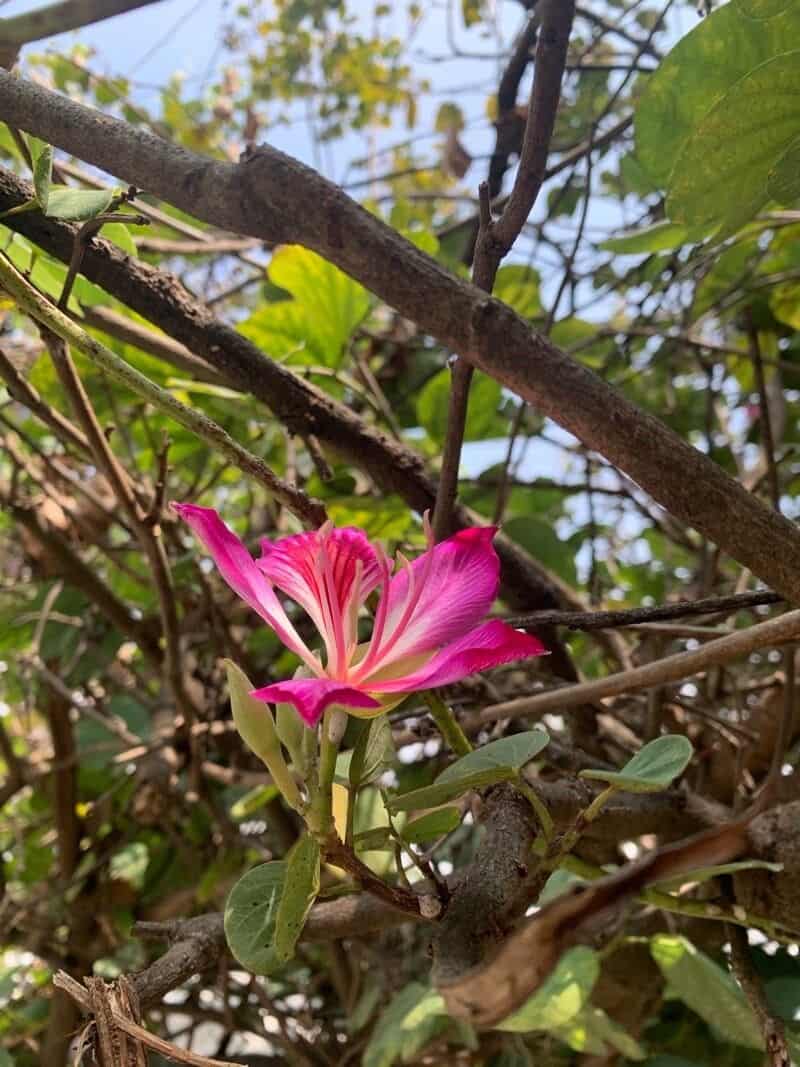
Unlocking the Mystery: Why You Can’t Grow a Hong Kong Orchid Tree From Seed
The Hong Kong Orchid Tree, with its vibrant purplish-red blooms and elegantly dancing branches, is a sight to behold. This magnificent tree, scientifically known as Bauhinia × blakeana, graces gardens and streetscapes around the world, painting them with a touch of tropical splendor. Yet, behind its captivating beauty lies a fascinating secret: the Hong Kong Orchid Tree is a sterile hybrid, unable to produce viable seeds.
So how does one propagate this botanical marvel? While you won’t find success scattering seeds, there are ways to welcome new generations of this stunning tree into your life.
Grafting: Mimicking Nature’s Ingenuity
Grafting, an ancient horticultural technique, is the primary method for propagating the Hong Kong Orchid Tree. This method involves fusing a cutting (scion) from the desired tree onto a compatible rootstock, typically a related Bauhinia species.
Think of it like a surgical operation where two plant parts are carefully joined to heal as one. The rootstock provides the necessary vigor and disease resistance, while the scion carries the genetic information for the beautiful Hong Kong Orchid Tree characteristics.
Grafting can be done using several techniques, with cleft grafting being a common choice. This involves making a cut in the rootstock and carefully inserting a wedge-shaped scion. The union is then sealed and protected to encourage callus formation and eventually, a successful graft.
Air Layering: Encouraging Root Formation on Branches
Another propagation technique used for the Hong Kong Orchid Tree is air layering. This method involves wounding a healthy branch and encouraging it to develop roots while still attached to the parent plant.
Here’s a simplified breakdown of the process:
- Wounding: A small section of bark is removed from the branch.
- Rooting Hormone (Optional): Rooting hormone can be applied to the wounded area to stimulate root development.
- Moist Medium: Sphagnum moss or a similar medium is wrapped around the wound and kept consistently moist.
- Wrap and Wait: The entire setup is wrapped in plastic wrap to create a humid environment.
- Root Formation: After several weeks, roots should begin to form within the moist medium.
- Severing and Planting: Once a substantial root system has developed, the branch is severed below the new roots and potted as you would any other young tree.
The Beauty of Hybrid Vigor: A Trade-Off for Seedlessness
While the inability to reproduce naturally might seem like a disadvantage, it has gifted the Hong Kong Orchid Tree with something special: hybrid vigor. This phenomenon describes the increased strength, growth rate, and flower power often observed in hybrids compared to their parent species.
So, while you might need to seek out grafted trees or try your hand at air layering, the captivating beauty and resilience of the Hong Kong Orchid Tree make it well worth the effort. And who knows, perhaps the challenge of propagation adds another layer of appreciation for this truly remarkable tree.