
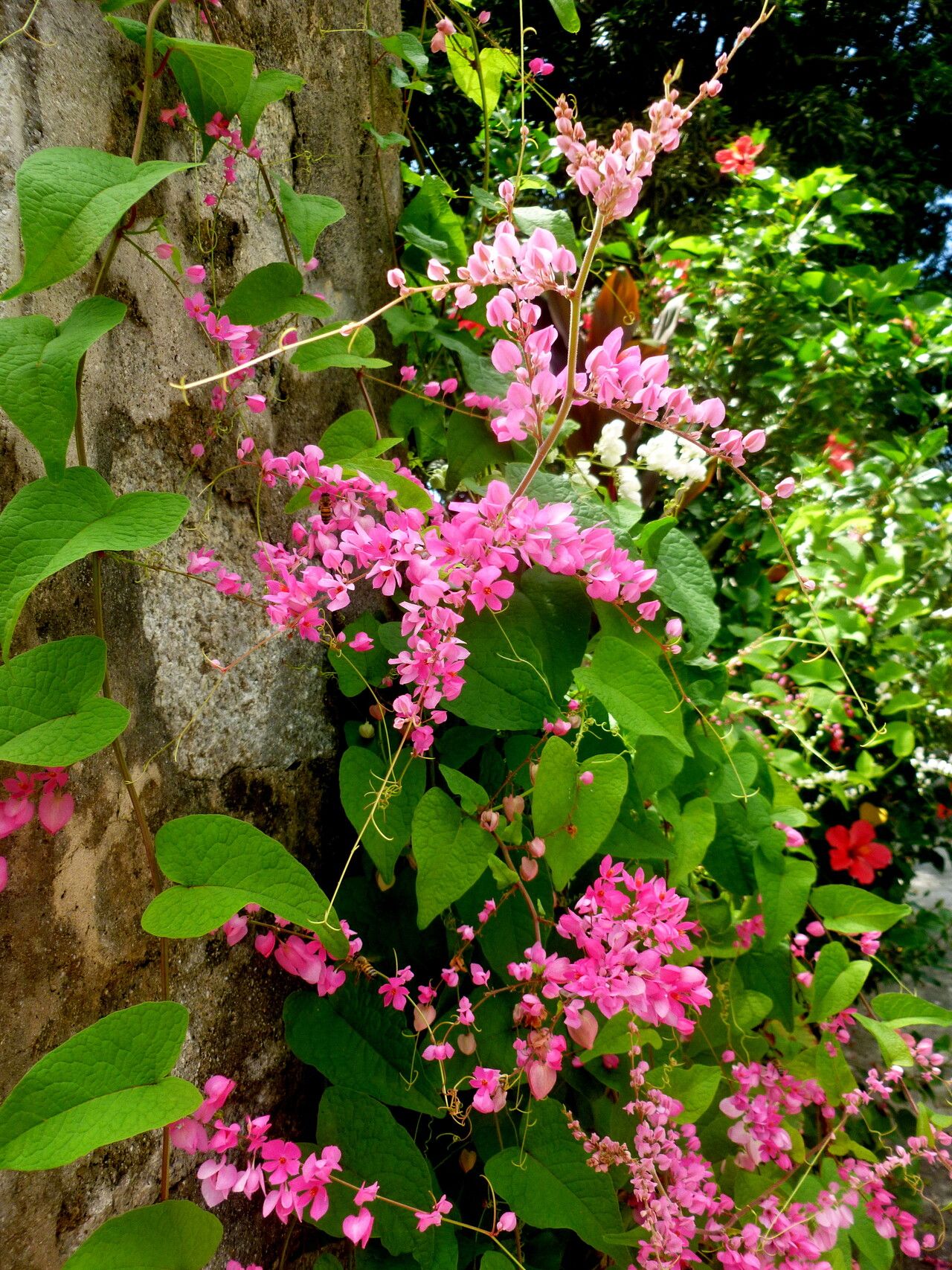
Unleashing a Waterfall of Flowers: Propagating Your Own Antigonon Leptopus
The Antigonon leptopus, also known as the Coral Vine, Queen’s Wreath, or Mexican Creeper, is a showstopping climber known for its vibrant pink or white blossoms that cascade like waterfalls. This fast-growing vine can quickly transform fences, trellises, and even neglected corners into vibrant displays of color.
While sourcing a plant from a nursery is one option, propagating your own Antigonon leptopus is surprisingly easy and rewarding. This allows you to create a beautiful garden filled with these stunning vines, all from a single plant. Let’s explore the different methods to multiply your own cascade of color:
1. Propagation from Seed:
- Seed Collection: Antigonon leptopus produces small, nut-like seeds after flowering. Collect these seeds once the flowers fade and the seed pods turn dry and brown.
- Seed Preparation: Gently crack open the seed pods to reveal the seeds inside. You can sow them immediately or store them in a cool, dry place for later use.
- Sowing: Sow seeds in a well-draining potting mix, covering them lightly with soil. Keep the soil consistently moist but not waterlogged.
- Germination: Within a few weeks, you should see sprouts emerging. Once the seedlings have developed a few sets of true leaves, you can transplant them to larger containers or directly into the ground.
2. Propagation from Cuttings:
- Timing is Key: The optimal time for taking cuttings is during the growing season, preferably in spring or early summer.
- Selecting Cuttings: Choose healthy, non-flowering stems that are about 4-6 inches long. Make a clean cut just below a leaf node.
- Preparing the Cuttings: Remove the leaves from the lower half of the cutting. You can dip the cut end in rooting hormone powder to encourage faster root development, though it’s not strictly necessary.
- Planting: Plant the cuttings in a well-draining potting mix. Ensure the bottom node, where you removed the leaves, is buried.
- Creating a Humid Environment: Cover the pot with a plastic bag or use a humidity dome to create a warm, moist environment that promotes rooting.
- Rooting: Be patient! It may take several weeks for roots to form. Gently tug on the cutting; resistance indicates successful rooting.
- Transplanting: Once the cutting is well-rooted, it can be transplanted to a larger pot or a permanent position in your garden.
Tips for Success:
- Sunlight: Antigonon leptopus thrives in full sun, so choose a location that receives at least 6 hours of direct sunlight daily.
- Soil: Well-draining soil is crucial to prevent root rot. Amend heavy clay soils with compost or other organic matter.
- Watering: Water deeply but infrequently, allowing the soil to dry slightly between waterings.
- Support: Provide a sturdy trellis, fence, or arbor for your vine to climb.
Propagating your own Antigonon leptopus is not only cost-effective but also immensely satisfying. With a little patience and the right techniques, you can easily multiply these stunning vines and create a breathtaking floral display in your own backyard.