
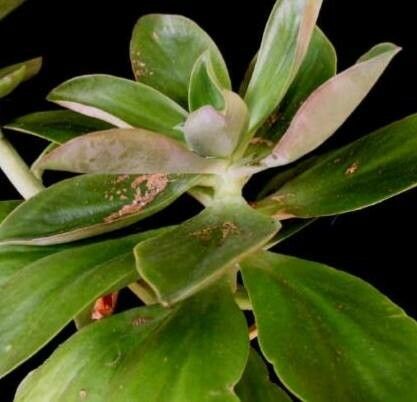
Echeveria Maxonii: A Beginner’s Guide to Propagation
The Echeveria Maxonii, with its captivating rosettes of silvery-green leaves tipped with blushing red, is a succulent that captures hearts. But did you know that besides their beauty, these stunning plants are also incredibly easy to propagate?
This means that you can easily multiply your collection of these charming succulents from a single plant. Are you ready to discover the secrets of Echeveria Maxonii propagation? Let’s dive in!
Methods of Propagation:
Echeveria Maxonii can be propagated through two primary methods:
Leaf cuttings: This is the most common and simplest technique for Echeveria Maxonii. Simply detach a healthy, mature leaf from the mother plant, leaving a small portion of the stem attached. Allow the cut end to dry for a few days, forming a callus. Once the callus has formed, plant the leaf base-down in a succulent potting mix. Keep the soil lightly moist and ensure good drainage. In a few weeks, you’ll see tiny plantlets emerging from the base of the leaf.
- Offset propagation: Echeveria Maxonii often produces offsets, or “pups,” at the base of the mother plant. Once these pups grow a few leaves and have roots of their own, they are ready to be separated. Carefully detach the pups from the main plant, ensuring that they have some roots attached. Plant them in a succulent potting mix, and you can enjoy watching them grow into beautiful, independent plants.
Essential Tips for Success:
To maximize your success in Echeveria Maxonii propagation, here are a few helpful tips:
- Choose the right potting mix: Use a well-draining succulent potting mix. You can also add perlite or pumice to improve drainage.
- Light and temperature: Provide bright, indirect light for your cuttings. They need warm temperatures to thrive, so avoid placing them in cold drafts.
- Water sparingly: Allow the soil to dry completely between waterings. Overwatering is the common cause of plant failure.
- Patience is key: Propagation can take some time, especially for leaf cuttings. Be patient and give your little Echeverias time to develop a good root system.
Frequently Asked Questions:
Q: Can I use any type of soil for propagation?
A: No, it’s important to use a well-draining cactus or succulent potting mix. These mixtures are designed to prevent root rot and ensure proper aeration.
Q: Do I need to use rooting hormone?
A: While using a rooting hormone is not mandatory, it can help accelerate the process and boost success rates.
Q: How long does it take for Echeveria Maxonii cuttings to root?
A: It can take anywhere from a few weeks to a couple of months. Patience is key, and with optimal conditions, you’ll see new growth.
Q: What happens if my cuttings rot?
A: If your cuttings rot, it’s likely due to overwatering or poor drainage. Make sure the soil is dry between waterings and check for any signs of fungal growth.
Enjoy the Rewards of Propagation!
Propagation is a rewarding experience that allows you to expand your garden and fill your home with these stunning succulents. With a little patience and these simple techniques, you can create a vibrant collection of Echeveria Maxonii. So, grab a leaf or offset, and start growing your own!