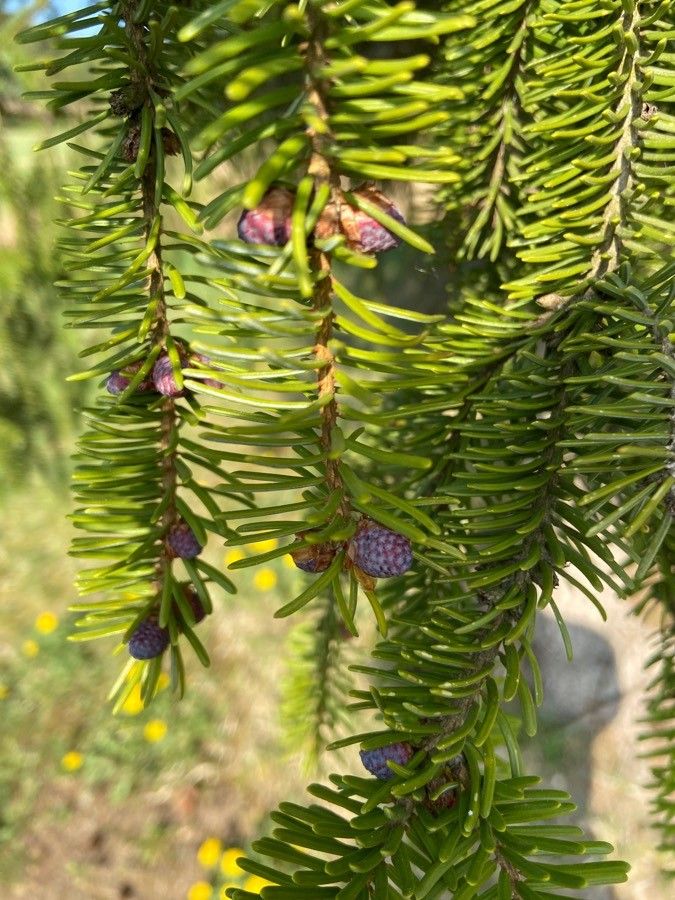
Propagating Abies balsamea: The Challenges and Rewards of Growing Balsam Fir
Introduction:
Abies balsamea, commonly known as Balsam Fir, is a graceful evergreen conifer prized for its aromatic needles, erect conical shape, and important ecological role in boreal forests. Its picturesque beauty makes it a popular choice among gardeners seeking a classic Christmas tree look or a statement piece in larger landscapes. However, propagating Balsam Fir can present unique challenges due to its specific germination requirements and relatively slow growth rate. This article explores various propagation methods, outlining their viability and offering practical advice for success.
Seed Germination:
Seed germination is a viable method for propagating Abies balsamea, but it presents several challenges. Balsam Fir seeds require a period of cold stratification to break dormancy. This mimics the natural winter conditions necessary for germination.
Challenges: The primary challenge is achieving consistent germination rates. Seeds often exhibit low germination percentages even with proper stratification. Furthermore, seedlings are prone to damping-off (fungal disease) in humid conditions.
Practical Tips: Collect seeds from mature cones in the autumn. Stratify the seeds for 60-90 days at temperatures just above freezing (around 33-40°F or 0.5-4.5°C), ideally in moist peat moss or vermiculite. Sow the stratified seeds in a well-drained seed-starting mix, ensuring good drainage to prevent damping-off. Maintain consistent moisture and shade the seedlings from direct sunlight.
Rewards: Seed propagation offers the greatest genetic diversity, leading to a broader range of plant characteristics within a population. It also presents the potential for large-scale propagation, making it suitable for commercial nurseries or reforestation projects.
Cuttings:
Cuttings are a less reliable method for propagating Abies balsamea compared to seed germination.
Challenges: Balsam Fir cuttings root poorly, with low success rates even with the use of rooting hormones and mist propagation systems. The slow rooting process increases the risk of fungal infections.
Practical Tips: Softwood cuttings, taken in early summer, are the most viable option, though success is still limited. Use a rooting hormone and plant the cuttings under high humidity conditions within a mist propagation system.
Rewards: Vegetative propagation through cuttings allows for the preservation of desirable characteristics from a parent tree, ensuring offspring mirror its traits. However, the low success rate makes this a less practical method for most gardeners.
Division:
Division is generally not a feasible method for propagating Abies balsamea. Balsam fir has a deep taproot and doesn’t readily divide into smaller, independent plants.
Tissue Culture:
Tissue culture is a viable, albeit specialized, method for propagating Abies balsamea.
Challenges: Tissue culture requires a sterile laboratory environment, specific growth media, and specialized expertise. It’s a costly and time-consuming process.
Practical Tips: This method requires advanced horticultural techniques, and it’s typically only undertaken by research institutions or specialized nurseries. It involves cultivating plant tissues in a sterile nutrient medium to produce many clones of the parent plant.
Rewards: Tissue culture offers the potential for mass propagation of superior genotypes selected for desirable characteristics, disease resistance, or other qualities. It allows for rapid multiplication and clonal propagation of genetically uniform plants.
Conclusion:
Propagating Abies balsamea presents unique challenges across all methods explored. While seed germination offers the best chance of success for the majority of enthusiasts, it requires patience and attention to detail. Cuttings are difficult and offer low success rates. Tissue culture is the most efficient method for large-scale propagation but requires considerable resources and technical expertise. The rewards, however—whether it is achieving genetic diversity through seeds or preserving valuable traits through cuttings or tissue culture– are well worth the effort for those passionate about growing this beautiful species. The satisfaction of successfully nurturing a Balsam Fir from seed or cutting, overcoming these challenges, is a testament to perseverance and a rewarding experience that makes the effort deeply fulfilling. Remember patience is key; success may take time, but the outcome is a magnificent and valuable addition to any garden or landscape.