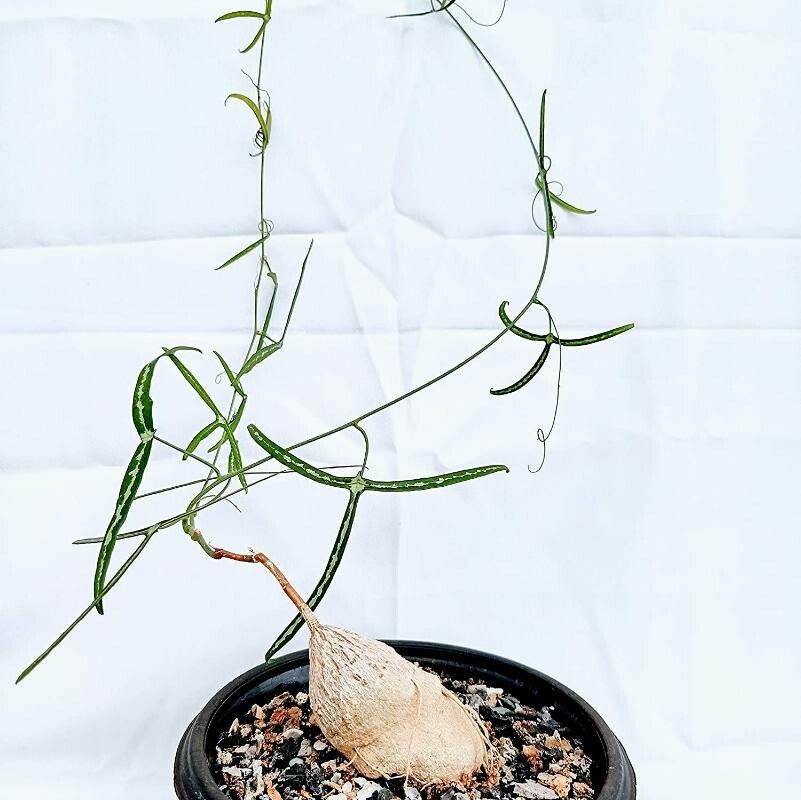
Propagating Adenia kirkii: A Gardener’s Challenge and Reward
Adenia kirkii, also known as the "Namibian Watermelon Plant," is a captivating succulent belonging to the Passifloraceae family. Its striking appearance, characterized by a swollen, caudex-like stem and intricately veined leaves, makes it a highly sought-after specimen among succulent enthusiasts. Its unique growth habit and relatively slow growth rate contribute to its desirability, but also present challenges for propagation. Successfully propagating Adenia kirkii offers a significant sense of accomplishment, rewarding the dedicated grower with a truly special plant.
Seed Germination:
Currently, there are no known reliable methods for seed germination propagation of Adenia kirkii. While seeds may occasionally be produced, germination rates are notoriously low, and even when germination occurs, seedling survival is often poor. Further research is needed to determine optimal conditions for seed germination, but at present, this method is not a practical approach for most growers.
Cuttings:
Cuttings represent a more viable option for Adenia kirkii propagation, although success is not guaranteed.
Challenges: The thick, woody stems of Adenia kirkii are not easily rooted. Cuttings are prone to rot if not carefully prepared and treated.
Practical Tips: Use sharp, sterilized tools to take semi-hardwood cuttings from mature stems in spring or early summer. Allow the cuttings to callus over for several days before planting in a well-draining cactus and succulent potting mix. Use a rooting hormone to increase the chances of success. Maintain a warm, humid environment (propagating mat or cloche recommended) but avoid overwatering.
Rewards: Successfully rooted cuttings offer a faster route to a mature plant than seed germination and maintain the characteristics of the parent plant.
Division:
Division is not a feasible propagation method for Adenia kirkii due to its single-stemmed nature and lack of readily separable offshoots or pups.
Tissue Culture:
Tissue culture offers the potential for large-scale propagation and genetic preservation of Adenia kirkii, circumventing the challenges associated with seed germination and cuttings.
Challenges: Establishing a successful tissue culture protocol for Adenia kirkii requires specialized knowledge, equipment, and a sterile laboratory environment. The optimal media composition and growth regulators need to be carefully determined through experimentation.
Practical Tips: This method is best left to experienced tissue culture professionals.
Rewards: Tissue culture is potentially the most effective method for large-scale propagation, facilitating the conservation and wider distribution of this species. It also allows for the production of disease-free plants.
Conclusion:
Propagating Adenia kirkii presents significant horticultural challenges. While seed germination is currently unreliable, cuttings offer a more practical approach, although requiring patience and skillful handling to avoid rot. Tissue culture holds the greatest potential for large-scale propagation but demands specialized expertise. Despite these difficulties, the unique beauty and slow growth of Adenia kirkii make the effort worthwhile. The profound satisfaction of successfully propagating this captivating plant, overcoming its inherent challenges, is a reward in itself, a testament to the grower’s dedication and skill. For aspiring propagators, patience, attention to detail, and a willingness to learn from both successes and failures are key to unlock the secrets of cultivating this remarkable succulent.