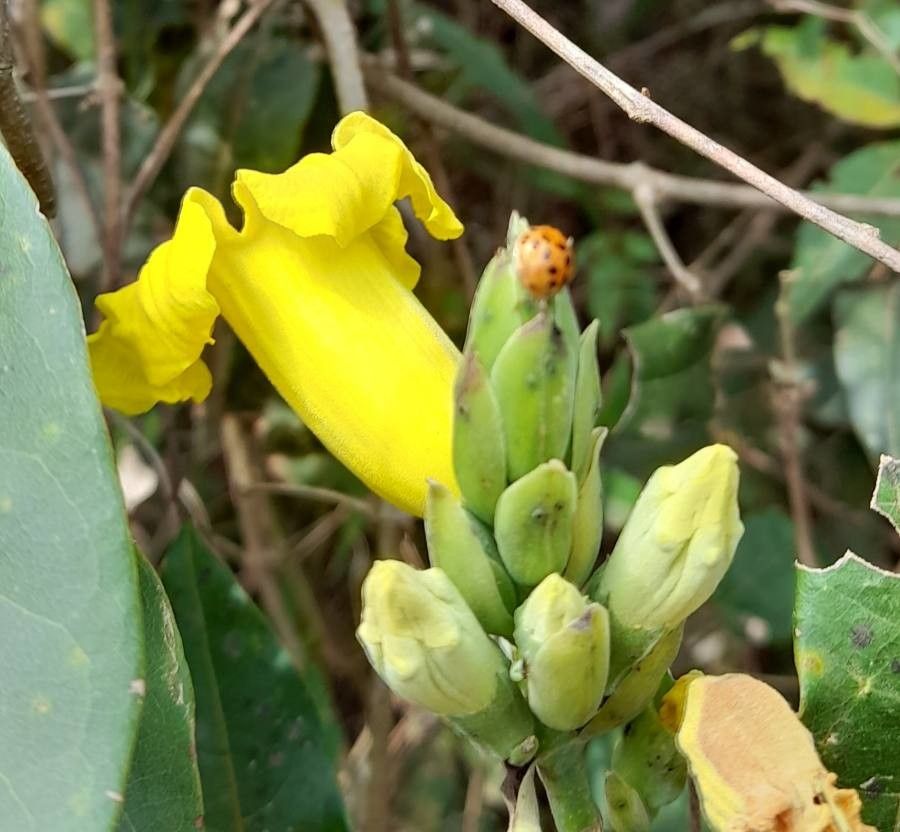
Propagating the Brazilian Clockvine: A Gardener’s Guide to Adenocalymma marginatum
Introduction
Adenocalymma marginatum, commonly known as the Brazilian Clockvine, is a captivating vine prized for its vibrant, trumpet-shaped flowers that bloom sequentially, resembling a clock’s face. Its rapid growth, tolerance of partial shade, and striking beauty make it a popular choice among gardeners. However, propagating this stunning plant can present some challenges. Its unique characteristics, including the relatively infrequent production of viable seed and its somewhat delicate nature, requires a thoughtful approach to propagation. This article explores various methods to successfully propagate Adenocalymma marginatum.
Seed Germination
Currently, there are no known reliable methods for seed germination propagation of Adenocalymma marginatum. While the plant does produce seeds, their viability is often low, and germination rates remain unpredictable, even under optimal conditions. Further research is needed to determine suitable germination techniques for this species.
Cuttings
Challenges: Successful propagation from cuttings requires careful attention to detail. The cuttings can be susceptible to fungal diseases and rot if not properly treated. Finding the optimal balance of humidity and warmth is critical.
Practical Tips: Semi-hardwood cuttings taken in late spring or early summer generally yield the best results. Cuttings should be approximately 4-6 inches long, with a clean cut made just below a node. Remove lower leaves to prevent rot. Dip the cut end in rooting hormone to encourage root development. Plant the cuttings in a well-draining propagating mix, ensuring good humidity (e.g., using a humidity dome or plastic bag). Maintain consistently moist, not soggy, conditions.
- Rewards: Cuttings propagation offers a fairly reliable method of producing genetically identical plants to the parent plant, preserving desirable characteristics. It’s relatively straightforward compared to other methods, making it accessible to home gardeners.
Division
Challenges: Adenocalymma marginatum is not easily propagated by division. Its root system, while extensive, isn’t naturally structured for easy separation into independently viable divisions. Dividing the plant risks damaging the root system, potentially leading to the death of both the parent plant and the division.
Practical Tips: Division, if attempted, should only be considered for well-established, large plants. The division must be carried out carefully, ensuring each division has a substantial portion of healthy roots and ample foliage. Replant immediately in well-draining soil and provide consistent moisture.
- Rewards: Successful division provides a rapid way to increase the number of plants, particularly useful for larger specimens.
Tissue Culture
Challenges: Tissue culture is a highly specialized technique requiring specific laboratory equipment, sterile conditions, and expertise in plant tissue culture methodologies. Establishing a culture protocol for Adenocalymma marginatum would require considerable research and experimentation.
Practical Tips: This method would involve sterilely obtaining explants (small pieces of plant tissue) and culturing them on a nutrient medium in a controlled environment. This advanced technique is best left to specialized laboratories and researchers.
- Rewards: Tissue culture offers the potential for mass propagation of genetically identical plants, disease-free stock, and the ability to rapidly produce large quantities of plants for commercial purposes.
Conclusion
Propagating Adenocalymma marginatum presents distinct challenges depending on the method chosen. While seed germination currently appears unreliable, cuttings offer a relatively straightforward, and rewarding approach for the home gardener. Division is not recommended due to risks involved. Tissue culture, while promising for large-scale propagation, requires specialized knowledge and resources. The unique beauty and rapid growth of the Brazilian Clockvine make the effort of propagation well worthwhile. The satisfaction of nurturing a cutting to a flourishing vine, or successfully mastering a more advanced technique like tissue culture, is a testament to the gardener’s patience and skill. Don’t be discouraged by initial setbacks; persistent experimentation and careful observation will ultimately lead to success with this magnificent climber.