
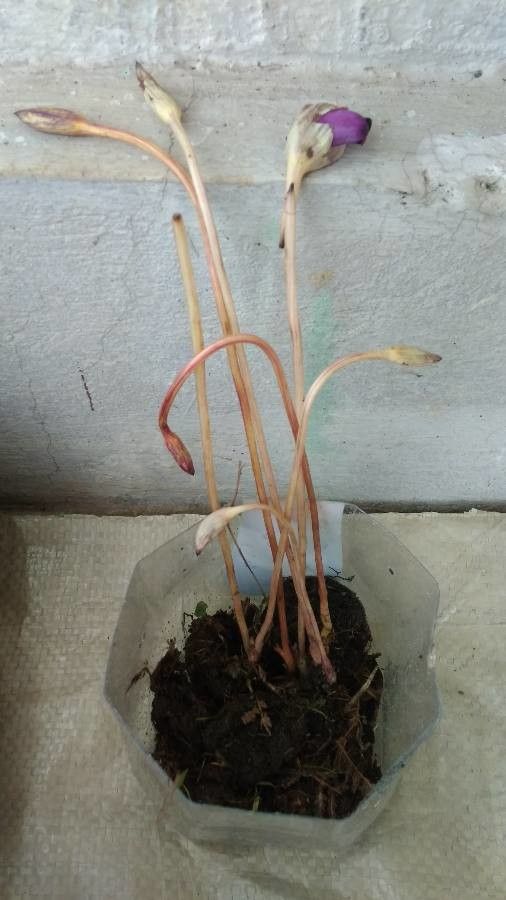
The Curious Case of Aeginetia sinensis: Can You Propagate This Parasitic Plant?
For those of us who enjoy the joy of growing plants, propagation is a satisfying process. Taking a cutting, sowing a seed, or dividing a clump allows us to share the beauty of our green companions with others or simply expand our own plant collection. But what about plants that don’t play by the usual rules? What about parasitic plants like Aeginetia sinensis, also known as the “Chinese Ghost Plant”?
Aeginetia sinensis is a fascinating and somewhat spooky-looking plant that earns its “ghost” nickname due to its pale, almost translucent appearance. It’s a root parasite, meaning it draws its nutrients from the roots of other plants, specifically members of the grass family. This unique lifestyle poses interesting challenges for propagation.
Can you propagate Aeginetia sinensis? The short answer is: not traditionally.
Here’s why:
- Dependence on a Host: Aeginetia sinensis relies entirely on its host plant for survival. Unlike most plants that manufacture their own food through photosynthesis, this species has no chlorophyll and cannot produce its own sustenance.
- Lack of Traditional Propagation Methods: This parasitic nature means traditional propagation methods like seeds, cuttings, or division won’t work.
- The Role of Host Plants: Successful propagation of Aeginetia sinensis depends on the specific host plant it targets. Understanding the relationship between the parasite and its host is crucial for any attempt at propagation.
So, how do you get more Aeginetia sinensis?
While artificial propagation is challenging, the plant relies on a natural propagation strategy: seed dispersal.
Here’s the process:
- Seed Production: Aeginetia sinensis flowers produce tiny seeds encased within capsules. These seeds are light and easily dispersed by the wind.
- Host Plant Roots: The seeds find themselves near the root systems of their host plants.
- Germination: The seeds germinate, often in the crevices or cracks near the host roots.
- Attachment and Nourishment: The germinating seed attaches to the host root, creating a haustorium (a specialized structure that allows it to draw nutrients and water from the host).
A Glimpse into the World of Parasitic Plants:
Aeginetia sinensis is a fascinating example of the diverse strategies plants use to survive. It demonstrates the intricate web of relationships within the natural world, where even a seemingly unusual species like a parasitic plant plays a role in the ecosystem.
Can you cultivate Aeginetia sinensis?
While you can’t propagate it through traditional methods, it’s possible to cultivate this intriguing plant in a controlled environment. This requires a careful understanding of its specific host plant needs and a willingness to provide the necessary conditions.
Understanding the unique life cycle of Aeginetia sinensis demystifies its unusual existence. Even if you can’t propagate it in the traditional sense, appreciating its unique adaptation and the symbiotic relationship it shares with its host plants brings a new perspective to the fascinating world of plant diversity.