
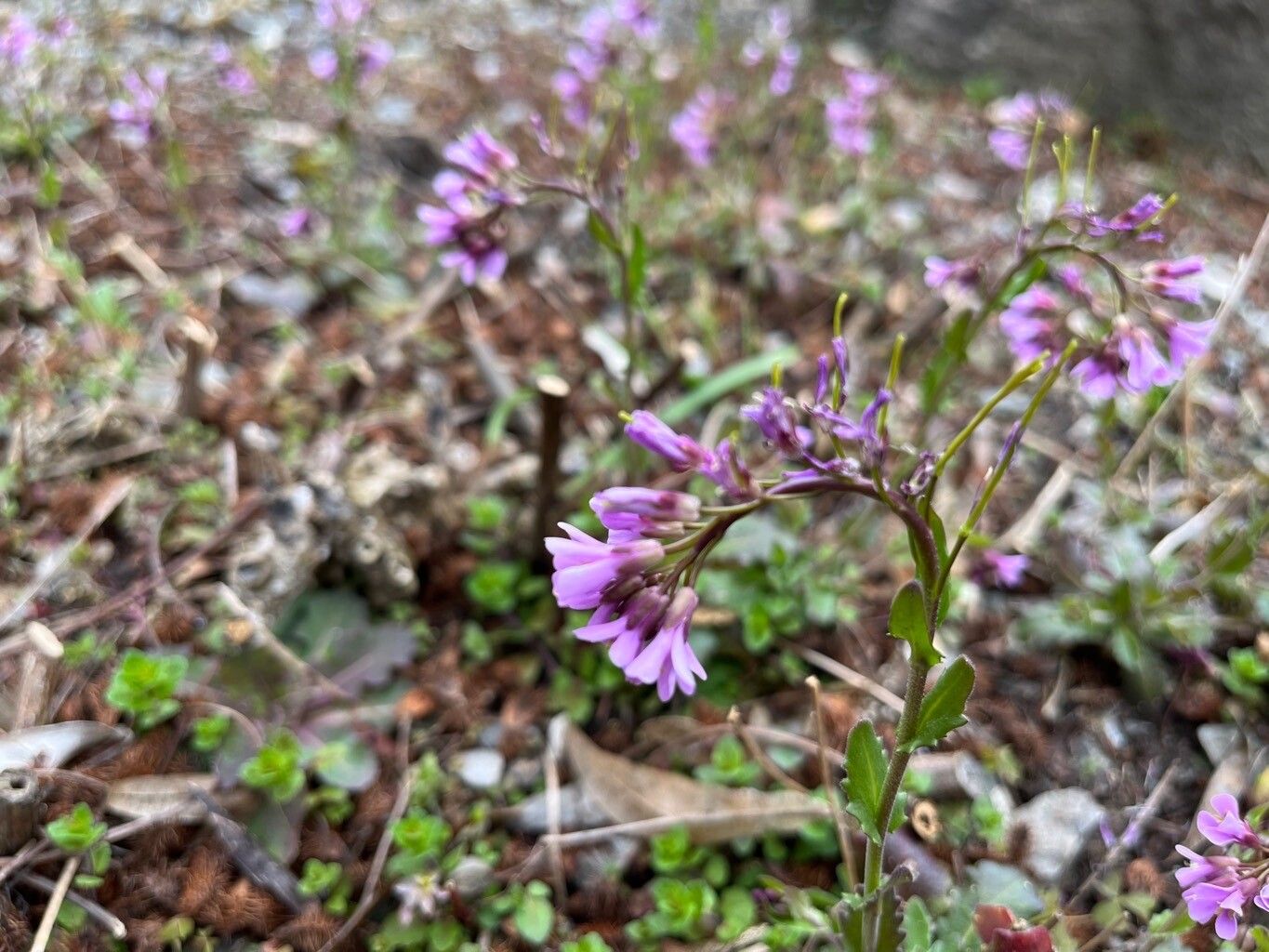
Propagating Arabis purpurea: A Gardener’s Guide to the Purple Rockcress
Arabis purpurea, commonly known as purple rockcress, is a captivating alpine plant prized for its vibrant purple flowers and low-growing, mat-forming habit. Its tolerance to poor soils and its ability to thrive in rocky conditions make it a popular choice for rock gardens, borders, and even wall plantings. This hardy perennial adds a splash of colour to challenging landscapes, but propagating it can present unique challenges. Its relative ease of propagation by division makes it a rewarding plant for those willing to put in the effort.
Seed Germination:
Currently, there are no known reliable methods for seed germination propagation of Arabis purpurea. While seeds may be produced, germination rates are notoriously low and unpredictable. The seeds are often recalcitrant, meaning they do not store well and lose viability quickly. Attempts at stratification (a period of cold, moist storage to mimic winter conditions) have yielded limited success.
Cuttings:
Cuttings offer a more reliable method for propagating Arabis purpurea.
Challenges: Rooting success can be variable depending on the timing and technique. Softwood cuttings taken in spring or early summer generally produce the best results.
Practical Tips: Take 4-6 inch cuttings from non-flowering stems, removing lower leaves to prevent rot. Dip the cut ends in rooting hormone and plant them in a well-draining, moist propagation mix (e.g., a mix of perlite and peat moss). Maintain high humidity using a cloche or propagator. Rooting typically takes several weeks.
Rewards: Cuttings provide a faster way to obtain new plants compared to division, and the resulting plants are genetically identical to the parent plant, preserving desirable traits.
Division:
Division is arguably the most successful and straightforward method for propagating Arabis purpurea.
Challenges: The plant needs to be established before division. Dividing too early or aggressively can damage individual plants.
Practical Tips: The best time to divide Arabis purpurea is in spring or autumn, after flowering or before new growth begins. Carefully lift the established clump and gently separate the roots into smaller sections, ensuring each division has a healthy root system and multiple growing points. Replant immediately, spacing them appropriately for the mature size of the plants.
Rewards: Division offers a simple and highly effective way to increase the number of plants. It’s quicker than cuttings and ensures a high success rate, making it ideal for gardeners of all skill levels.
Tissue Culture:
While technically feasible, tissue culture propagation of Arabis purpurea is typically not undertaken by home gardeners due to the specialized equipment, sterile conditions, and expertise required.
Challenges: Establishing a sterile protocol and maintaining a contamination-free environment are crucial but need laboratory facilities and training.
Practical Tips: This method requires a controlled environment with specialized media and growth regulators, all of which are beyond the scope of home propagation.
Rewards: Tissue culture allows for mass production of genetically identical plants quickly and efficiently, often disease-free – useful for commercial nurseries.
Conclusion:
Propagating Arabis purpurea presents varying degrees of challenge depending on the chosen method. While seed propagation is unreliable, cuttings offer reasonable success, especially for experienced propagators. Division stands out as the most accessible and effective method for home gardeners. The satisfaction of nurturing a small cutting or division into a vibrant, flowering plant, particularly with a species that presents initial propagation challenges, stands as a testament to the gardener’s perseverance and patience. Don’t be discouraged by initial setbacks. Experiment with division, focusing on healthy plants and careful handling, and enjoy the rewards of this beautiful alpine treasure in your garden.