
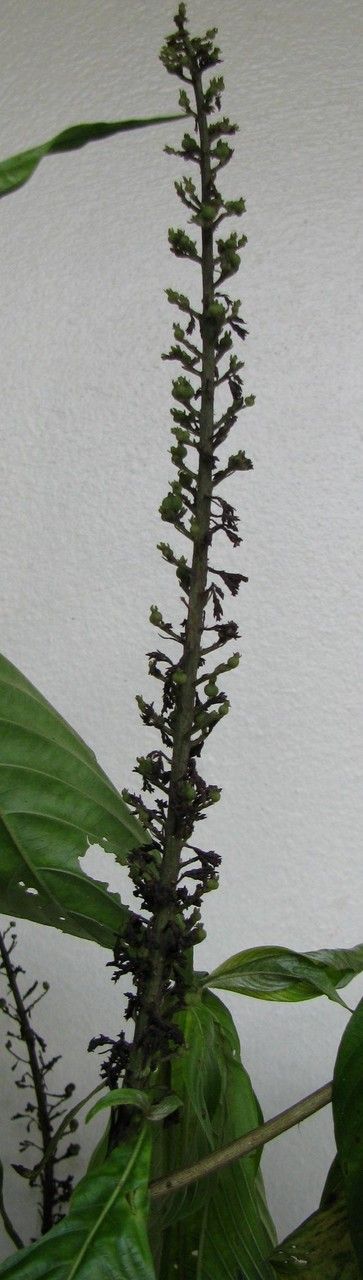
Propagating Arachnothryx brenesii: A Gardener’s Guide to a Rare Beauty
Introduction
Arachnothryx brenesii, also known as the Costa Rican Spider Flower, is a captivating plant prized for its delicate, spider-like white flowers and attractive foliage. This relatively rare species, native to Costa Rica and Panama, is increasingly popular among collectors and enthusiasts who appreciate its unique beauty and the challenge it presents in cultivation. Its propagation, however, presents particular difficulties, making successful cultivation a rewarding accomplishment. This guide explores various propagation methods to help gardeners navigate these challenges.
Seed Germination
Currently, there are no known reliable methods for seed germination propagation of Arachnothryx brenesii. Limited research exists on the species’ reproductive biology, and successful germination from seed remains undocumented. Further research is needed to determine if seed viability is affected by factors such as seed maturity, storage conditions, or specific germination requirements.
Cuttings
Challenges: Arachnothryx brenesii can be challenging to propagate from cuttings due to its relatively slow growth rate and potential for rot. Successful rooting requires careful attention to hygiene and environmental conditions.
Tips: Semi-hardwood cuttings taken in late spring or early summer offer the best chance of success. Use a sharp, sterile blade to take 4-6 inch cuttings, removing lower leaves to prevent rot. Treat the cut ends with a rooting hormone to stimulate root development. Plant the cuttings in a well-draining mix of perlite and peat moss, keeping the environment humid (e.g., using a humidity dome or propagator). Maintain consistent moisture but avoid overwatering. Rooting can take several weeks to several months.
Rewards: Cuttings offer a relatively straightforward method for propagating existing plants, maintaining the genetic characteristics of the mother plant.
Division
Challenges: Division is likely not a viable propagation method for Arachnothryx brenesii. This species typically grows as a relatively compact plant, lacking the extensive root system suitable for division. Attempts at division could seriously damage the plant and likely result in failure.
Tips: Not applicable.
Tissue Culture
Challenges: Tissue culture is a technically demanding method requiring specialized equipment, sterile conditions, and expertise in plant tissue culture techniques. Whilst potentially highly successful for large-scale propagation, the initial investment in equipment and training can be significant.
Tips: Establishing a sterile environment is crucial. Suitable media containing plant growth regulators will be necessary to promote shoot and root development. The precise hormonal balance and media composition will require experimentation to optimize regeneration protocols specific to Arachnothryx brenesii.
Rewards: Tissue culture allows for the rapid clonal propagation of a large number of plants from a small amount of starting material. It enables consistent production of high-quality plants with homogenous traits and can be particularly valuable for conservation purposes.
Conclusion
Propagating Arachnothryx brenesii presents a unique horticultural challenge. While seed germination has proven unreliable, cuttings offer a viable, albeit patience-testing, route to propagation. Division is unlikely to succeed. Tissue culture offers the potential for large-scale propagation but demands expertise and specialized resources. The relatively slow growth and susceptibility to rot are hurdles in all methods. However, the rewards of successfully nurturing this beautiful and rare plant from a cutting or through tissue culture are substantial. The satisfaction of overcoming the propagation challenges involved adds a special layer of accomplishment to the joy of cultivating this exquisite Costa Rican Spider Flower. Aspiring propagators should begin with cuttings, focusing on maintaining sterile conditions and consistent moisture, and be prepared for a journey that requires patience and persistence.