
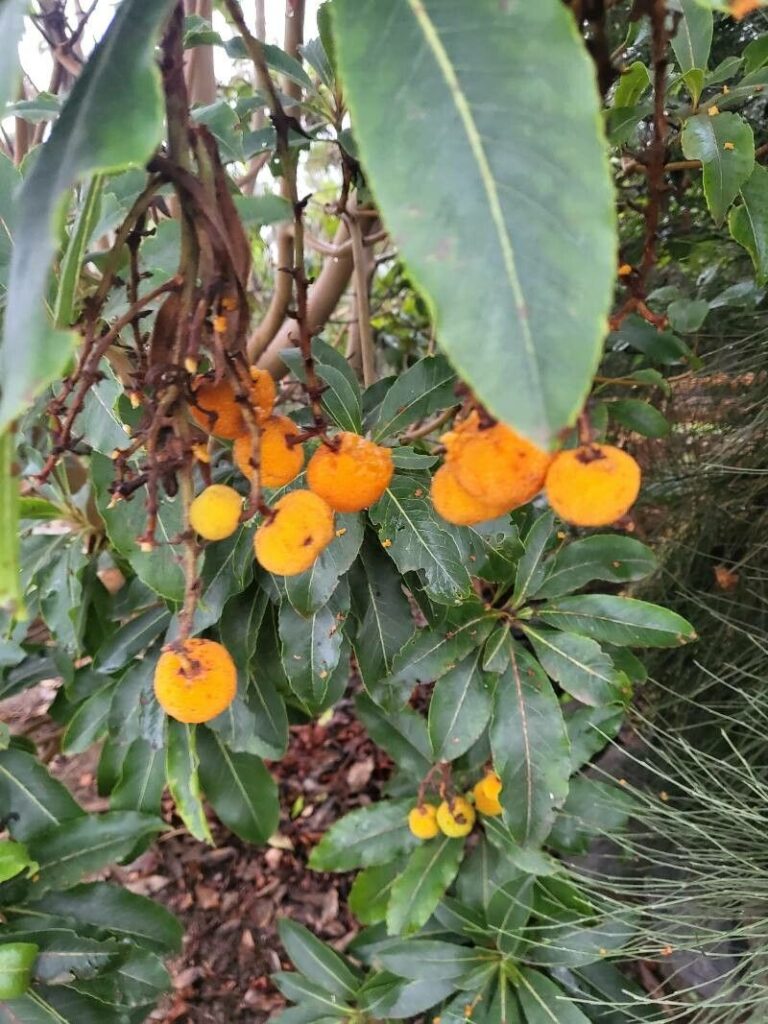
Propagating the Canary Island Strawberry Tree (Arbutus canariensis): A Gardener’s Guide
Introduction
Arbutus canariensis, also known as the Canary Island Strawberry Tree, is a captivating evergreen tree prized for its striking appearance. Its rough, reddish-brown bark peels away in strips, revealing a smoother, lighter underlayer. The glossy, dark green leaves provide a beautiful backdrop to the creamy white flowers that appear in dense panicles, followed by bright red, strawberry-like fruits. This visually stunning tree, native to the Canary Islands, has gained popularity among gardeners seeking an unusual and attractive addition to their landscapes. However, propagating Arbutus canariensis presents certain challenges, making successful cultivation a rewarding endeavor. Its relatively slow growth and specific environmental needs add to the mystique surrounding its propagation.
Seed Germination:
Currently, there are no known reliable methods for seed germination propagation of Arbutus canariensis. While seeds are produced, germination rates are notoriously low, and even with pre-treatment, success is inconsistent. Factors such as dormancy periods and fungal infections often hinder germination. Therefore, relying on seeds for large-scale propagation is not a practical approach for this species.
Cuttings:
Cuttings offer a more reliable method compared to seed propagation. However, it’s not straightforward.
Challenges: Arbutus canariensis cuttings are notoriously difficult to root. They are prone to fungal diseases and often suffer from a low success rate, requiring careful attention to sanitation and propagation techniques.
Practical Tips: Semi-hardwood cuttings taken in late summer or early autumn, treated with a rooting hormone, and placed in a humid environment with bottom heat, offer the best chance of success. Using a well-draining propagation mix and ensuring good airflow are crucial.
Rewards: Cuttings provide a faster method of propagation compared to other methods and guarantee the perpetuation of desirable traits from the parent plant. This is particularly useful for cultivars with unique characteristics.
Division:
Division is generally not a viable method for propagating Arbutus canariensis. The tree’s deep taproot system makes it difficult to successfully divide into smaller, independently viable plants without causing significant damage to the parent plant, often resulting in mortality.
Tissue Culture:
Tissue culture presents a potentially promising, albeit technically demanding, method for propagating Arbutus canariensis.
Challenges: Establishing aseptic conditions and identifying the optimal growth media and hormonal treatments are challenging steps. Tissue culture requires specialized equipment and expertise, making it a costly and time-consuming approach.
Practical Tips: Experienced tissue culture laboratories with experience in woody species are better suited for this task. The use of specific growth regulators and careful monitoring of contamination are crucial for success.
Rewards: Tissue culture allows for the rapid and large-scale production of genetically identical plants, ensuring uniformity and enabling the propagation of rare or desirable cultivars.
Conclusion:
Propagating Arbutus canariensis presents significant hurdles, with seed germination proving unreliable and division largely unfeasible. Cuttings offer a more realistic approach, though success requires patience and attention to detail. Tissue culture presents the most promising avenue for large-scale propagation, yet demands specialized skills and resources. The challenges inherent in propagating this species, however, only enhance the sense of achievement experienced when a cutting takes root or a tissue culture thrives. The unique beauty and character of the Canary Island Strawberry Tree make the effort a worthwhile undertaking for dedicated gardeners willing to dedicate the time and effort required. For those aspiring to propagate this species, perseverance, meticulous attention to sanitation and the right techniques, and perhaps a little bit of luck, are key elements for success.