
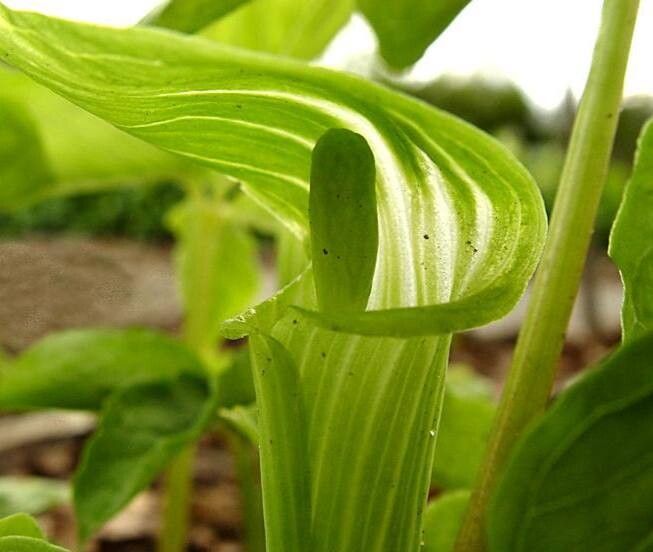
Propagating Jack-in-the-Pulpit: A Gardener’s Guide to Arisaema triphyllum
Introduction:
Arisaema triphyllum, commonly known as Jack-in-the-Pulpit, is a captivating native North American wildflower prized for its unique, hooded inflorescence. This striking plant, with its characteristic three-parted leaf, adds a touch of woodland mystique to gardens. Its popularity among gardeners stems from its intriguing form, relative ease of cultivation in appropriate conditions, and the rewarding experience of nurturing it from propagation. However, propagating Arisaema triphyllum presents unique challenges, making successful cultivation all the more satisfying.
Seed Germination:
Seed germination is a viable but challenging method for propagating Arisaema triphyllum. The primary challenge lies in the seed’s dormancy requirements. Jack-in-the-Pulpit seeds require a period of stratification – a cold, moist treatment that mimics the natural conditions experienced in the wild – before germination can occur.
Challenges: Inconsistent germination rates are common. Seeds need a specific temperature and moisture level for successful stratification. Improper stratification can lead to rotting or failure to germinate.
Practical Tips: Collect seeds as soon as they are ripe, ensuring they aren’t overly dry. Stratify seeds by mixing them with moist peat moss or vermiculite and placing them in a sealed container in the refrigerator at around 4°C (39°F) for 3-4 months. Sow stratified seeds in a well-draining seed-starting mix, barely covering them with soil. Maintain consistently moist but not waterlogged conditions. Germination can take several months, even a year or more.
Rewards: Seed propagation offers a significant advantage: genetic diversity. This leads to a wider array of possible variations in your plants, potentially leading to exciting new characteristics. Seed propagation can also lead to the development of larger populations within a garden over time, especially valuable for those wishing to establish a sizable patch of this beautiful plant.
Cuttings:
Currently, there are no known reliable methods for propagating Arisaema triphyllum from cuttings. The plant’s physiology doesn’t lend itself well to this form of vegetative propagation.
Division:
Division is the most reliable and commonly used method for propagating Arisaema triphyllum.
Challenges: Division should only be done during the plant’s dormant period (late fall or early spring). Care must be taken to divide the corms (modified underground stems) without damaging them, as this can lead to plant failure. Each division needs to include a sufficient amount of root structure for successful establishment. Improper division can lead to the decline or death of the mother plant and the newly divided plants.
Practical Tips: Carefully dig up the established plant, gently separating the corms. Ensure each division has at least one growth bud and a healthy root system. Replant the divisions immediately in a suitable location, maintaining the original soil depth. Water thoroughly after planting.
Rewards: Division provides a straightforward way to increase the number of plants quickly and efficiently. It maintains the exact genetic characteristics of the parent plant, ensuring the established desirable traits will carry over to the new plants.
Tissue Culture:
While tissue culture is theoretically possible, it is not a widely utilized or readily available method for Arisaema triphyllum propagation. Specialized labs and equipment are required.
Challenges: Establishing a reliable protocol for tissue culture propagation of Arisaema triphyllum is a complex and specialized undertaking, requiring significant expertise and resources. Contaminations and unpredictable growth rates pose significant challenges.
Practical Tips: This propagation method is generally best left to research institutions and experienced tissue culture laboratories.
Rewards: If successful, tissue culture offers the potential for the rapid multiplication of desirable genotypes of Arisaema triphyllum for conservation purposes or large-scale commercial production.
Conclusion:
Propagating Arisaema triphyllum presents a spectrum of challenges and rewards. While seed germination offers genetic diversity but requires patience and careful stratification, division provides a reliable, albeit less diverse, method for quick propagation. Cuttings and tissue culture, currently, are not viable options. The satisfaction of successfully nurturing this distinctive plant, whether from seed or through division, is richly rewarding, underscoring the effort invested in understanding its unique requirements. Aspiring propagators are encouraged to begin with division, mastering that method before attempting the more challenging seed germination process. The journey of cultivating Arisaema triphyllum is a testament to the enduring connection between humans and the natural world, rewarding those who persevere with the beauty and intrigue of this woodland gem.