
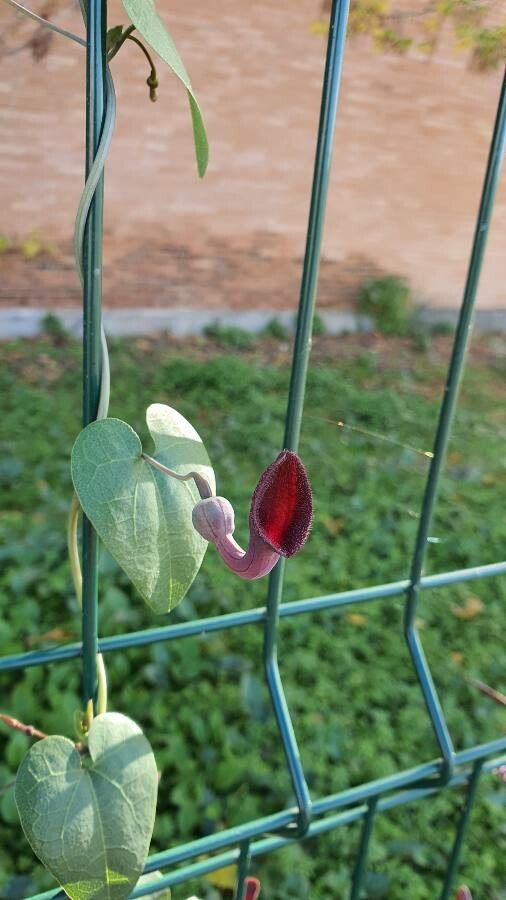
Propagating the Spanish Birthwort (Aristolochia baetica): A Gardener’s Guide
Introduction:
Aristolochia baetica, commonly known as the Spanish Birthwort, is a captivating climbing plant prized for its unusual, darkly veined, and somewhat sinister-looking flowers. Its unique blooms attract pollinators with a deceptive yet effective strategy, and its heart-shaped leaves provide appealing foliage. This makes it a popular choice among gardeners seeking something a little different. However, its propagation presents specific challenges, making successful cultivation all the more rewarding. Unlike some readily propagated vines, Aristolochia baetica requires careful consideration of various techniques.
Seed Germination:
Currently, there are no known reliable methods for seed germination propagation of Aristolochia baetica. While seeds may be produced, their viability and germination rate are extremely low, making this method impractical for most gardeners. Further research into specific seed treatments or germination conditions might yield positive results in the future.
Cuttings:
Cuttings offer a more reliable method for propagating Aristolochia baetica.
Challenges: Rooting cuttings can be slow and inconsistent. The success rate depends heavily on timing, technique, and environmental conditions.
Practical Tips: Semi-hardwood cuttings, taken in late summer or early autumn, show the best results. Use a sharp knife or shears to take 4-6 inch cuttings, removing lower leaves to prevent rotting. Dip the cut ends in a rooting hormone powder before planting in a well-draining, moist propagation mix (e.g., perlite and peat moss). Maintain high humidity using a humidity dome or plastic bag. A bottom heat mat can also improve rooting success. Be patient; rooting may take several weeks or even months.
Rewards: Cuttings offer a relatively quick way to obtain genetically identical plants to the parent plant, preserving desirable traits.
Division:
Division is a viable method, but its success hinges on the size and health of the parent plant.
Challenges: Aristolochia baetica does not readily lend itself to division. Disturbing the root system can be stressful for the plant, leading to reduced vigor or even death.
Practical Tips: Division should only be attempted on mature, well-established plants in spring or early summer. Dig up the plant carefully, ensuring minimal damage to the roots. Divide the root ball into sections, each containing several healthy stems and a substantial root system. Replant immediately, ensuring proper watering and avoiding excessive direct sunlight initially.
Rewards: Division provides a quicker way to propagate multiple plants than cuttings, but only suitable for established plants.
Tissue Culture:
Tissue culture offers the potential for large-scale propagation of Aristolochia baetica.
Challenges: This method requires specialized equipment, sterile conditions, and a thorough understanding of plant tissue culture techniques. It’s generally not a practical approach for home gardeners.
Practical Tips: Sterile techniques are crucial. Explants (small pieces of plant tissue) need to be carefully chosen and cultured on a nutrient-rich medium under controlled conditions. This is a complex process best left to laboratories or specialized nurseries.
Rewards: Tissue culture allows for the rapid production of a large number of genetically identical plants, valuable for commercial propagation and conservation efforts.
Conclusion:
Propagating Aristolochia baetica presents various challenges across different methods. Seed propagation is currently unreliable, while cutting propagation is a more feasible approach requiring patience and attention to detail. Division is limited by the plant’s size and health. Tissue culture offers the highest propagation potential but necessitates specialized expertise and equipment. The unique rewards of successfully cultivating this intriguing plant, however, justify the effort. The satisfaction of nurturing a cutting into a thriving vine, adorned with its unusual blooms, is a testament to perseverance and horticultural skill. For aspiring propagators, remember that patience, attention to detail, and the right techniques are key to success. Don’t be discouraged by setbacks – the beauty of the Spanish Birthwort makes the challenges worthwhile.