
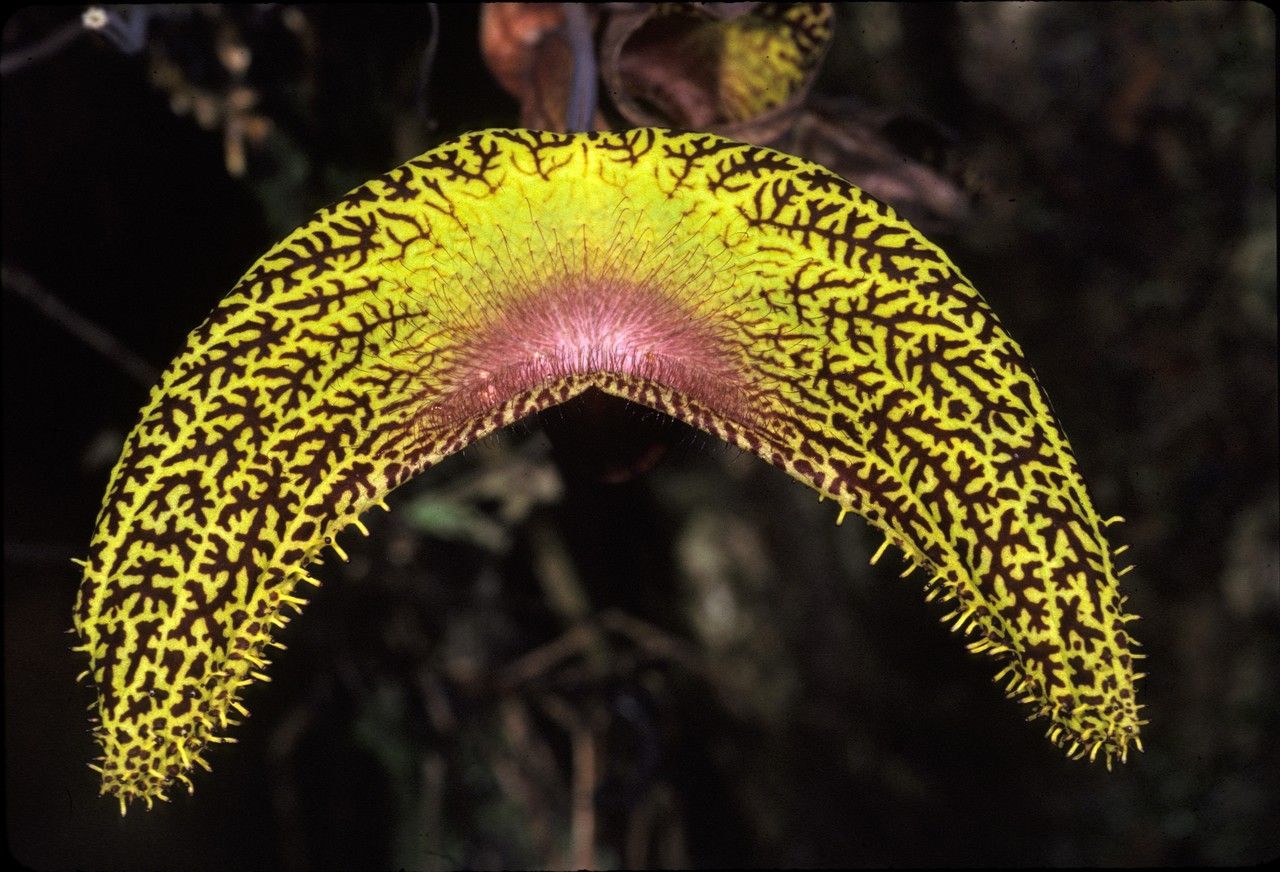
Propagating the Giant Dutchman’s Pipe: A Guide to Aristolochia cornuta
Introduction:
Aristolochia cornuta, commonly known as the Giant Dutchman’s Pipe, is a breathtaking vine renowned for its enormous, uniquely shaped flowers. These striking blooms, resembling a long, curved pipe, often reach lengths exceeding 30cm and boast a captivating blend of deep maroon and yellow-green hues. Its dramatic appearance makes it a highly sought-after plant among collectors and gardeners who appreciate its unusual beauty and the buzz surrounding its cultivation. However, propagating this captivating species presents notable challenges, making successful propagation a rewarding accomplishment. A key aspect to consider is that Aristolochia cornuta is a slow-growing plant, adding to the patience required for its propagation.
Seed Germination:
Currently, there are no known reliable methods for seed germination propagation of Aristolochia cornuta. While seed production occurs, the germination rate is exceptionally low, rendering this method impractical for most growers. Further research into specific germination triggers may be necessary to unlock this potential pathway.
Cuttings:
Cuttings offer a more promising avenue for propagating Aristolochia cornuta.
Challenges: The success rate of cuttings depends greatly on timing and technique. Hardwood cuttings taken in late autumn or early winter show some promise, but the rooting process is slow and success is not guaranteed. Softwood cuttings taken in spring or summer generally fail to root.
Practical Tips: Use semi-hardwood cuttings taken from the current year’s growth, approximately 10-15cm long. Remove lower leaves, dip the cut ends in rooting hormone, and plant in a well-draining propagation mix (e.g., perlite and peat moss mixture). Maintain high humidity (using a propagator or plastic bag) and warmth (around 24°C). Patience is key; rooting can take several weeks or even months.
Rewards: Cuttings provide a relatively straightforward way to multiply existing plants while ensuring that the new plants retain the characteristics of the mother plant.
Division:
Division of established Aristolochia cornuta plants is also possible but should be approached with caution.
Challenges: Aristolochia cornuta has a relatively fragile root system, making it susceptible to damage during division. This can significantly impact the survival rate of the divided portions.
Practical Tips: Division should only be attempted on mature, well-established plants. Carefully dig up the plant, gently separating the root ball into several sections, ensuring each division has sufficient roots and stems. Replant each division immediately in a well-prepared soil mix, maintaining similar growing conditions to the original plant.
Rewards: Similar to cuttings, division provides a faster mode of propagation compared to other methods if successful. Genetic uniformity of the mother plant is also preserved.
Tissue Culture:
Tissue culture offers a potentially powerful, though complex, method for propagating Aristolochia cornuta.
Challenges: Establishing a reliable tissue culture protocol for this species requires significant expertise and specialized laboratory equipment. Contamination is a constant risk, and the development of optimal media formulations for growth and rooting can be challenging.
Practical Tips: This method is best left to experienced tissue culture laboratories. Sterile conditions, appropriate culture media, and skilled handling are crucial for success.
Rewards: Tissue culture offers the potential for mass propagation and disease elimination.
Conclusion:
Propagating Aristolochia cornuta presents unique challenges regardless of the chosen method. While seed germination is currently unreliable, cuttings and division offer viable alternatives, albeit with relatively low success rates. Tissue culture represents a potential solution for large-scale propagation, but it demands significant resources and expertise. The rewards, however, are substantial. The triumphant cultivation of this remarkable plant, born from a cutting, a divided section, or even a tissue culture, provides an immense feeling of accomplishment, making the effort and patience involved well worth the exquisite beauty ultimately achieved. For aspiring propagators, perseverance, meticulous attention to detail, and a willingness to learn from both successes and failures are crucial ingredients for success. Remember to research diligently and start small, focusing on perfecting each technique before attempting large-scale propagation.