
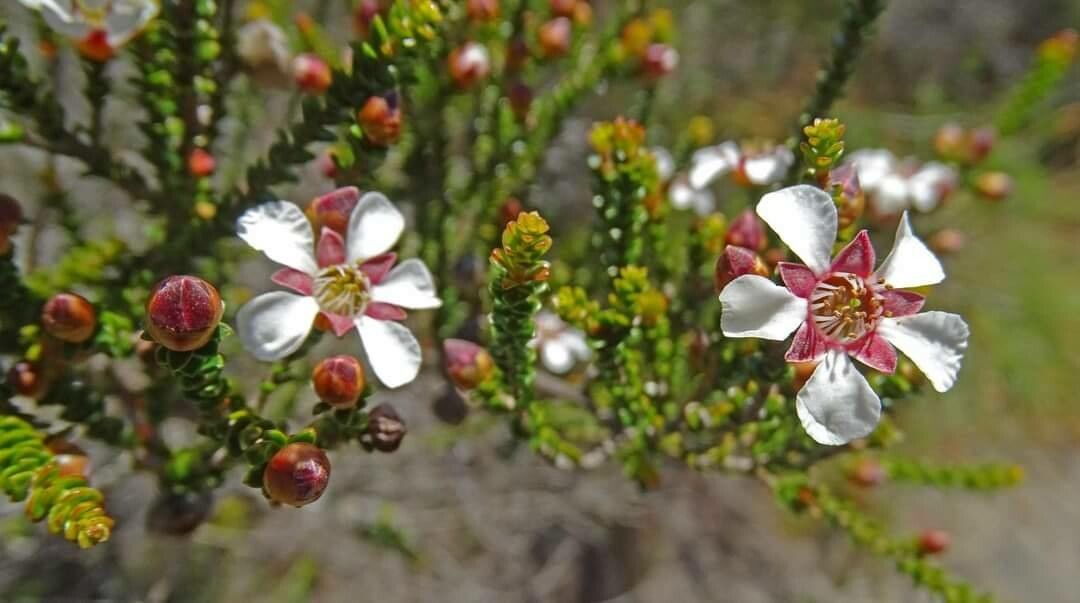
Propagating Baeckea brevifolia: A Gardener’s Guide to the Heath Myrtle
Baeckea brevifolia, commonly known as the Heath Myrtle, is a charming Australian native shrub prized for its delicate, needle-like leaves and profusion of small, white flowers. Its compact habit and drought tolerance make it a popular choice for rock gardens, borders, and even container gardening. However, propagating this beautiful plant can present some unique challenges. Its success often hinges on understanding its specific needs and employing the right technique.
Seed Germination:
Currently, there are no known reliable methods for seed germination propagation of Baeckea brevifolia. While the plant does produce seeds, germination rates are extremely low, even under optimal conditions. Further research is needed to determine if factors such as specific light requirements, temperature stratification, or the use of growth hormones could improve germination success.
Cuttings:
Cuttings represent a more reliable method for propagating Baeckea brevifolia. However, success isn’t guaranteed and requires patience and attention to detail.
Challenges: The main challenge lies in achieving successful rooting. Baeckea brevifolia cuttings can be slow to root, with only a moderate success rate. Using semi-hardwood cuttings (taken from new growth that has partially matured) tends to yield better results than softwood cuttings.
Practical Tips: Take cuttings approximately 10-15 cm long, removing lower leaves to prevent rot. Dip the cut ends in a rooting hormone powder before planting them in a well-draining propagation mix (e.g., a mix of perlite and vermiculite). Maintain consistently moist (but not waterlogged) conditions and high humidity, either by placing a plastic bag over the cuttings or using a humidity dome. Bottom heat can also significantly improve rooting success. Keep the cuttings in a shaded location to prevent desiccation.
Rewards: Cuttings offer a relatively straightforward method to increase the number of plants, preserving the desirable traits of the parent plant.
Division:
Division is generally not a feasible method for propagating Baeckea brevifolia. The plant’s compact root system and fibrous nature make it difficult to divide without causing significant damage, resulting in poor survival rates for the divided sections.
Tissue Culture:
Tissue culture offers the potential for large-scale propagation of Baeckea brevifolia, bypassing the challenges associated with seed germination and cuttings. However, it requires specialized equipment, a sterile environment, and a nuanced understanding of plant tissue culture techniques.
Challenges: Establishing a successful tissue culture protocol for Baeckea brevifolia requires considerable expertise and experimentation to determine the optimal media composition, growth regulators, and sterilization procedures. The cost of equipment and materials can also be a significant barrier.
Practical Tips: This method is best suited to experienced tissue culturists. Research on suitable media, plant growth regulators, and sterilization methods specific to Baeckea brevifolia would be crucial.
Rewards: Tissue culture allows for rapid and large-scale propagation, preserving genetic uniformity, and provides opportunities for disease elimination.
Conclusion:
Propagating Baeckea brevifolia presents unique challenges across all methods. While seed germination currently proves unreliable, cuttings offer a reasonably achievable method for the home gardener with patience and attention to detail. Division is largely impractical, and tissue culture requires sophisticated expertise. Ultimately, the rewards of successfully cultivating this charming plant—whether through cuttings or more advanced techniques—are significant. The satisfaction gained from nurturing a cutting from a small sprig to a flourishing shrub surpasses the difficulties, offering a deeply rewarding experience for the dedicated propagator. Don’t be discouraged by initial setbacks; persistent experimentation and attention to the specific needs of Baeckea brevifolia will ultimately lead to success.