
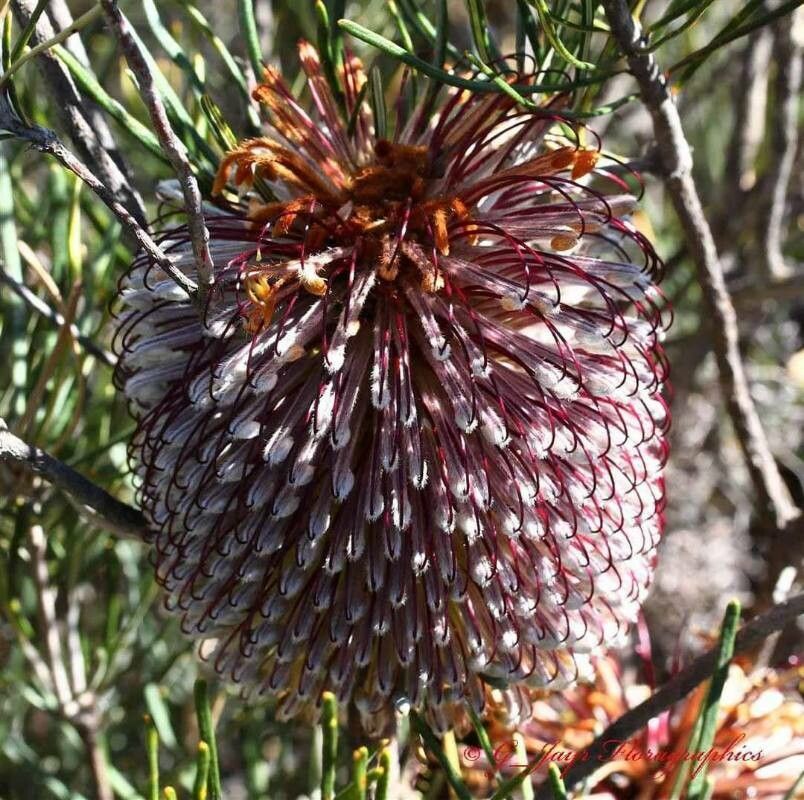
Propagating Banksia grossa: A Gardener’s Guide to the Big Banksia
Introduction:
Banksia grossa, commonly known as the Big Banksia or Woolly Banksia, is a striking Australian native shrub prized for its large, attractive flower spikes and its tolerance of harsh conditions. Its coarse, greyish-green foliage adds textural interest to any garden, making it popular among gardeners seeking drought-tolerant, low-maintenance landscaping options. However, its propagation isn’t always straightforward, demanding the understanding of specific techniques depending on the chosen method. This article explores several techniques for propagating Banksia grossa and their associated challenges and rewards.
Seed Germination:
Seed germination is a viable method for Banksia grossa propagation, but it presents several challenges. Banksia grossa seeds possess a hard seed coat, requiring stratification to break dormancy. This process mimics the natural conditions seeds experience before germination.
Challenges: Inconsistent germination rates are common. Seed viability can vary significantly depending on seed source and storage conditions. Fungal diseases can also affect seedlings.
Practical Tips: Pre-sowing treatment involves soaking seeds in boiling water for a few seconds, then allowing them to cool and soak overnight. Scarification (mechanically weakening the seed coat) can also improve germination rates. Sow seeds in a well-drained seed-raising mix, keeping moist but not waterlogged. A period of warm stratification (around 20-25°C) followed by a period of cool stratification (around 10-15°C) is often beneficial. Choose a sunny location that is well ventilated and protected from frost.
Rewards: Seed-grown Banksia grossa exhibits high genetic diversity, leading to a greater range of plant characteristics. Seed propagation also allows for large-scale propagation, making it a cost-effective method for commercial growers.
Cuttings:
Cuttings are a less common but potentially successful method for propagating Banksia grossa.
Challenges: Banksia grossa cuttings are notoriously difficult to root. The success rate is generally low, even with the application of rooting hormones. The woody nature of the stems increases the difficulty of rooting.
Practical Tips: Semi-hardwood cuttings taken from new growth in spring to early autumn appear to be most likely to root. Employ rooting hormone and a well-draining propagation medium. Consider using a humidity dome or propagation tray to maintain higher humidity levels.
Rewards: Faster establishment compared to plants grown from seed. The resulting plants are genetically identical to the parent plant, preserving desirable traits.
Division:
Division is generally not a practical method for propagating Banksia grossa. This is due to the plant’s taproot system, which makes dividing the plant difficult without causing significant damage.
Tissue Culture:
Tissue culture offers the potential for mass propagation of Banksia grossa, avoiding some of the challenges associated with seed and cutting propagation.
Challenges: This is a specialized technique requiring a controlled laboratory environment and expertise in sterile tissue culture methods. The establishment of clean and actively growing cultures can be challenging.
Practical Tips: Sterile laboratory equipment and techniques are essential. Choosing the right media and growth regulators is crucial for successful propagation.
Rewards: Large-scale propagation with precise genetic control is possible. It allows for the rapid multiplication of desirable cultivars.
Conclusion:
Propagating Banksia grossa presents distinct challenges depending on the chosen method. Seed germination offers the potential for large-scale propagation and genetic diversity but requires patience and understanding of stratification techniques. Cuttings provide a faster route to obtaining plants, but are less reliable. Tissue culture is the most effective method for large scale production. Division is not recommended.
The immense satisfaction of successfully cultivating a Banksia grossa from seed, cutting, or via tissue culture is amplified by the inherent difficulties. Seeing a tiny seedling emerge or a cutting successfully root is a rewarding experience that speaks to the gardener’s dedication and skill. Choosing the right propagation method depends on your resources and experience level. For beginners, starting with seeds (with appropriate pre-treatment) may be the most accessible route, while experienced producers may wish to explore the potential of tissue culture for more efficient propagation. Persistence and a knack for patience are key to success when working with this beautiful iconic Australian plant.