
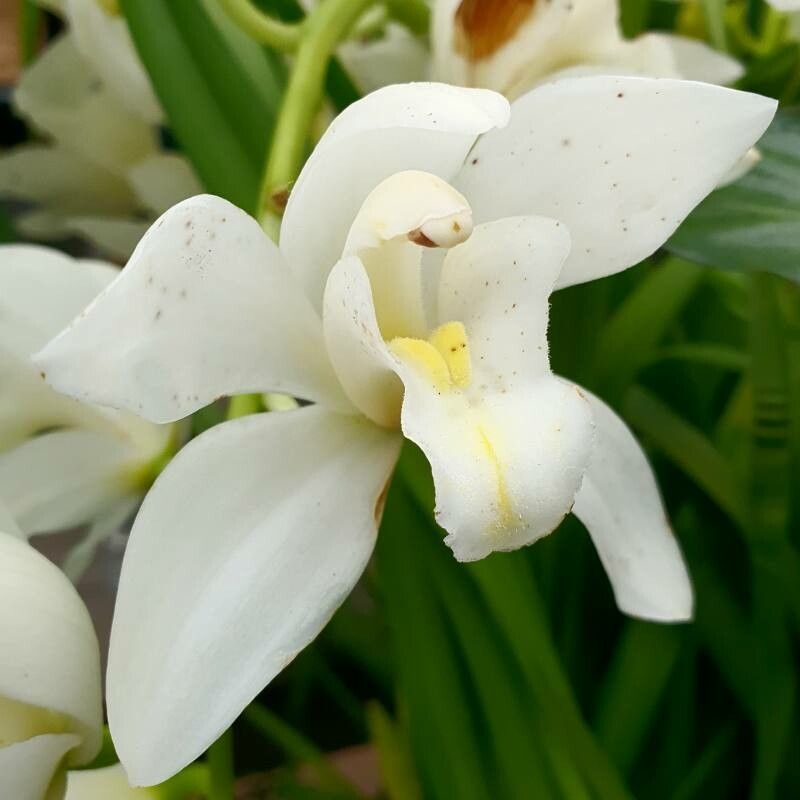
Propagating Calanthe amboinensis: Unveiling the Secrets of the "Ambon Calanthe"
Introduction:
Calanthe amboinensis, commonly known as the Ambon Calanthe, is a captivating terrestrial orchid native to Southeast Asia and the Pacific Islands. Characterized by its striking, often variegated foliage and delicate, usually white or pale-colored flowers, it holds a special place among orchid enthusiasts. Its relatively easy cultivation compared to some epiphytic orchids contributes to its popularity, yet propagating it successfully presents unique challenges. This article will explore various propagation methods for Calanthe amboinensis, highlighting their viability, challenges, and potential rewards.
Seed Germination:
Currently, there are no known reliable methods for seed germination propagation of Calanthe amboinensis. Orchid seeds are notoriously tiny and lack endosperm, requiring symbiotic relationships with specific mycorrhizal fungi for successful germination. Establishing these relationships in a controlled environment is exceptionally difficult, limiting the viability of seed propagation for this species.
Cuttings:
Propagating Calanthe amboinensis via cuttings is also generally unsuccessful. Unlike some other plants, Calanthe amboinensis does not readily produce adventitious roots from stem or leaf cuttings. Attempts at propagation through this method have typically yielded poor results.
Division:
Division is the most reliable and widely practiced method for propagating Calanthe amboinensis. This technique involves carefully separating established plants into smaller divisions, each containing its own roots and pseudobulbs (or rhizomes).
- Challenges: Dividing Calanthe amboinensis requires careful handling to prevent damage to the delicate roots and pseudobulbs. Over-division can weaken the plants, leading to poor establishment and increased susceptibility to disease.
- Practical Tips: The best time to divide is during the dormant period (typically after flowering). Use a sharp, sterilized knife or shears to divide the plant into sections, ensuring each division has several healthy pseudobulbs and a healthy root system. Plant the divisions immediately in a well-draining potting mix.
- Rewards: This method provides a relatively simple and highly successful way of increasing the number of plants. It also preserves the genetic characteristics of the mother plant.
Tissue Culture:
Tissue culture offers a potential route for large-scale propagation of Calanthe amboinensis. This sterile laboratory technique involves growing plantlets from small pieces of plant tissue on a nutrient-rich medium.
- Challenges: Tissue culture requires specialized equipment, aseptic techniques, and expertise in plant tissue culture protocols. Developing an effective protocol for Calanthe amboinensis might require considerable experimentation. Contamination is a significant risk.
- Practical Tips: Finding a reputable laboratory specializing in orchid propagation is crucial. Samples of healthy plant material should be sent for culture, specifying the desired outcome.
- Rewards: Tissue culture offers the possibility for rapid multiplication and the potential for disease-free plants. It also allows for the preservation of rare or endangered genotypes.
Conclusion:
Propagating Calanthe amboinensis presents a unique set of challenges. While seed and cutting propagation prove largely ineffective for this species, division offers a reliable, albeit labor-intensive, method. Tissue culture represents a powerful tool for future large-scale propagation, though access to specialized facilities is necessary. The satisfaction of successfully cultivating Calanthe amboinensis, whether through division or advanced technologies, comes from mastering the intricacies of its propagation needs. The beauty of its flowers is well worth the effort. Aspiring propagators should start with the simpler division method and, for large-scale production, consider investing in or collaborating with tissue culture laboratories. The journey to successfully growing this captivating orchid is a rewarding one, reflecting the dedicated care and patience involved in cultivating these beautiful plants.