
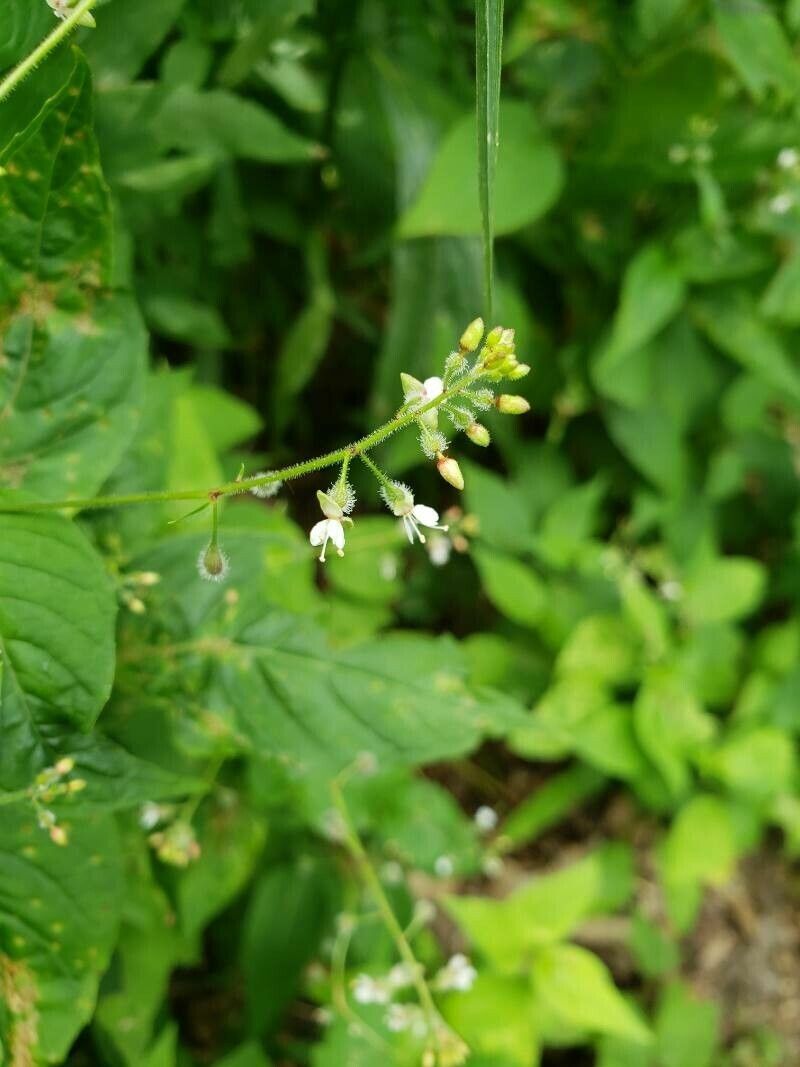
Propagating Circaea canadensis: A Guide to Growing Enchanter’s Nightshade
Introduction:
Circaea canadensis, commonly known as Enchanter’s Nightshade, is a charming, delicate woodland plant prized for its airy, white or pale pink flowers and its attractive, opposite, ovate leaves. Its understated beauty and tolerance of shade make it a popular choice among gardeners seeking to add texture and interest to shaded areas. While not overly demanding, propagating Circaea canadensis presents some unique challenges, rendering it more rewarding to cultivate for the seasoned gardener. Its propagation is largely vegetative due to the difficulties associated with seed germination.
Seed Germination:
Currently, there are no known reliable methods for seed germination propagation of Circaea canadensis. While seeds may be produced, their germination rate is notoriously low, and successful germination under controlled conditions remains elusive. Further research into specific stratification techniques and germination triggers might yield results, but currently, seed propagation is not a practical method.
Cuttings:
Propagating Circaea canadensis via cuttings offers a more promising route.
Challenges: The success rate is moderately low, and cuttings require consistently high humidity and moisture to prevent wilting and desiccation.
Tips: Softwood cuttings taken in early summer, after active growth has begun, show the best results. Prepare cuttings about 4-6 inches long, removing lower leaves to prevent rotting. Dip cuttings in rooting hormone to improve success. Plant them in a mix of perlite and peat moss to maintain high humidity. Place them under a humidity dome or within a propagator to maintain consistent humidity levels. Mist regularly.
Rewards: Cuttings offer a reliable, albeit somewhat challenging, way to increase the number of plants, providing genetically identical offspring.
Division:
Division is the most straightforward and reliable method for propagating Circaea canadensis.
Challenges: The relatively small size of the plant limits the number of divisions possible per plant. Divisions must be handled carefully to avoid damaging the delicate roots.
Tips: The best time to divide is in spring or early autumn. Carefully lift the entire plant, being mindful not to disturb the roots more than necessary. Divide the root system into smaller sections, each with several healthy shoots and roots. Replant the divisions immediately in moist, well-draining soil, maintaining a similar depth to their original planting.
Rewards: Division is a relatively quick and easy way to propagate the plant. It offers high success rates and is ideal for home gardeners.
Tissue Culture:
Tissue culture propagation of Circaea canadensis is currently unexplored in published literature. While theoretically possible, it would require specialized laboratory equipment and expertise, rendering it impractical for the average home gardener.
Conclusion:
Propagating Circaea canadensis presents both challenges and rewards. While seed germination remains unreliable, both cuttings and division offer viable options, with division being the most straightforward and rewarding method for most gardeners. While the success of cuttings may require patience and attention to detail, the satisfaction of coaxing a tiny cutting into a thriving plant is immense. The delicate beauty of Enchanter’s Nightshade and the effort involved in its propagation combine to create a unique and deeply satisfying gardening experience. Beginning with division and progressing to cuttings, aspiring propagators will find the rewards well worth the patient effort.