
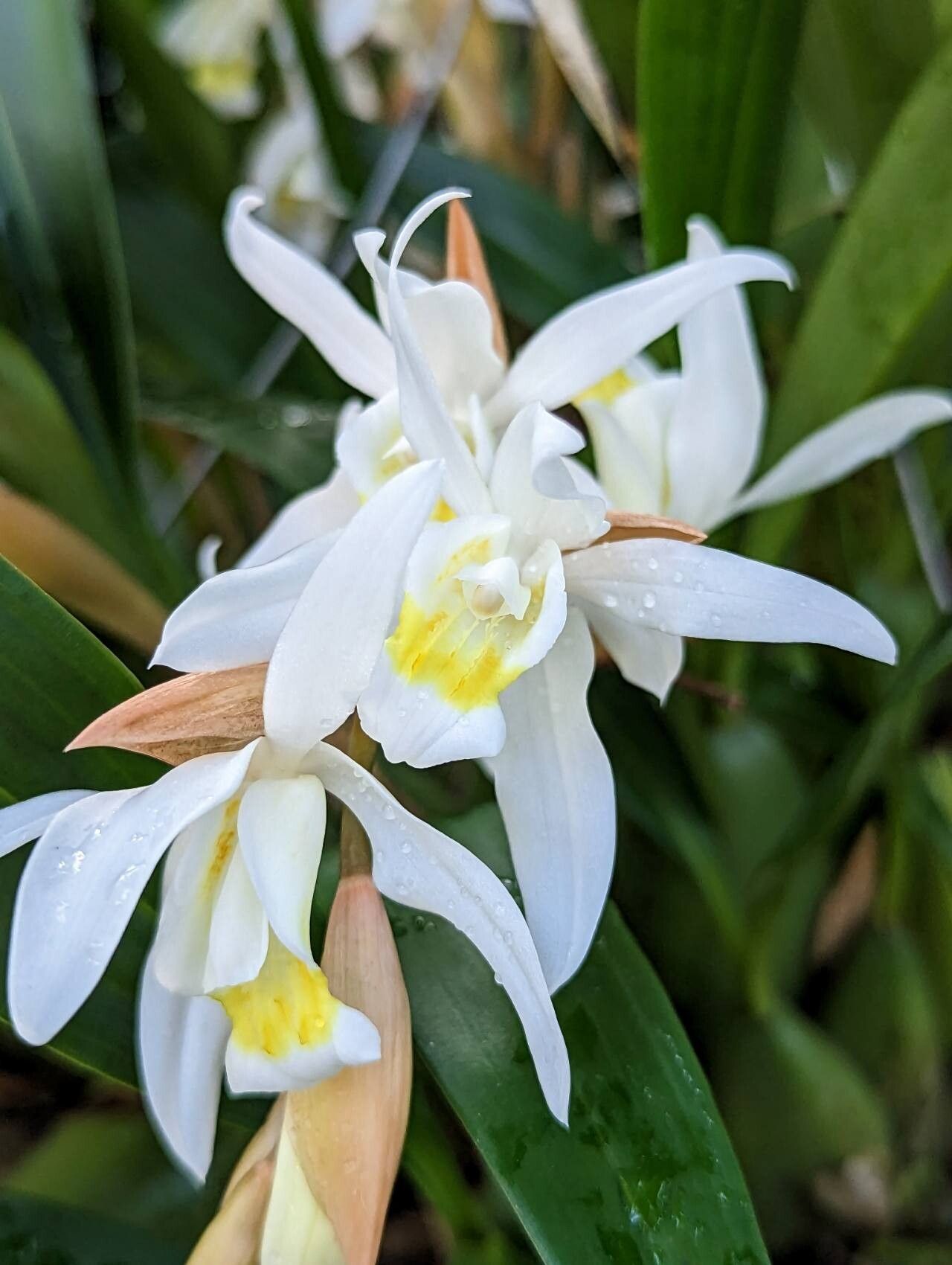
Propagating Coelogyne nervosa: A Gardener’s Guide to the Nervy Orchid
Introduction:
Coelogyne nervosa, sometimes called the “Nerve-veined Coelogyne,” is a captivating epiphytic orchid native to the Himalayas and Southeast Asia. This species is prized for its gracefully arching pseudobulbs, slender leaves, and delicate, fragrant flowers exhibiting prominent veins – hence its common name. Its relatively compact size and enchanting blooms make it a popular choice among orchid enthusiasts, though propagation can present some unique challenges. Successfully propagating Coelogyne nervosa offers a rewarding experience for those prepared to invest time and effort.
Seed Germination:
Currently, there are no known reliable methods for seed germination propagation of Coelogyne nervosa. Orchid seeds are notoriously tiny and require specific symbiotic mycorrhizal fungi for successful germination, a condition difficult to replicate in a home environment. While germination in a laboratory setting with sterile techniques and fungal inoculation might be possible, this is beyond the scope of most hobbyist growers.
Cuttings:
Cuttings are not a viable method for propagating Coelogyne nervosa. This orchid doesn’t readily produce adventitious roots from stem or leaf cuttings and lacks the required regenerative capacity.
Division:
Division is the most practical and reliable method for propagating Coelogyne nervosa. This involves carefully separating mature plants into individual sections, each with its own pseudobulbs and roots.
Challenges: The key challenge is ensuring each division possesses sufficient root mass and healthy pseudobulbs to support independent growth. Dividing the plant too aggressively can weaken or kill the sections.
Practical Tips: The best time to divide is during the active growing season after flowering. Use a sharp, sterile knife or pruning shears to sever the rhizome (root-like stem) between pseudobulbs. Ensure each division has a minimum of three mature pseudobulbs and several healthy roots. Plant the divisions immediately in a well-draining orchid potting mix.
Rewards: Division offers a relatively fast and straightforward method for increasing the number of plants, maintaining the exact genetic characteristics of the parent plant.
Tissue Culture:
Tissue culture offers the potential for large-scale propagation of Coelogyne nervosa, producing numerous clones from a small amount of plant material.
Challenges: Tissue culture requires specialized equipment, a sterile laboratory environment, and a high level of technical expertise. It’s a more complex and costly method than division. Media formulation and sterilization are critical for success.
Practical Tips: For hobbyists, outsourcing this method to a professional laboratory is usually the most practical approach. This ensures sterile conditions and increases the chance of successful propagation.
Rewards: Tissue culture allows for mass propagation, generating a large number of genetically identical plants quickly for commercial purposes or conservation efforts.
Conclusion:
While seed germination and cuttings are not feasible methods for propagating Coelogyne nervosa at home, division offers a satisfying and relatively straightforward technique for hobbyists. Tissue culture presents a viable option for large-scale propagation but requires access to specialized resources. The challenges involved in propagating this elegant orchid are balanced by the deep satisfaction of successfully nurturing these divisions or receiving healthy plantlets from a tissue culture lab to maturity. The rewarding journey of cultivating Coelogyne nervosa, from a small division to a thriving plant, serves as a testament to the perseverance and dedication of the orchid grower. Don’t be discouraged by the difficulties; the beauty and fragrance of your successfully grown Coelogyne nervosa will be ample reward.