
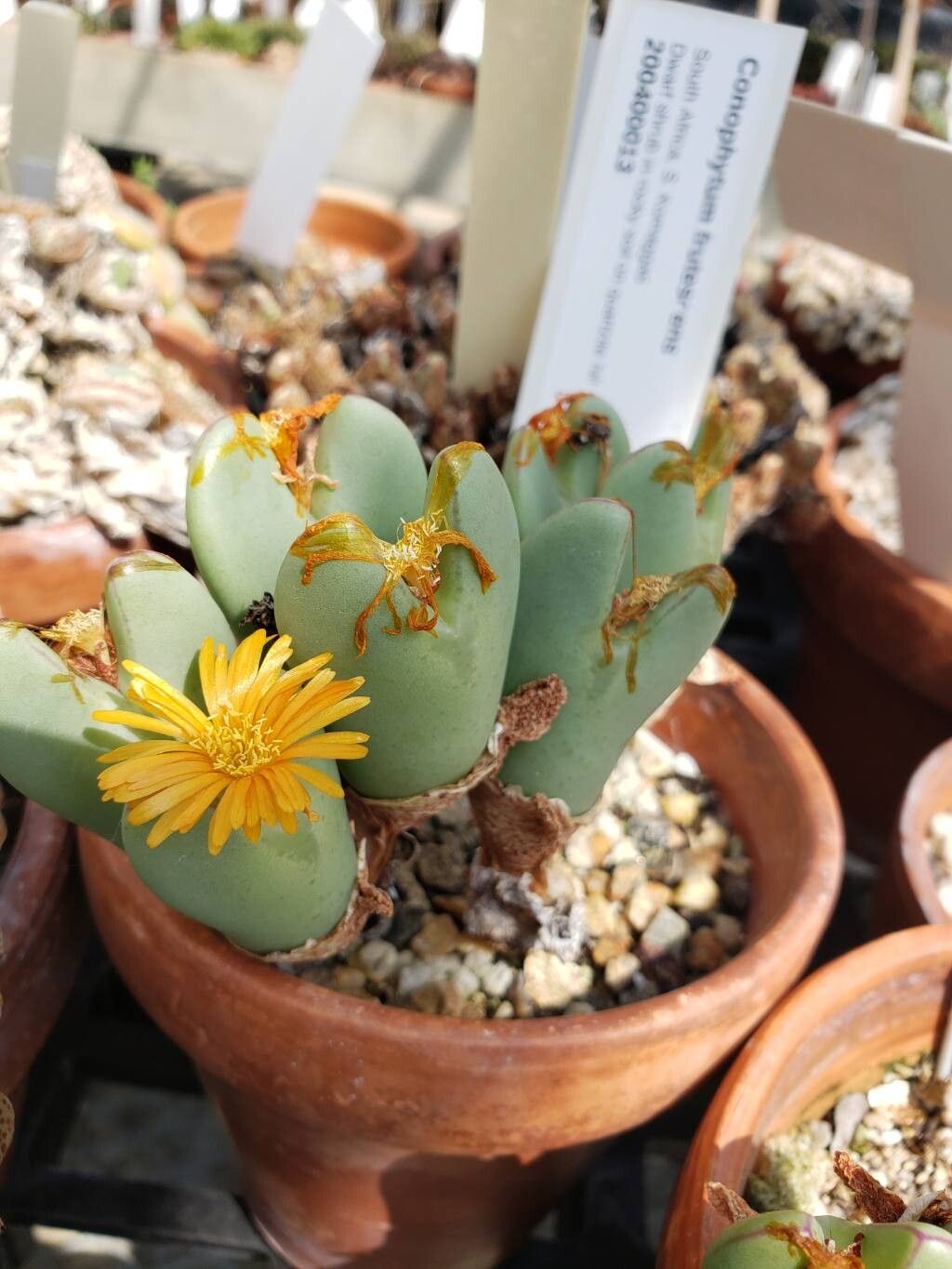
Multiply Your Miniature Marvels: Conophytum frutescens Propagation Demystified
Conophytum frutescens, with its charming button-like forms and vibrant autumn flowers, has captivated succulent enthusiasts for decades. If you’re looking to expand your collection of these miniature marvels, propagation is a rewarding endeavor. While it might seem intimidating at first, armed with the right knowledge and a sprinkle of patience, you’ll be surprised how easily you can multiply your Conophytum frutescens.
Demystifying the Methods
1. Seed Propagation: A Journey into Patience
For those who enjoy the magic of witnessing life sprout from tiny beginnings, seed propagation is an exciting route. While it requires more patience, the potential for variety is remarkable.
- Sourcing Seeds: Purchase seeds from reputable sellers specializing in succulents or cacti for optimal germination rates.
- Sowing Time: The best time for sowing is during the cooler months when Conophytum frutescens actively grows. Aim for spring or early fall.
- Creating the Ideal Nursery: Use a well-draining seed-starting mix (equal parts pumice, perlite, and coco coir work well) in shallow trays. Scatter seeds on the surface and lightly press them down without burying.
- Moisture and Light: Mist the soil regularly to keep it consistently moist but not soggy. Place the tray in a brightly lit area, but avoid direct sunlight.
- Germination: Patience is key! Germination can take anywhere from a few weeks to a couple of months. Once seedlings appear, gradually reduce watering frequency.
2. Division: Separating for Success
As Conophytum frutescens matures, it forms clusters of bodies (commonly called “heads”). Dividing these clumps is a straightforward method to propagate new plants.
- Timing is Key: The best time to divide is in early spring, just as new growth emerges after the winter dormancy.
- Gentle Separation: Carefully remove the plant from its pot and gently loosen the soil around the roots. Identify clusters of bodies that can be separated with minimal root disturbance.
- Potting Up the Divisions: Plant each division in its own pot using a well-draining succulent mix. Water sparingly until established.
3. Leaf Cuttings: From Body to Baby Plant
Though less common, leaf cuttings offer another avenue for propagating Conophytum frutescens.
- Selecting Healthy Leaves: Choose plump, healthy bodies for successful propagation.
- Careful Removal: Gently twist the body from the parent plant, ensuring a clean break. Allow the cutting to callus for a few days before proceeding.
- Encouraging Root Development: Place the callused body on a bed of slightly moist perlite or coarse sand.
- Patience is Paramount: Keep the cutting in a brightly lit area, misting occasionally. Rooting can take several weeks to months. Once roots develop, transfer the new plant to a well-draining succulent mix.
Nurturing Your New Additions
Regardless of the propagation method you choose, successful establishment relies on providing the right environment. Conophytum frutescens thrives in bright indirect light, well-draining soil, and infrequent watering. With minimal care, your new plants will flourish and eventually reward you with their delightful blooms.
Propagation is a journey of patience and observation. Embrace the process, learn from your experiences, and soon you’ll have a flourishing miniature landscape of Conophytum frutescens to admire.