
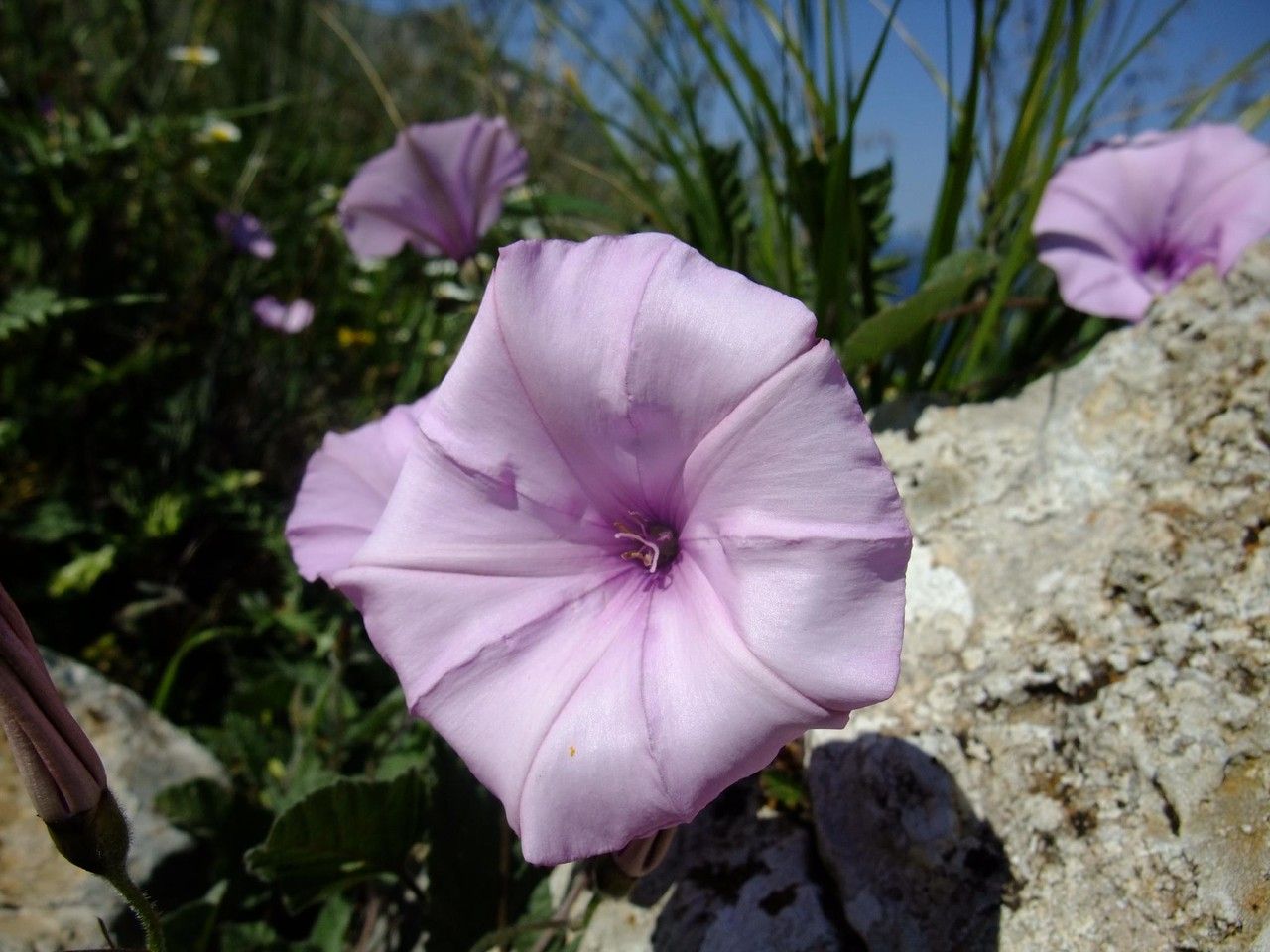


Propagating Convolvulus thunbergii: A Gardener’s Guide to the Thunberg’s Bindweed
Introduction:
Convolvulus thunbergii, commonly known as Thunberg’s bindweed or Trailing Convolvulus, is a charming, mat-forming perennial vine prized for its delicate, trumpet-shaped flowers and trailing habit. Its silvery-grey foliage adds textural contrast to gardens, making it a popular choice for groundcover, hanging baskets, or cascading over walls. However, while its aesthetic appeal is undeniable, propagating this species presents unique challenges. Unlike some easily propagated plants, Convolvulus thunbergii requires a bit more finesse and understanding to successfully multiply. This article explores various propagation methods, highlighting their viability and offering practical advice.
Seed Germination:
Currently, there are no known reliable methods for seed germination propagation of Convolvulus thunbergii. While the plant does produce seeds, their germination rate is extremely low, if at all viable under typical gardening conditions. Further research into specific germination requirements, including potential stratification techniques, is necessary before seed propagation can be considered a feasible method.
Cuttings:
Cuttings offer a more reliable method of propagating Convolvulus thunbergii than seed germination.
Challenges: Rooting cuttings can be slow and inconsistent. The success rate depends heavily on factors such as timing, the hormone used and the growing medium.
Practical Tips: Take semi-hardwood cuttings (partially matured stems) in late spring or early summer. Use a sharp knife or shears to make clean cuts, approximately 4-6 inches long, below a leaf node. Remove lower leaves to prevent rotting. Dip the cut end in rooting hormone powder. Plant the cuttings in a well-draining, moist propagation mix (e.g., perlite and peat moss) and cover with a humidity dome or plastic bag to maintain high humidity. Place in a bright, indirect light location. Rooting can take several weeks to months.
Rewards: Cuttings reliably produce genetically identical plants to the mother plant, preserving desirable traits. This method is suitable for small-scale propagation of specific cultivars.
Division:
Division is a relatively straightforward method for propagating established Convolvulus thunbergii plants.
Challenges: This method is only viable when the plant has become well-established and sufficiently large to allow separation without damaging the parent plant or the divisions severely.
Practical Tips: The best time to divide Convolvulus thunbergii is during the spring or early autumn when the plant is actively growing but not flowering profusely. Gently lift the entire plant from the ground, carefully separating the root system into smaller clumps, each with its own roots and several stems. Replant the divisions immediately, ensuring each division has sufficient roots and stems to establish itself. Water thoroughly after planting.
Rewards: This method is relatively quick and easy, producing multiple plants from a single mature plant. Increases the size of the planted area of the species.
Tissue Culture:
Tissue culture offers the highest potential for large-scale propagation and disease-free plants but requires specialized equipment, expertise, and a controlled environment.
Challenges: Establishing a successful tissue culture protocol for Convolvulus thunbergii requires significant scientific expertise and resources. Sterile conditions are crucial to prevent contamination.
Practical Tips: This method is best tackled by experienced tissue culture specialists. It involves establishing plantlets from small pieces of plant tissue grown in a sterile nutrient medium.
Rewards: High propagation rate, disease-free plants, and genetic uniformity. This is the most efficient method for large-scale commercial propagation.
Conclusion:
Propagating Convolvulus thunbergii presents distinct challenges regardless of the chosen method. While seed propagation is currently unreliable, cuttings and division offer viable options for gardeners. Tissue culture presents the most efficient but also the most complex method. The success of any method depends strongly on attention to detail, precise technique, and patience. The reward, however, is the immense satisfaction of nurturing these delicate plants from cuttings or divisions—a testament to your gardening skills and a source of pride as you witness the cascading beauty of your successfully propagated Thunberg’s bindweed. Do not be discouraged by initial setbacks. Persistence and a keen eye for detail are crucial for success in propagating this rewarding plant.