
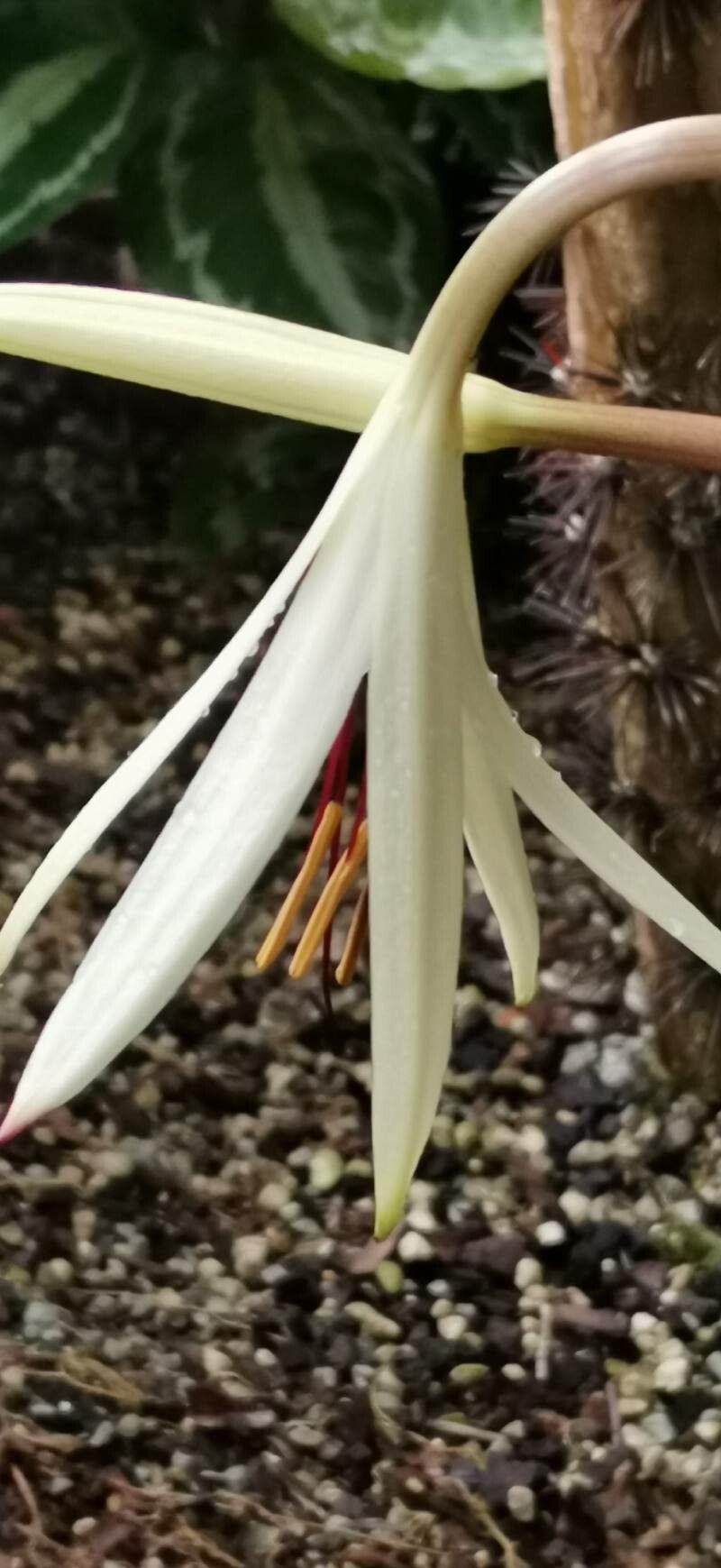
Propagating the Charming Crinum oliganthum: A Gardener’s Guide
Introduction:
Crinum oliganthum, often called the “Few-flowered Crinum” or simply “Narrow-leaved Crinum”, is a captivating bulbous plant prized for its elegant, strappy foliage and delicate, fragrant flowers. Native to South Africa, its relatively small size compared to other Crinum species and its graceful habit make it a popular choice for container gardening and rock gardens. While not as commonly grown as some other crinums, its unique characteristics and relative ease of propagation (through certain methods) make it a rewarding challenge for the dedicated gardener. Successfully propagating this plant offers a unique connection to the horticultural process and the satisfaction of nurturing life from a small piece of the parent plant.
Seed Germination:
Currently, there are no known reliable methods for seed germination propagation of Crinum oliganthum. While the plant does produce seeds, their viability and germination rate are reportedly extremely low, making this method impractical for most home gardeners. Further research is needed to determine optimal germination conditions for this species.
Cuttings:
Crinum oliganthum is not readily propagated from cuttings. Like other crinums, it lacks the ability to root readily from stem or leaf cuttings. Attempts at this method are unlikely to be successful.
Division:
Division is the most successful and reliable method for propagating Crinum oliganthum. This involves separating the offsets (baby bulbs) that naturally form around the mother bulb.
Challenges: The main challenge is carefully separating the offsets without damaging either the parent bulb or the young ones. The offsets must be large enough to possess their own healthy root system already, usually at least 2 inches across. This naturally limits the number of propagules you can obtain from a single division.
Practical Tips: The best time for division is during the plant’s dormant period (usually late autumn or early winter). Dig up the entire clump gently, carefully loosening the soil around the bulbs. Use a sharp, clean knife or garden trowel to separate the offsets, ensuring each division has its own root system and some healthy foliage. Plant the divisions immediately in well-draining soil, spacing them appropriately.
Rewards: Division offers a relatively quick way to increase your stock of Crinum oliganthum. It’s also a simple technique, suitable for home gardeners of all skill levels. The offspring plants are genetically identical to the parent, ensuring you maintain the desirable traits of the original plant.
Tissue Culture:
Tissue culture offers a potentially high-yield method for propagation of Crinum oliganthum.
Challenges: Tissue culture requires specialized equipment, sterile conditions, and a certain level of horticultural expertise. It is not a readily accessible method for the average home gardener. Establishing optimal protocols for Crinum oliganthum may require experimentation.
Practical Tips: This method necessitates access to a tissue culture laboratory and expertise in aseptic techniques. Sterile media, growth hormones, and carefully chosen explant material (typically meristem tissue) are essential.
Rewards: Successful tissue culture allows for the mass production of genetically identical plants, particularly valuable for conservation efforts or large-scale commercial propagation. This method also bypasses the low success rate of other methods.
Conclusion:
Propagating Crinum oliganthum presents a unique set of challenges, primarily due to the unreliability of seed germination and cuttings propagation. The most viable and practical method for the home gardener is division, offering a straightforward but rewarding way to expand your collection. While tissue culture holds immense potential for large-scale propagation, it remains outside the scope of average home gardeners. The satisfaction derived from nurturing a small offset into a mature flowering Crinum oliganthum is immense, rewarding the patience and care invested in the process. Don’t be discouraged by the difficulties; even the most challenging plants offer a unique sense of accomplishment to those willing to learn and adapt. So, embrace the journey, and enjoy the beauty of your successfully propagated Crinum oliganthum.