
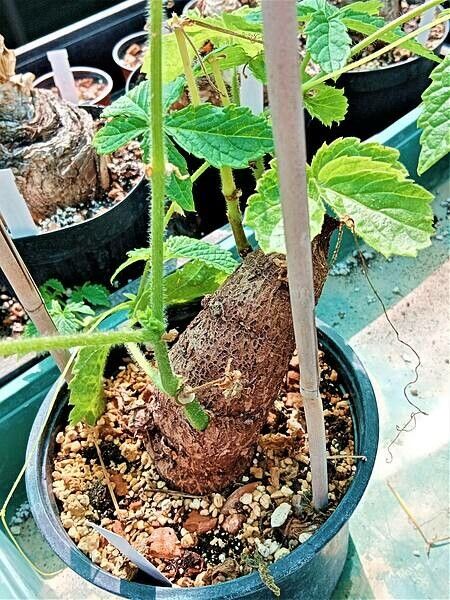
Uncorking the Secrets: Propagating the Curious Cyphostemma cirrhosum
The Cyphostemma cirrhosum, with its captivating, swollen base and tendril-graced vines, is a statement piece for any plant enthusiast. Native to Madagascar, this quirky succulent, also known as the “Tendril-Leaved Cyphostemma,” thrives in warmth and sunshine. And while finding one in your local nursery can be a treat, why not try your hand at propagating your own unique specimen?
Two Paths to Propagation:
There are two primary methods for propagating Cyphostemma cirrhosum, each with its own level of complexity:
1. The Art of Seed Propagation:
Propagating from seed offers the reward of witnessing the entire growth journey of your Cyphostemma. However, patience is key, as it’s a slower process compared to cuttings. Here’s a step-by-step guide:
- Source your seeds: Reputable online nurseries specializing in succulents or cacti are your best bet for acquiring Cyphostemma cirrhosum seeds.
- Prepare the sowing medium: A well-draining mix is crucial. Opt for a blend specifically formulated for cacti and succulents or create your own using equal parts perlite, potting soil, and coarse sand.
- Sow the seeds: Lightly press the seeds onto the surface of the moistened medium. Do not bury them, as they require light to germinate.
- Provide warmth and humidity: Cover the container with a clear plastic wrap or a humidity dome to create a warm, humid microclimate. Place it in a bright location but out of direct sunlight.
- Wait and watch: Germination can take anywhere from a few weeks to several months. Keep the soil consistently moist but not waterlogged.
- Transplant with care: Once the seedlings are a few inches tall and have developed a good root system, they can be carefully transplanted into individual pots.
2. The Efficiency of Cuttings:
For a quicker propagation method, cuttings are the way to go. This approach involves taking a section of a healthy plant to encourage new root development. Here’s how it’s done:
- Choose the right time: Spring or early summer, when the plant is actively growing, is the optimal time for taking cuttings.
- Select a healthy stem: Choose a firm, healthy stem with visible nodes. Ideally, the cutting should be at least 4-6 inches long.
- Let the wound heal: Allow the cut end of the stem to callus over for a few days in a dry, shaded location.
- Apply rooting hormone (optional): While not essential, dipping the callused end in rooting hormone can encourage faster and more successful root development.
- Plant the cutting: Insert the callused end of the cutting into a well-draining potting mix. Ensure at least one node is buried, as this is where the roots will sprout.
- Provide indirect light and warmth: Place the cutting in a bright location with indirect sunlight and maintain a warm temperature.
- Be patient and monitor: Water sparingly, allowing the soil to dry out slightly between waterings. In a few weeks, you should start to see signs of new growth, indicating successful rooting.
Nurturing Your Cyphostemma:
Regardless of the propagation method you choose, providing the right care is crucial for your Cyphostemma cirrhosum to thrive. Ensue it receives plenty of bright, indirect light, allow the soil to dry out between waterings, and protect it from frost. With a little dedication and patience, you’ll be rewarded with a captivating, conversation-starting succulent that will bring joy for years to come.