
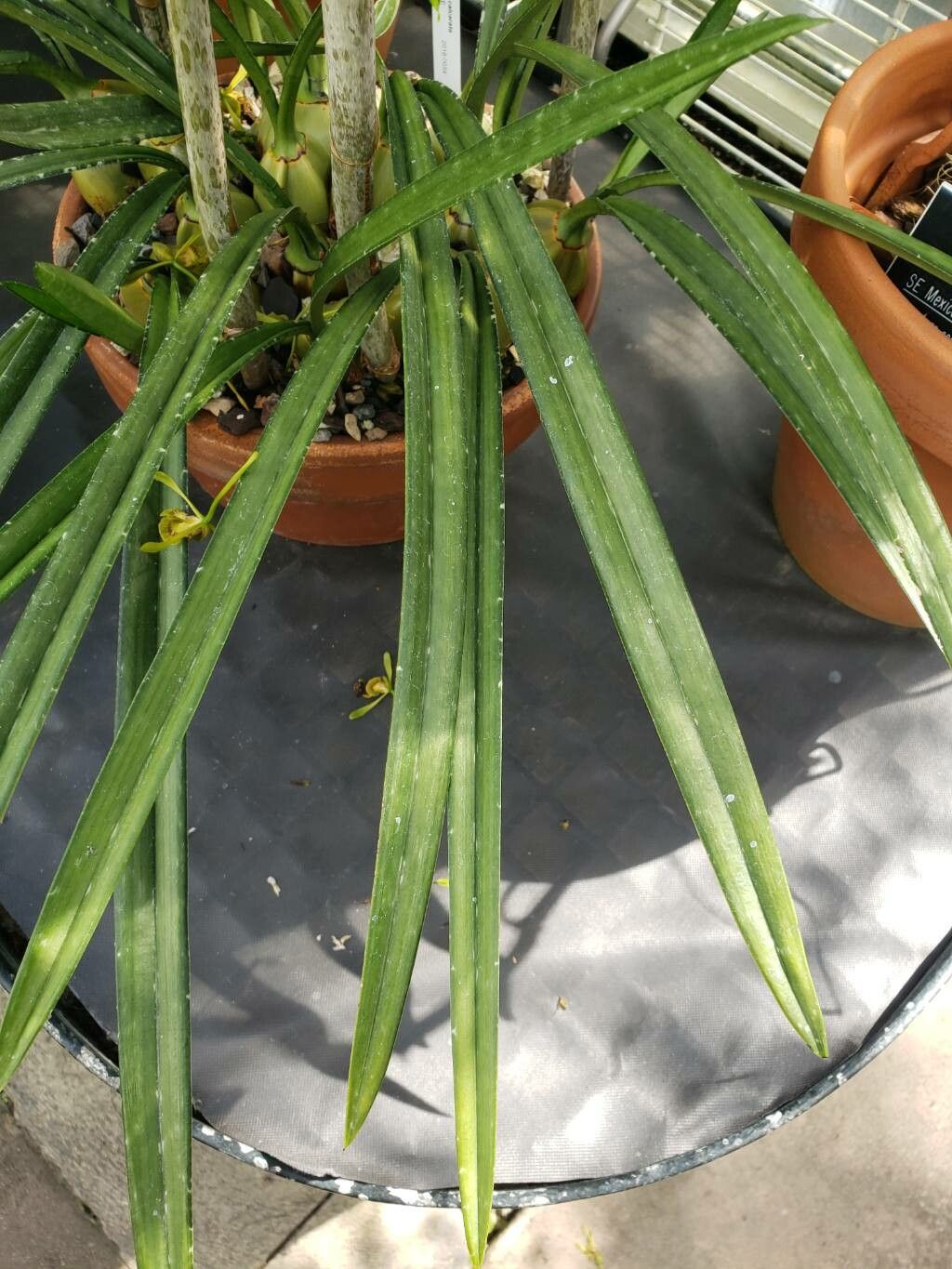
Propagating the Spurred Eulophia: Challenges and Rewards of Cultivating Eulophia calcarata
Eulophia calcarata, commonly known as the Spurred Eulophia or sometimes the spurred orchid, is a striking terrestrial orchid prized by horticulturalists for its vibrant, often yellowish-green, flowers adorned with a characteristic spur. Its relative ease of cultivation compared to some epiphytic orchids contributes to its popularity, but propagation presents a unique set of challenges. This article explores the various methods available, weighing their advantages and disadvantages.
Seed Germination:
Currently, there are no known reliable methods for seed germination propagation of Eulophia calcarata. Orchid seeds, including those of Eulophia calcarata, are typically dust-like and lack endosperm (the food source for the developing embryo). This necessitates a symbiotic relationship with specific mycorrhizal fungi for successful germination. Replicating these fungal associations in a controlled environment is extremely challenging, thus rendering seed germination a largely unsuccessful approach for most home growers. Research into specific mycorrhizal partners for this species may unlock this method in the future.
Cuttings:
Cuttings are not a viable method for propagating Eulophia calcarata. Unlike some plants that can regenerate from stem or leaf cuttings, orchids, particularly terrestrial ones like this species, do not readily produce new plants from cuttings. Attempts at this method are highly unlikely to succeed.
Division:
Division is the most practical and reliable method for propagating Eulophia calcarata. This involves carefully separating the mature plant’s rhizome (underground stem) into multiple sections, each containing several pseudobulbs and healthy roots.
Challenges: Dividing the rhizome requires care to avoid damaging the delicate roots and pseudobulbs. Each section must be large enough to support independent growth. Over-division can weaken the parent plant and the resulting divisions, hindering their establishment. Improper handling can introduce disease.
Practical Tips: Divide the rhizome during the dormant period (typically after flowering). Use a sharp, clean knife or shears. Ensure each division has a substantial root system and several pseudobulbs. Plant the divisions in well-draining potting mix, similar to the parent plant’s original conditions. Water sparingly after planting to avoid rot.
Rewards: Division allows for relatively quick propagation, increasing the number of plants while maintaining the genetic characteristics of the parent plant.
Tissue Culture:
Tissue culture offers a potential avenue for large-scale propagation of Eulophia calcarata. This sophisticated laboratory technique involves cultivating plant tissues in sterile conditions on a nutrient-rich medium.
Challenges: Tissue culture requires specialized equipment, aseptic techniques, and expertise in plant physiology. The process can be time-consuming and expensive. Contamination is a constant risk. Developing optimized culture media for Eulophia calcarata specifically may require research and experimentation.
Practical Tips: This method is best left to experienced tissue culture laboratories or professionals.
Rewards: Tissue culture offers the potential for mass propagation, generating numerous genetically identical plants. It can be used to conserve endangered populations or produce disease-free planting material.
Conclusion:
Propagating Eulophia calcarata presents a notable challenge. While seed germination and cuttings are currently not viable options, division offers a practical method for home growers, requiring only careful technique and patience. Tissue culture represents a more advanced route capable of generating large numbers of plants, but it demands specialized knowledge and resources. The satisfaction of successfully cultivating and propagating this beautiful orchid, overcoming the inherent difficulties, makes the effort all the more rewarding. For aspiring propagators, starting with division, combined with careful observation of the plant’s needs, provides the most accessible and successful route to expanding your collection of these captivating spurred orchids.