
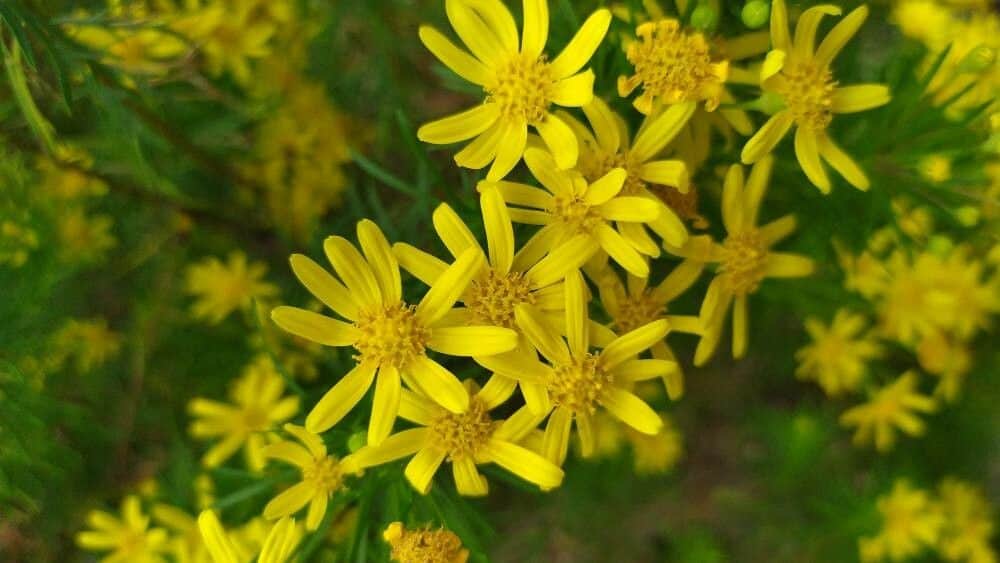
Propagating Euryops linearis: A Gardener’s Guide to the Yellow Bush Daisy
Introduction:
Euryops linearis, commonly known as the Yellow Bush Daisy or Slender-leaved Euryops, is a beloved shrub valued for its cheerful, abundant yellow daisy-like flowers and its relatively low-maintenance nature. Its compact, bushy habit and drought tolerance make it a popular choice for borders, rockeries, and even container gardening. While readily available commercially, propagating Euryops linearis offers gardeners a rewarding challenge and the satisfaction of nurturing new plants from existing ones. The propagation methods discussed below highlight the different approaches available, outlining their challenges and rewards.
Seed Germination:
Currently, there are no known reliable methods for seed germination propagation of Euryops linearis. While the plant does produce seeds, their germination rate is extremely low, and achieving successful germination consistently has proven difficult for even experienced horticulturalists. Further research into specific seed treatments might unlock this method in the future, but for now, other techniques are more reliable.
Cuttings:
Challenges: Cuttings are the most readily successful method of propagation for Euryops linearis. However, employing the correct technique is crucial. Improper sanitation or rooting conditions can lead to rotting before root development.
Practical Tips: Take semi-hardwood cuttings (partially mature growth) in spring or early summer. Use sharp, clean tools to prevent disease transmission. Each cutting should be approximately 10-15cm long, with several nodes. Remove lower leaves to prevent rot and dip the cut ends in a rooting hormone powder. Plant cuttings in a well-draining propagation mix, such as a blend of perlite and vermiculite, ensuring good humidity. Cover with a plastic bag or propagator lid to maintain humidity levels. Rooting usually occurs within 4-6 weeks.
Rewards: Cuttings offer a reliable and efficient method to generate many plants genetically identical to the mother plant, maintaining desirable traits. It’s suitable for both small-scale home propagation and larger-scale nursery production.
Division:
Challenges: Division is most effective with established, mature plants. Forcing division on younger plants can severely stress them, and potentially result in their death. Care must be taken to ensure each division has sufficient root mass to support new growth.
Practical Tips: Divide the plant in spring or autumn, ensuring each section has a good amount of healthy roots and several stems. Replant the divisions immediately into well-prepared soil, ensuring adequate watering until they are re-established.
Rewards: Division is a rapid method of multiplying a valuable cultivar, especially if space is an issue. It avoids the need for specialized equipment.
Tissue Culture:
Challenges: Tissue culture requires specialized equipment, sterile environments, and a high level of technical expertise. It is not a practical method for the home gardener.
Practical Tips: This method requires a laboratory setting with sterile conditions, appropriate media, and plant growth regulators. It’s typically employed commercially for mass propagation of superior cultivars.
Rewards: Tissue culture allows for the rapid multiplication of plant material, producing disease-free and genetically uniform plants on a large scale. It is often used to conserve rare or endangered cultivars.
Conclusion:
Propagating Euryops linearis presents unique challenges and rewards depending on the chosen method. While seed propagation is currently infeasible, cuttings offer the most practical and reliable approach for home gardeners. Division provides a simpler but more limited option for established plants. Tissue culture remains the domain of professionals. Ultimately, the satisfaction of successfully propagating this lovely shrub, whether from a tiny cutting or a carefully divided clump, far outweighs the effort invested. The vibrant yellow blooms that reward your patience serve as a constant reminder of the enduring magic of horticulture. So, aspiring propagators—take heart, choose your method wisely, and enjoy the journey!