
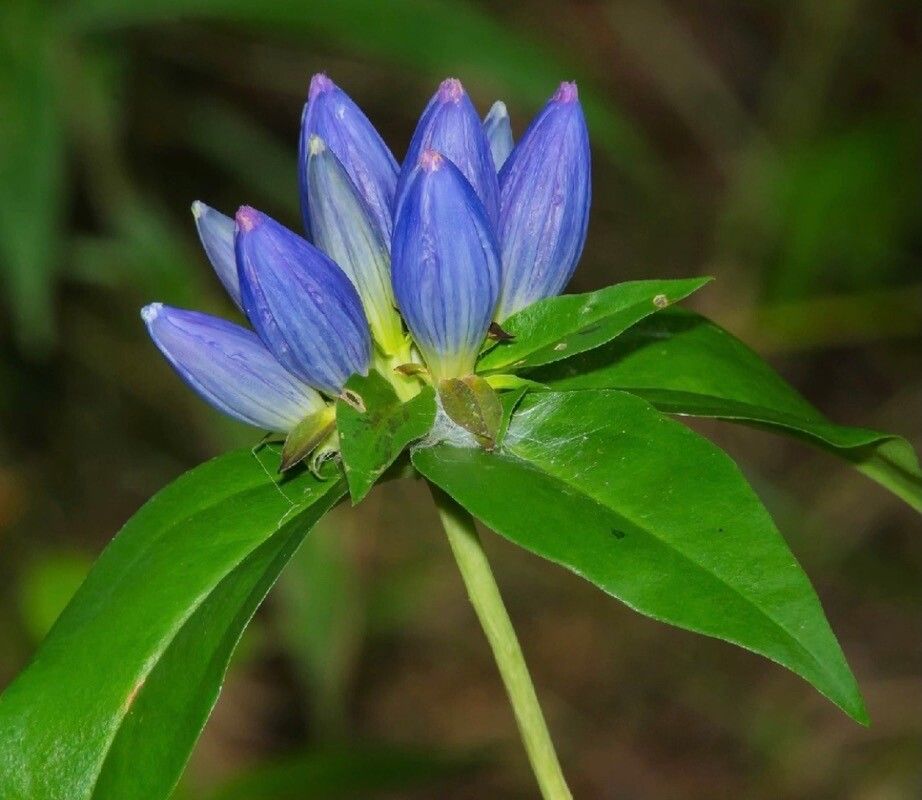
Propagating Closed Gentian (Gentiana andrewsii): A Gardener’s Challenge
Introduction:
Gentiana andrewsii, commonly known as Closed Gentian, is a captivating native North American perennial prized for its striking, deep blue, closed blossoms. Unlike many gentians with open, trumpet-shaped flowers, the Closed Gentian’s blooms remain tightly sealed, adding to its unique mystique. This characteristic, coupled with its late summer/early autumn flowering and preference for moist, shady conditions, makes it a highly sought-after addition to woodland gardens and shaded borders. However, its propagation presents several challenges, making success all the more rewarding for the dedicated gardener.
Seed Germination:
Currently, there are no known reliable methods for seed germination propagation of Gentiana andrewsii. While seeds are produced, their germination rate is notoriously low, even under optimal conditions. Factors such as the need for specific mycorrhizal fungi associations and a very precise balance of temperature and moisture likely contribute to this difficulty. Attempts at stratification (pre-treatment to mimic winter conditions) have yielded inconsistent results. Therefore, relying on seed for propagating Closed Gentian is generally discouraged.
Cuttings:
Propagating Gentiana andrewsii from cuttings also presents significant difficulties. Softwood cuttings taken in early summer have shown some potential, but success rates remain low. Challenges include the susceptibility of cuttings to fungal diseases and the slow rooting process. Practical tips such as using a well-draining propagation mix, maintaining high humidity, and employing rooting hormones might improve the odds, but success is far from guaranteed. The rewards, while possible – obtaining genetically identical plants – are outweighed by the considerable challenges and low success rate.
Division:
Division is the most reliable method for propagating Closed Gentian. This involves carefully separating established clumps of plants in early spring or autumn. Each division should ideally have well-developed roots and several growing points. Challenges include the potential for damaging the delicate roots, leading to the failure of the divisions to establish. Careful handling is crucial. The rewards are significant; division provides a relatively high success rate and allows for the rapid multiplication of desirable specimens. This is the method most frequently recommended for gardeners seeking to increase their stock of Closed Gentian.
Tissue Culture:
Tissue culture, a sophisticated laboratory technique, holds potential for large-scale propagation of Gentiana andrewsii. However, this method requires specialized equipment, sterile conditions, and expertise in plant tissue culture techniques – making it inaccessible to most home gardeners. While it offers the possibility of overcoming the limitations of seed germination and cuttings, the high cost and technical demands make it an impractical approach for the average enthusiast.
Conclusion:
Propagating Gentiana andrewsii is undoubtedly a challenge, with seed germination proving unreliable, cuttings yielding low success, and tissue culture being financially and technically prohibitive for most. Division, however, stands out as the most practical and reliable method for increasing the number of Closed Gentians in your garden. The difficulties, though, are balanced by the profound satisfaction derived from coaxing this beautiful, but demanding plant to thrive under your care. The rare success of propagating a Closed Gentian, regardless of the method chosen, is a testament to your horticultural skill and a richly deserved reward. So, don’t be discouraged by the challenges – embrace them, and the beauty of your carefully propagated Closed Gentians will be all the more rewarding.