
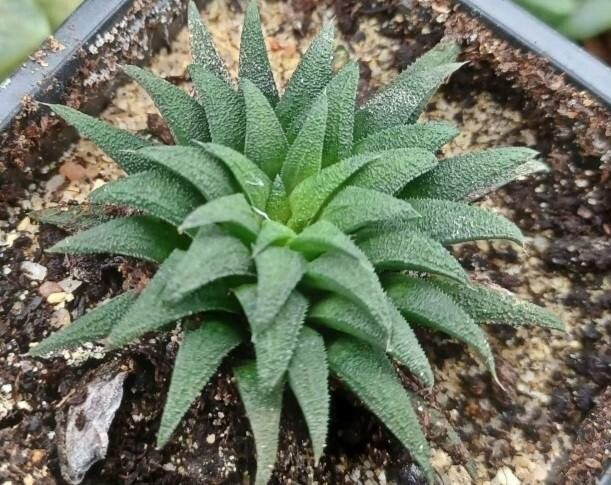
Propagating Haworthia parksiana: Unveiling the Secrets of the Star Window Plant
Introduction:
Haworthia parksiana, often called the "Star Window Plant," is a captivating succulent prized for its striking rosette of translucent, star-shaped leaves. These leaves, adorned with characteristic window-like markings, allow light penetration for photosynthesis, a unique adaptation to its semi-shaded, arid native habitat. Its compact size and visually appealing form have cemented its popularity among succulent enthusiasts, fueling interest in its propagation. However, compared to other Haworthia species, propagating Haworthia parksiana presents some unique challenges.
Seed Germination:
Currently, there are no known reliable methods for seed germination propagation of Haworthia parksiana. While the plant does produce seeds, the germination rate is extremely low, and achieving successful germination under typical home conditions has proved elusive. Further research is needed to determine the specific environmental factors and techniques required for optimal seed germination in this species.
Cuttings:
Cuttings represent a more viable propagation method for Haworthia parksiana.
Challenges: The slow growth habit of Haworthia parksiana is a significant challenge. Leaf cuttings rarely root successfully, and offsets (also known as pups) are produced infrequently compared to other Haworthia species.
Practical Tips: The best approach is offset propagation. Carefully separate offsets from the mother plant only when they have developed a good root system of their own. Use a sharp, sterilized knife or scalpel to minimize damage. Allow the cuttings to callous for a few days before planting in well-draining succulent potting mix. Maintain a consistently moist (but not soggy) environment, using a humidity dome or plastic bag to increase humidity if necessary.
Rewards: This method provides a relatively straightforward approach to increasing your stock of this slow-growing plant. While it’s not a rapid means of propagation, the success of each offset becomes a satisfying accomplishment.
Division:
Division is similar to offset propagation; they are essentially the same method (the term "division" is typically used for larger plants with more extensive root systems).
Challenges: As mentioned above, Haworthia parksiana produces offsets sparingly, making division less frequent than in other succulent species.
Practical Tips: Follow the same guidelines as the cuttings method. Ensure each division has sufficient roots and leaves to establish itself.
Rewards: Successfully dividing a mature Haworthia parksiana can result in multiple healthy plants, rewarding patience and careful handling.
Tissue Culture:
Tissue culture offers a potential, albeit more complex, avenue for Haworthia parksiana propagation.
Challenges: Establishing a tissue culture protocol requires specialized equipment, sterile techniques, and expertise in plant tissue culture. Finding suitable media recipes and hormone concentrations for optimal growth and shoot multiplication may necessitate experimentation.
Practical Tips: This method is best left to experienced tissue culture laboratories or hobbyists with extensive lab experience.
Rewards: Tissue culture allows for rapid and large-scale propagation, cloning desirable genetic traits, and potentially rescuing endangered plants.
Conclusion:
Propagating Haworthia parksiana presents unique challenges due to its slow growth and low offset production. While seed germination currently seems unreliable, offset separation/division offers the most practical approach for home gardeners. Tissue culture, although technically more complex, holds significant promise for mass propagation. The rewards, however, are substantial: each successfully propagated plant represents a victory against the difficulties involved, delivering a profound sense of accomplishment and a deeper appreciation for the intricate beauty of this miniature botanical marvel. The patience and care required cultivate not just more plants, but also a deeper connection with the cultivation process itself. Aspiring propagators should begin with offset removal and carefully develop their techniques, understanding that success requires patience and careful observation.