
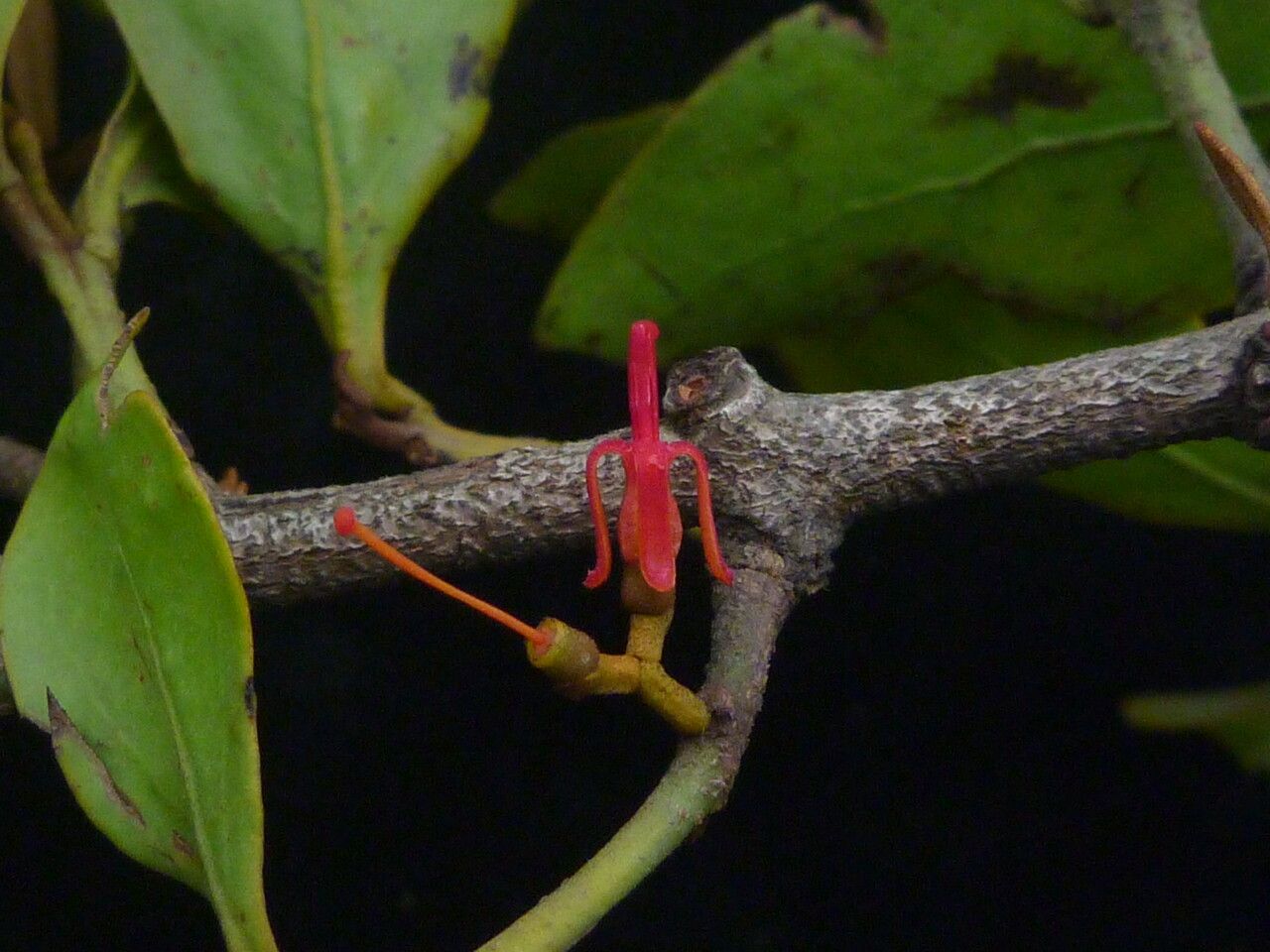
Birds, Berries, and Blooms: Unlocking the Propagation Secrets of the Slender Mistletoe
The natural world is a tapestry of intricate relationships, with each organism playing a vital role. Take the Slender Mistletoe (Helixanthera ligustrina), for example. This fascinating plant, a hemiparasite, depends on both birds and specific host trees for its survival and propagation. Today, we unravel the mysteries of this delicate dance, exploring the fascinating world of mistletoe propagation.
Unlike most plants we cultivate, starting Slender Mistletoe from seed in your garden isn’t as simple as sowing seeds in soil. This mistletoe relies on a fascinating, multi-stage process entirely dependent on the natural world.
Stage One: From Berry to Beak
The story begins with the Slender Mistletoe’s small, enticing berries. These succulent fruits, ripening to a vibrant orange or red, are a magnet for various bird species, particularly those with a penchant for sweet treats. Mistletoe birds, flowerpeckers, and even some sunbird species feast on these berries, inadvertently playing a crucial role in the plant’s survival.
Stage Two: A Sticky Situation – Seed Dispersal
Here’s where things get interesting. The Slender Mistletoe berries contain incredibly sticky seeds. When birds feed, these seeds, often clinging to their beaks or feathers, are carried away from the parent plant. In a remarkable example of co-evolution, birds, seeking to clean their beaks, often rub them against the bark of suitable host trees – a behavior crucial for the next stage.
Stage Three: Finding the Perfect Home
The sticky seeds, now deposited on the branches of host trees, are perfectly positioned for germination. The Slender Mistletoe is a hemiparasite, meaning it can photosynthesize for some of its energy. However, it depends on a host tree for water and essential nutrients. This reliance on specific hosts makes the bird’s role even more significant. The Slender Mistletoe shows a preference for trees like Acacias, Casuarinas, and certain Eucalyptus species, typically found in its native Australian habitats.
Stage Four: Germination and Growth
Once firmly attached to a suitable host, environmental cues like moisture and temperature trigger germination. The mistletoe seed sends out a specialized root-like structure called a “haustorium,” which penetrates the host tree’s bark and taps into its vascular system, drawing water and nutrients.
Challenges and Conservation:
While fascinating, the propagation of the Slender Mistletoe faces challenges. Habitat loss due to deforestation and clearing affects both the mistletoe and the bird species crucial for its dispersal. Additionally, the specific host tree requirements limit the plant’s distribution.
Appreciating the Interconnectedness:
Understanding the complex propagation strategy of the Slender Mistletoe highlights the intricate web of life that exists within our ecosystems. It emphasizes the importance of conserving not only individual species but also their unique relationships and interdependencies. So, next time you encounter this delicate plant, take a moment to appreciate the fascinating journey it undertakes, carried on the wind of a bird’s wing and fueled by the generosity of a host tree. It’s a story of resilience, adaptation, and the remarkable power of nature’s collaborations.