
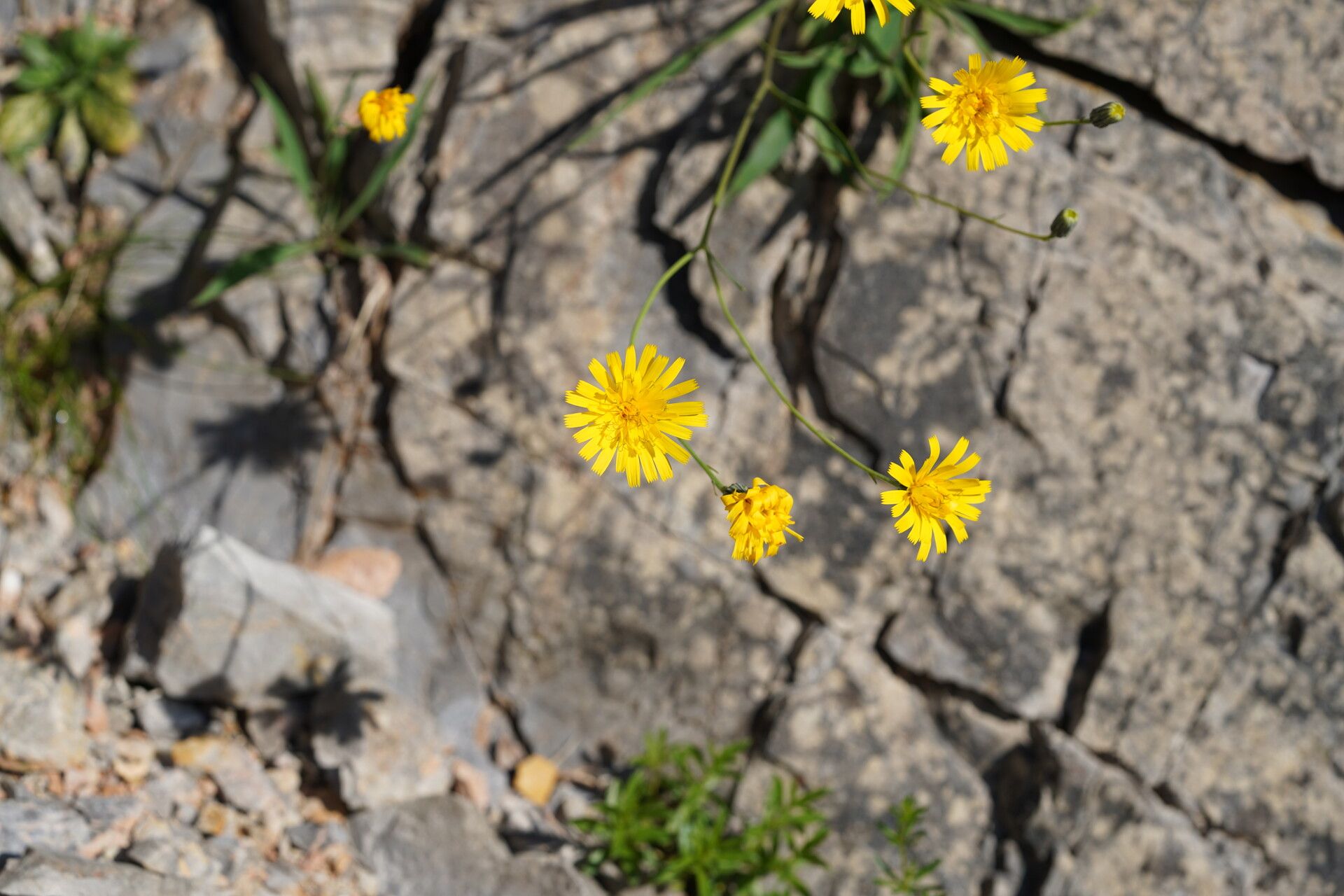
Propagating Hieracium glaucum: A Guide to Cultivating the Glaucous Hawkweed
Introduction:
Hieracium glaucum, commonly known as glaucous hawkweed, is a captivating perennial plant prized for its striking glaucous (bluish-green) foliage and attractive, though often fleeting, yellow flower heads. Its compact habit and tolerance for challenging conditions make it a popular choice among gardeners seeking hardy, low-maintenance additions to rock gardens, alpine beds, or even as ground cover. However, propagating this somewhat enigmatic plant presents unique challenges, making successful cultivation a rewarding experience. Because Hieracium species are often challenging to propagate from seed, other methods are more commonly employed.
Seed Germination:
Currently, there are no known reliable methods for seed germination propagation of Hieracium glaucum. While seeds may be produced, the germination rate is notoriously low, and even if germination occurs, seedlings are often weak and susceptible to disease. Further research into specific stratification techniques or hormonal treatments might be necessary to improve germination success.
Cuttings:
Cuttings offer a more reliable method for propagating Hieracium glaucum than seed germination.
Challenges: Rooting success from cuttings can be variable, depending on the time of year and the plant’s overall health. Older, woody stems are less likely to root than younger, semi-hardwood cuttings.
Practical Tips: Take semi-hardwood cuttings in late spring or early summer. Use a sharp knife or shears to take 4-6 inch cuttings from healthy, non-flowering stems. Remove lower leaves, dip the cut end in rooting hormone, and plant in a well-draining propagation mix (e.g., a mix of peat moss and perlite). Maintain a consistently moist but not waterlogged environment, ideally under a humidity dome or in a propagator.
Rewards: Cuttings offer a relatively quick method for increasing the number of desired plants, ensuring that the new plants are genetically identical to the parent plant.
Division:
Division is perhaps the most reliable and easiest method for propagating Hieracium glaucum.
Challenges: Division is best performed during the plant’s dormant period (spring or autumn) when the plant is less stressed. Care must be taken not to damage the delicate roots.
Practical Tips: Carefully lift the established plant from the ground, gently separate the crown into smaller sections, each with its own set of roots and shoots. Replant the divisions immediately into well-prepared soil, ensuring adequate spacing. Water thoroughly after planting.
Rewards: Division allows for rapid multiplication of plants and ensures quick establishment of the new divisions.
Tissue Culture:
While tissue culture offers the potential for rapid and large-scale propagation of Hieracium glaucum, it’s a highly specialized technique.
Challenges: Establishing a successful tissue culture protocol requires specialized equipment, knowledge, and aseptic techniques. Finding suitable media and growth regulators for optimal growth and development of Hieracium glaucum requires experimentation.
Practical Tips: This method should only be undertaken by experienced tissue culture practitioners. Protocols need to be developed for this specific species.
Rewards: Tissue culture offers the potential for mass propagation of genetically uniform plants, ideal for commercial cultivation or large-scale landscaping projects.
Conclusion:
Propagating Hieracium glaucum presents certain challenges, particularly with seed germination. However, reliable methods exist through cuttings and division, with tissue culture offering potential for large-scale propagation with the appropriate skills and resources. The rewards of successfully growing this lovely plant surpass the difficulties involved; seeing the glaucous leaves unfurl and the cheerful yellow flowers emerge justifies the effort. For the home gardener, division offers the simplest and most reliable approach. Don’t be discouraged by initial setbacks; persistence and experimentation will eventually bring forth the satisfaction of cultivating this unique and rewarding plant.