
Propagating Ixia maculata: Bringing the Spotted Ixia to Bloom
Introduction:
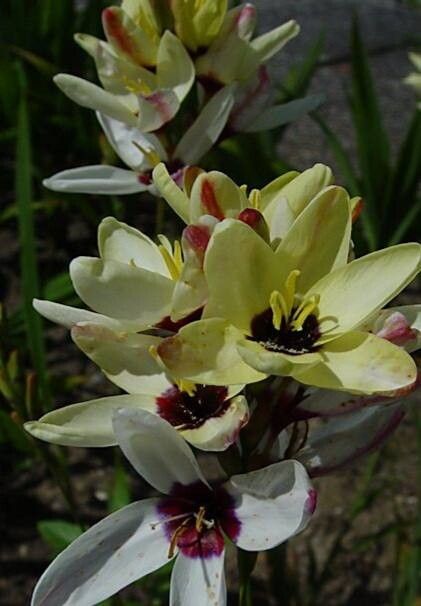
Ixia maculata, commonly known as the spotted ixia, is a captivating member of the Iridaceae family, prized for its vibrant, star-shaped flowers in shades of white, yellow, orange, and red, often adorned with striking spots or speckles. Native to South Africa, this bulbous perennial adds a touch of exotic elegance to gardens and enjoys considerable popularity among gardeners for its relatively easy cultivation and dazzling display. However, propagating Ixia maculata can present certain challenges, making successful propagation all the more rewarding. This article will explore various methods, analyzing their feasibility and offering practical advice.
Seed Germination:
Currently, there are no known reliable methods for seed germination propagation of Ixia maculata. While seeds may be produced, germination rates are notoriously low and inconsistent, making this method impractical for most gardeners. The dormancy requirements and specific conditions necessary for successful germination remain largely unstudied and unreliable.
Cuttings:
Currently, there are no known reliable methods for propagating Ixia maculata from cuttings. Ixias, being bulbous plants, do not readily produce propagules from stem or leaf cuttings.
Division:
Division is the most common and reliable method for propagating Ixia maculata. This involves carefully separating the corms (underground storage organs) from the parent plant after the foliage has died back.
Challenges: Correct timing is crucial; division should occur during the dormant period, typically late summer or early autumn. Damaging the corms during separation can lead to rot and failure.
Practical Tips: Dig up the mature clump carefully, ensuring as much soil as possible remains attached to the corms. Gently separate the individual corms, ensuring each has some roots and healthy growth points. Replant the divisions immediately in well-drained soil. Allow for sufficient spacing to prevent overcrowding in coming seasons.
Rewards: Division offers a relatively quick and simple way to increase the number of plants, maintaining the characteristics of the parent plant.
Tissue Culture:
Tissue culture presents a potential but specialized method for propagating Ixia maculata.
Challenges: This method requires specialized equipment, sterile laboratory conditions, and expertise in plant tissue culture techniques. Establishing suitable growth media and protocols may also prove challenging for this species.
Practical Tips: Consult with a professional plant tissue culture laboratory for assistance. The process involves sterilising corm segments, placing them onto a nutrient agar medium and then transferring the developing plantlets to a progressively less sterile environment before hardening off and planting.
Rewards: Tissue culture allows for large-scale propagation of genetically identical plants and provides a method for disease-free stock production.
Conclusion:
Propagating Ixia maculata presents distinct challenges depending on the chosen method. While seed and cutting propagation methods are currently unreliable, division offers a practical and relatively straightforward approach for most gardeners. Tissue culture offers the potential for large-scale propagation but demands significant expertise and resources. The inherent difficulties involved only serve to amplify the satisfaction of successfully cultivating these beautiful plants. The vibrant display of these spotted gems more than compensates for the effort, making Ixia maculata propagation a rewarding undertaking for even the modestly experienced gardener. Be patient, research thoroughly, and don’t be discouraged by initial setbacks – the rewards are well worth the effort!