
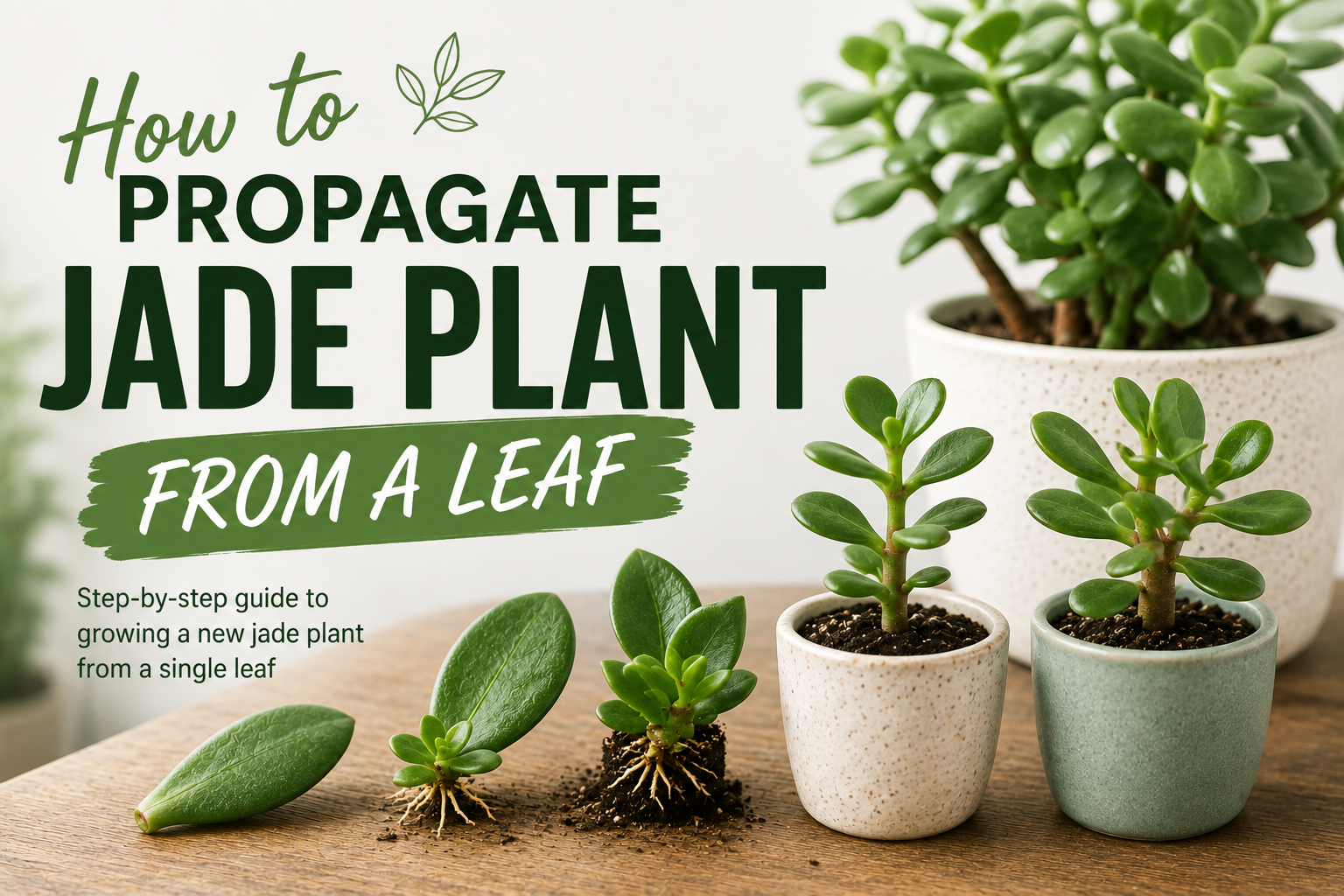
There’s a leggy old jade plant on my kitchen windowsill that I’ve had for the better part of a decade, and every time I brush past it, a fat little leaf or two lets go and lands on the counter. For years I just swept them into the trash. Then I learned that each one of those plump leaves can, with a bit of patience, turn into a whole new plant. If you’ve got a jade and a bright sill, the tail end of summer is still warm enough to give it a go — so here’s exactly how I do it.
When to take a leaf
Jade (Crassula ovata) is a succulent, and like most succulents it roots best when it’s warm and actively growing — roughly spring through early summer is the sweet spot. That said, warmth matters more than the calendar. If your plant sits in a bright, warm spot, late summer works fine too; things just slow right down as the light fades in fall and winter. I’d steer clear of starting a leaf in the dead of winter unless you can give it steady warmth and a grow light, because a cold, damp leaf is a leaf that rots instead of roots.
What you’ll need
- A healthy, plump jade leaf — or better yet, several
- A shallow tray or small pot with a drainage hole
- Fast-draining succulent or cactus mix (or make your own — see below)
- Rooting hormone (optional — jade roots just fine without it)
- A bright spot out of harsh, direct sun
- Patience — genuinely the most important item on this list
How to propagate a jade leaf, step by step
- Pick a good leaf. Choose one that’s plump, firm and unblemished. Gently rock it side to side until it pops off cleanly — you want the whole leaf, including the little base where it meets the stem. A torn leaf that’s missing its base usually won’t grow, so take your time here.
- Let it callus. Set the leaf somewhere dry and shaded for three to seven days, until the broken end dries over and forms a callus. This is the step everyone wants to skip, and it’s the one that saves you from rot.
- Prepare the mix. Fill your tray with a gritty, free-draining medium. A bagged cactus/succulent mix is perfect, or blend your own — I use roughly 40% potting soil, 40% coir and 20% perlite. Jade roots are shallow, so you don’t need much depth.
- (Optional) Dust with rooting hormone. If you have it, a light dusting on the calloused end can nudge things along. Skip it if you don’t — jade manages without.
- Set the leaf on the soil. Lay it flat on top of the mix, or barely rest the calloused end against it. Don’t bury it. Put the tray somewhere bright but out of scorching midday sun.
- Wait — and don’t water yet. This is the hard part. Leave the soil dry until you actually see roots. Watering now is the quickest way to lose the leaf; a light misting every few days is the most I’ll do.
The one thing that kills jade leaves: rot
If a jade leaf fails, it’s almost always because it got too much water too soon. Succulents evolved in dry places, and a fresh, un-calloused leaf sitting on damp soil is basically an open wound in a wet room — it rots before it ever roots. So let the end callus first, use a gritty mix that dries fast, and keep the water away until roots have genuinely formed. When in doubt, do nothing. A jade leaf will sit happily for weeks on dry soil; it will not forgive a soggy one.
Water or soil?
You’ll see people rooting jade leaves in a glass of water, and it can work — but I don’t recommend it. Roots grown in water tend to be thinner and weaker, and they often sulk when you move them into soil. On top of that, sitting in water is exactly the wet-feet situation succulents hate, so leaves rot easily. I start mine in dry, gritty soil from the beginning and skip the drama. If you’ve already got a leaf rooting in water, move it into soil as soon as the roots are a half-inch or so long, before it gets too used to being wet.
How long it takes (and the patience part)
Here’s the honest truth: leaf propagation is the slow lane. You might spot the first tiny roots in a few weeks, but a recognizable baby plant — a little rosette of new leaves at the base — can take a couple of months, sometimes longer. The original leaf feeds that baby and eventually shrivels away; that’s completely normal, so don’t panic and don’t pull it off. Once you’ve got a small plant with roots of its own, start watering properly: soak the soil, then let it dry out completely before the next drink. Hold off on fertilizer until it’s clearly growing, and even then just a dilute succulent feed a few times over the season.
And one more honest note: a single leaf is the least reliable way to grow a jade. Some leaves take, plenty don’t. That’s exactly why I start several at once — and why, if you’re in a hurry, a stem cutting will get you there faster. But there’s something quietly satisfying about coaxing a whole plant out of one dropped leaf, so I always keep a little tray going on the sill.
Frequently asked questions
Can you really grow a jade plant from just one leaf?
Yes — a whole jade plant can grow from a single leaf, as long as you take the entire leaf (including its base) and let it callus before it touches soil. It’s slower and less reliable than a stem cutting, so start several leaves at once to improve your odds.
How long does it take for a jade leaf to root?
In warm conditions you’ll usually see the first roots in about two to four weeks. A small plantlet with its own leaves takes longer — often a couple of months. Warmth and bright light speed things up; cold and low light slow everything down.
Should I put the jade leaf in water or soil?
Soil. Jade is a succulent and roots better in a dry, gritty mix. Water rooting works occasionally, but it produces weaker roots and rots leaves easily, since succulents dislike sitting in moisture.
Why is my jade leaf shriveling or turning mushy?
A little shriveling is normal — the leaf is spending its own stored energy to grow roots and a baby plant. Mushy, translucent or blackening tissue is a different story: that’s rot, almost always from watering too soon. Let leaves callus and keep the soil dry until roots form.
Do I need rooting hormone for jade leaves?
No. Jade roots perfectly well without it. A light dusting on the calloused end can give things a small nudge, but it’s strictly optional.
Related guides
If you enjoy growing whole new plants from a single leaf or cutting, you might like these too:
- How to Propagate a ZZ Plant From a Leaf — another slow-but-rewarding leaf project
- Grow Your Own African Violets From a Leaf
- Propagate Your Christmas Cactus From Cuttings
— Nora Ellison