
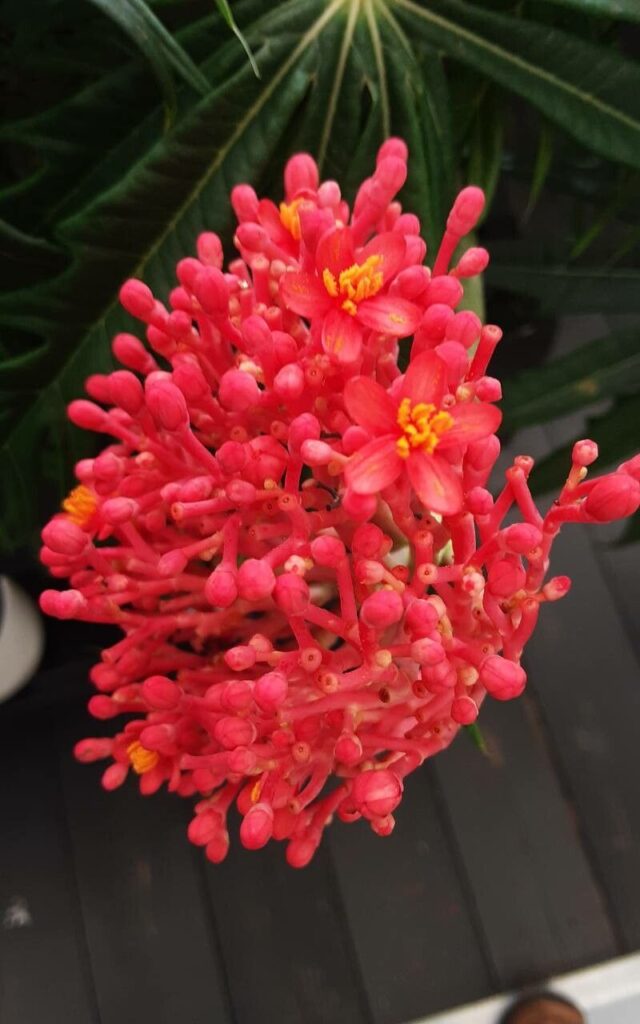
Propagating the Coral Plant: A Guide to Multiplying Jatropha multifida
Introduction:
Jatropha multifida, commonly known as the coral plant or physic nut, is a captivating succulent shrub prized for its vibrant, coral-like inflorescences and deeply lobed leaves. Its unique appearance makes it a popular choice among gardeners seeking an eye-catching addition to their collections, whether in containers or as a landscape specimen. However, propagating Jatropha multifida presents certain challenges, making success all the more rewarding. This article explores various propagation methods, highlighting both their difficulties and the potential triumphs.
Seed Germination:
Currently, there are no known reliable methods for seed germination propagation of Jatropha multifida. While seeds may occasionally germinate under ideal conditions, the process is unpredictable and inconsistent, rendering it impractical for reliable propagation. This is likely due to factors such as dormancy mechanisms within the seeds and specific environmental requirements not fully understood.
Cuttings:
Cuttings are a viable, though not always straightforward, method for propagating Jatropha multifida.
Challenges: The main challenge lies in successfully rooting the cuttings. The stems are somewhat brittle, and rotting is a common problem if adequate hygiene and rooting conditions aren’t maintained.
Practical Tips: Use semi-hardwood cuttings taken from mature, healthy stems in spring or summer. Remove lower leaves to prevent rotting and dip the cut ends in a rooting hormone powder. Plant the cuttings in a well-draining, sterile propagation mix (e.g., a blend of perlite and peat moss) and maintain high humidity, preferably using a propagation dome or by regularly misting. Keep the cuttings warm (around 70-75°F) and avoid overwatering.
Rewards: Successfully rooted cuttings provide a relatively quick and easy way to increase the number of plants, preserving the genetic characteristics of the mother plant.
Division:
Division offers another potential method for propagating Jatropha multifida, particularly for established, well-rooted plants.
Challenges: Dividing the root system can damage the plant, and improperly divided sections may not survive. The ideal time for division is during the spring or early summer, when the plant is actively growing.
Practical Tips: Carefully dig up the mature plant and gently separate the root ball into several sections, ensuring each section has sufficient roots and stems. Replant each section immediately into well-draining soil and water sparingly until the plants have re-established themselves.
Rewards: This method offers relatively quick establishment compared to cuttings, and allows for the creation of multiple plants from a single mature specimen.
Tissue Culture:
Tissue culture offers the most reliable and potentially large-scale method for propagating Jatropha multifida.
Challenges: This method requires specialized equipment, sterile conditions, and a good understanding of plant tissue culture techniques. It’s a more complex and costly approach than cuttings or division.
Practical Tips: Sterilization of the explants and culture media is critical to prevent contamination. Optimal hormone concentrations need to be carefully adjusted for efficient shoot multiplication and rooting. Expertise in plant tissue culture is required for success.
Rewards: Tissue culture provides a reliable way to create a large number of genetically identical plants from a single source, overcoming the limitations of seed germination and increasing the possibility of mass production.
Conclusion:
Propagating Jatropha multifida presents unique challenges but offers immense rewards. While seed germination remains unreliable, cuttings and division offer accessible methods for home gardeners. Tissue culture potentially allows for large-scale production, but demands specialized knowledge and resources. The satisfaction of cultivating this stunning plant from a cutting, by successfully rooting a seemingly unyielding stem, far surpasses the initial challenges. The vibrant coral flowers that ultimately reward the patient propagator make the effort undeniably worthwhile. So, embrace the challenge, experiment with the techniques that best suit your resources, and enjoy the journey of cultivating this exceptional plant.