
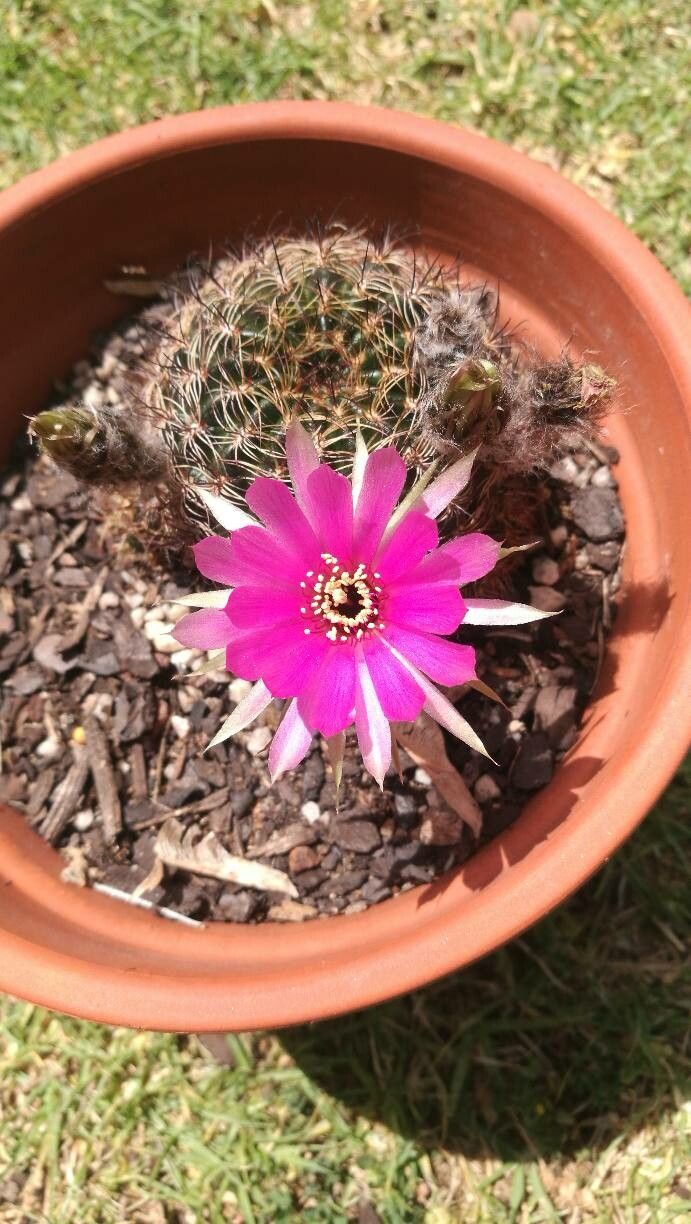
Propagating Lobivia tiegeliana: A Gardener’s Guide
Introduction:
Lobivia tiegeliana, often called the Tigel’s Lobivia, is a captivating cactus species from the Bolivian Andes, prized for its vibrant, often reddish-orange flowers and its spiny, globular form. While not as widely cultivated as some other cacti, its striking beauty and relative ease of propagation (through certain methods) make it a rewarding challenge for enthusiastic gardeners. Its unique challenge in propagation lies in its specific needs, making success particularly satisfying.
Seed Germination:
Seed germination is a viable method for propagating Lobivia tiegeliana, however, it presents some challenges. The seeds are quite small and require specific conditions for successful germination.
Challenges: Seed dormancy can be an issue. Fresh seeds have the highest germination rates.
Practical Tips: Sow seeds in a well-draining cactus seed compost, lightly covering them with fine grit. Maintain consistent warmth (around 20-25°C) and high humidity, ideally using a propagator with bottom heat and a humidity dome. While no stratification (cold treatment) is strictly necessary, a period of two weeks in a slightly cooler temperature (around 15˚C) might improve germination rates for some seed batches. Gentle watering, allowing the compost to dry slightly between waterings, is crucial to prevent damping-off.
Rewards: Seed-grown Lobivia tiegeliana offer the highest degree of genetic diversity, leading to potentially unique variations in flower color and plant form. This method also allows for large-scale propagation if sufficient seeds are available.
Cuttings:
Cuttings are not a reliable method for propagating Lobivia tiegeliana. This cactus doesn’t readily produce offsets or stems suitable for propagation through cuttings.
Division:
Division is a viable propagation method for Lobivia tiegeliana, but only applicable under specific circumstances.
Challenges: Successful division relies on the parent plant having already produced offsets (or "pups") – clusters of small plants growing at the base. These offsets must be carefully separated from the mother plant, ensuring each has a healthy root system or a section of stem capable of producing roots.
Practical Tips: Use a sharp, sterile knife or pruning shears to separate the offsets. Allow the cut surfaces to callus over for several days before planting in well-draining cactus compost. Handle the offsets gently as they are fragile.
Rewards: Division is a relatively quick and straightforward method, particularly if offsets are already present. It guarantees genetically identical plants to the parent.
Tissue Culture:
Tissue culture is a viable, albeit more advanced method for propagating Lobivia tiegeliana.
Challenges: Tissue culture requires specialized equipment, sterile conditions, and a detailed understanding of plant tissue culture techniques. It’s not a method easily undertaken by amateur gardeners.
Practical Tips: Sterile procedures are paramount; contamination can easily ruin the entire culture. The use of appropriate plant growth regulators (phytohormones) is key to stimulating shoot and root development.
Rewards: Tissue culture allows for rapid and large-scale propagation of genetically identical plants. This method is valuable for preserving rare or endangered varieties.
Conclusion:
Propagating Lobivia tiegeliana presents distinct challenges depending on the chosen method. While seed germination offers the most genetic diversity but demands patience and attention to detail, division is a simpler option, but reliant on the parent plant producing offsets. Tissue culture offers large-scale propagation, but demands technical expertise. The lack of viable cutting propagation limits options further.
However, the rewards are substantial. Successfully cultivating this beautiful cactus, whether from seed or by division, offers immense satisfaction. The vibrant flowers and unique form are a testament to the gardener’s dedication and skill. For those willing to embrace the challenge, Lobivia tiegeliana rewards patience and careful attention with its dazzling beauty. Don’t be discouraged by the difficulty – the journey, just like the flowering plant itself, is uniquely rewarding.