
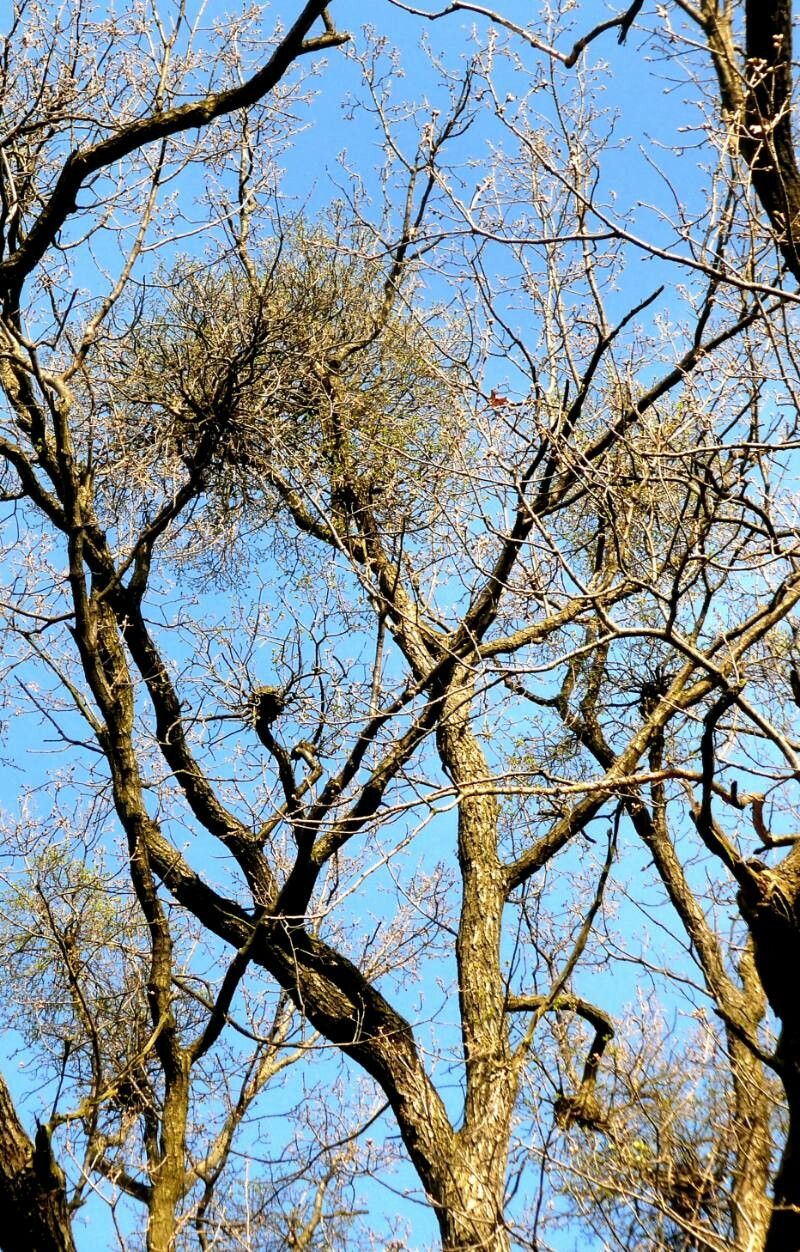
The Sticky Secret of the Yellow Mistletoe: Propagating Loranthus europaeus
The sight of mistletoe often evokes thoughts of holiday romance, but did you know there’s a whole world of mistletoe beyond the familiar Christmas decoration? Enter Loranthus europaeus, also known as the yellow or oak mistletoe, a fascinating plant with a unique propagation strategy that takes “sticky situation” to a whole new level.
Unlike its cousin, the European mistletoe (Viscum album) which parasitizes a wide range of trees, Loranthus europaeus is a bit more discerning. This species, identifiable by its beautiful yellow-orange berries, has a particular fondness for oak trees, specifically those belonging to the Quercus genus. But how does this parasitic plant spread from one oak to another?
The answer, quite literally, lies in the wind – or rather, what the wind carries. Birds, particularly thrushes and blackcaps, feast upon the fleshy berries of Loranthus europaeus. These berries, however, hold a sticky secret. Instead of being digested, the seeds within the berries are coated with a gooey, glue-like substance called viscin. This viscin ensures that the seeds stick rather stubbornly to the beaks and feathers of their unsuspecting avian diners.
Unable to dislodge the persistently adherent seeds, the birds become unwitting propagation partners. As they fly from tree to tree, they inevitably attempt to clean their beaks, often by wiping them on the branches of…you guessed it…oak trees. And there you have it – a perfectly positioned Loranthus europaeus seed, stuck firmly to its preferred oak host, ready to begin its life cycle anew.
Once attached, the seed germinates, sending a specialized structure called a haustorium into the bark of its oak host. This haustorium acts like a biological straw, tapping into the oak’s vascular system to draw water and nutrients. While Loranthus europaeus is capable of photosynthesis, it relies on its host for a significant portion of its sustenance.
This process, while fascinating from a botanical perspective, can have mixed implications for the host oak. A light infestation might be tolerated, but a heavy load of mistletoe can weaken the oak, making it susceptible to other stressors like drought or disease.
While propagating Loranthus europaeus yourself might be tricky (and potentially harmful to your local oaks!), understanding its unique lifecycle offers a glimpse into the fascinating interplay between plants and animals. The next time you encounter an oak tree, look closely – you might just spot the yellow mistletoe, a testament to the power of sticky seeds and unwitting bird partners.