
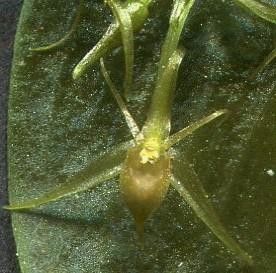
Propagating the Tiny Treasure: Unveiling the Secrets of Malaxis nana
Malaxis nana, also known as the Dwarf Adder’s-mouth orchid, is a captivating miniature orchid prized for its delicate beauty and unique adaptability. This diminutive plant, boasting tiny, often inconspicuous flowers, holds a special place in the hearts of orchid enthusiasts, although its popularity remains somewhat niche due to the challenges of cultivating and propagating it. Its compact size makes it suitable for terrariums and small orchid collections, adding a touch of refined elegance to any space. The difficulties inherent in propagation, however, contribute to its rarity and mystique.
Seed Germination:
Currently, there are no known reliable methods for seed germination propagation of Malaxis nana. Orchid seeds, including those of Malaxis nana, are typically dust-like and lack endosperm, meaning they require a symbiotic relationship with specific mycorrhizal fungi for germination. Establishing this symbiotic relationship in a controlled horticultural setting is extremely challenging and has yet to be successfully achieved for Malaxis nana. Further research into the specific fungal requirements may be necessary to unlock this propagation method.
Cuttings:
Cuttings are not a viable propagation method for Malaxis nana. This orchid does not develop adventitious roots (roots that develop from non-root tissues) readily from stem or leaf cuttings.
Division:
Division is the most practical and reliable method for propagating Malaxis nana. This involves carefully separating the plant’s rhizomes (underground stems) into smaller sections, each containing several healthy pseudobulbs and roots.
Challenges: The rhizomes are often fragile, making careful handling crucial. Damaging the rhizomes during division can lead to death of the plant sections. The plants should also be relatively mature and well-established before attempting division to ensure sufficient energy reserves are present for the developing plantlets.
Practical Tips: Divide during the orchid’s growing season (spring or early summer). Use a sharp, sterile knife or scalpel to minimize damage. Ensure each division has healthy roots and at least three pseudobulbs. Pot the divisions immediately in a well-draining medium specifically designed for orchids.
Rewards: Division offers a reliable method for increasing the number of plants while maintaining the genetic characteristics of the parent plant. It’s a relatively quick method compared to other approaches.
Tissue Culture:
Tissue culture offers the potential for large-scale propagation of Malaxis nana, bypassing the challenges of seed germination and offering a more controlled environment to establish healthy plantlets.
Challenges: Establishing a suitable tissue culture protocol for Malaxis nana requires specialized knowledge, laboratory equipment, and sterile techniques. Determining the optimal growth media and hormonal balance is crucial for successful shoot proliferation and subsequent plantlet development. This route is costly and requires expertise.
Practical Tips: Collaborating with experienced tissue culture laboratories specializing in orchids can significantly increase chances of success.
Rewards: Tissue culture offers significant potential for mass propagation, conservation efforts, and the potential for genetic improvement.
Conclusion:
Propagating Malaxis nana presents unique challenges due to its delicate nature and specific requirements. While seed germination and cuttings are currently not viable methods, division provides a reliable approach for the hobbyist, albeit with the need for careful handling. Tissue culture holds significant potential for larger-scale propagation but requires specialized expertise and resources. The rewards, however, are significant. Successfully cultivating and propagating this diminutive orchid is a testament to patience, horticultural skill, and a deep appreciation for botanical intricacies. While daunting, the process serves as a reminder of the unique satisfaction of nurturing life from even the most delicate beginnings, and the resulting tiny treasures are a source of immense joy. Aspiring propagators are encouraged to begin with division, focusing on meticulous care and creating optimal growing conditions. With perseverance, the rewards of successfully cultivating Malaxis nana are well worth the effort.