
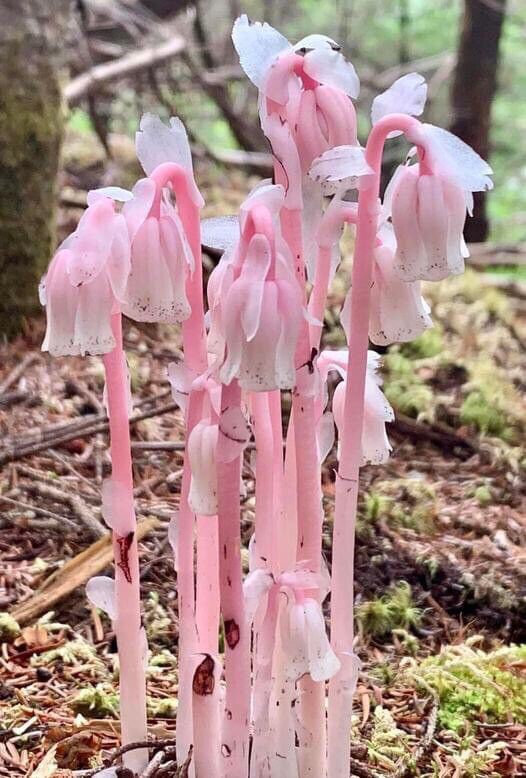
The Ghost Plant’s Secret Partner: Unraveling the Propagation Mystery of Monotropa uniflora
Deep in the shaded heart of old-growth forests, a peculiar plant known as Monotropa uniflora, or the Ghost Plant, captivates with its ethereal beauty. Lacking chlorophyll, this ghostly white flower seems to materialize from the decaying leaves like a phantom, making its propagation a subject of intrigue and curiosity.
Unlike most plants, Monotropa uniflora doesn’t rely on sunlight for food. Instead, it forms an extraordinary symbiotic relationship with mycorrhizal fungi. These fungi are interconnected with the roots of trees, effectively creating a complex underground network that the Ghost Plant taps into.
A Tricky Triangle: The Symbiotic Relationship
Understanding Monotropa uniflora‘s propagation requires unraveling this intricate web of dependency.
- The Tree: Beeches and pines are often the preferred hosts, providing sugars created through photosynthesis to the mycorrhizal fungi.
- The Fungi: The mycorrhizal fungi act as a bridge, transporting nutrients from the tree roots to the Ghost Plant. Different Monotropa uniflora populations may rely on specific fungal species, adding another layer of complexity to propagation.
- The Ghost Plant: With its nutritional needs met by the fungi, Monotropa uniflora can focus its energy on flowering and producing seeds.
Propagation: More Mystery Than Method
Due to this intricate relationship, propagating Monotropa uniflora in a controlled environment is extremely difficult, bordering on impossible. Currently, there is no reliable method for cultivating this plant outside of its natural habitat. Here’s why:
- Specific Conditions: Monotropa uniflora requires well-established forests with a specific combination of host trees, soil composition, and fungal species. Replicating these delicate conditions artificially is a significant challenge.
- Seed Sensitivity: The tiny seeds lack an endosperm, a nutrient reserve common in other plants, making them highly susceptible to drying out and dependent on immediate fungal connection for germination.
- Ethical Considerations: Due to the complex symbiosis and the Ghost Plant’s role in the forest ecosystem, removing plants or attempting to transplant them can be harmful and disrupt the delicate balance.
Appreciating the Ethereal from Afar
While cultivating Monotropa uniflora remains a challenge, the intrigue surrounding its propagation adds to the allure of this fascinating plant. The best way to appreciate its unique beauty and ecological significance is to observe it within its natural habitat, marveling at the wonders of the interconnected web of life it so aptly represents. Remember, the forest holds many secrets, and some, like the Ghost Plant, are best left undisturbed.