
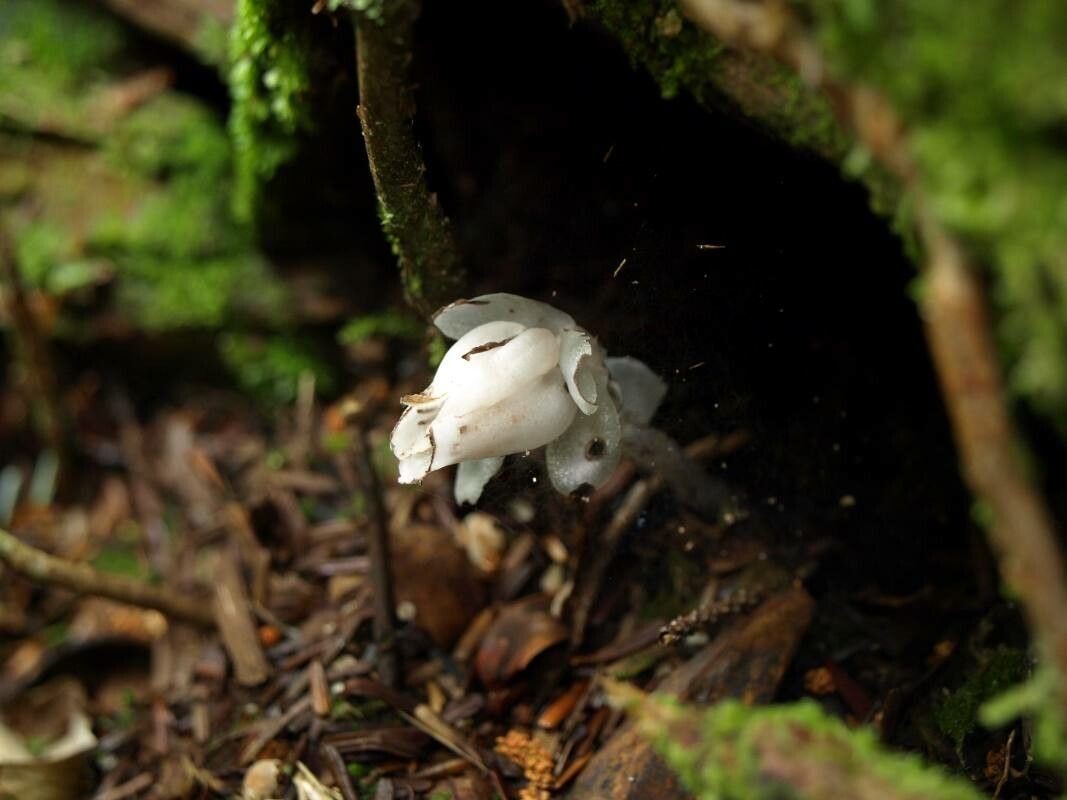
The Ghostly Challenge: Propagating the Mysterious Monotropastrum humile
Imagine a plant devoid of green, its ethereal white stem emerging from the forest floor like a ghostly apparition. That’s Monotropastrum humile, commonly known as the “ghost plant” or “Indian pipe,” a fascinating species captivating both plant enthusiasts and scientists alike. While its beauty is undeniable, cultivating this enigmatic plant presents a unique horticultural challenge.
Unlike most plants, Monotropastrum humile lacks chlorophyll, rendering it incapable of photosynthesis. Instead, it forms a symbiotic relationship with mycorrhizal fungi, drawing nutrients from the network of trees and fungi in the forest ecosystem. This fascinating adaptation is also the key to understanding its propagation challenges.
The Symbiotic Hurdle:
Cultivating Monotropastrum humile outside its natural habitat proves difficult precisely because of its reliance on specific mycorrhizal fungi. These fungi don’t just provide nutrients; they are intricately intertwined with the plant’s life cycle, even influencing its germination.
Traditional propagation methods like seed sowing or cuttings prove largely unsuccessful. Seeds require the presence of compatible fungi to germinate, and even then, success rates are incredibly low.
The Research Frontier:
Despite the challenges, scientists and dedicated cultivators are exploring innovative ways to propagate Monotropastrum humile. These research avenues offer glimpses of hope for those dreaming of introducing this mystical plant to their gardens:
- Mycorrhizal Inoculation: Researchers are studying the specific fungal species associated with Monotropastrum humile to develop inoculation techniques. By introducing the right fungi to the growing medium, they aim to create an environment conducive to seed germination and plant establishment.
- Tissue Culture: In vitro propagation techniques could potentially offer a way to multiply existing plants. This method involves cultivating plant tissues in a sterile laboratory setting, allowing for greater control over environmental factors and potentially bypassing the need for fungal symbiosis in the initial stages.
Ethical Considerations:
While the allure of growing Monotropastrum humile is undeniable, it’s crucial to consider the ethical implications. As a species intricately tied to undisturbed forest ecosystems, large-scale cultivation efforts could negatively impact wild populations.
Furthermore, the complexity of its symbiotic relationships raises concerns about the long-term sustainability of cultivated plants. Can we truly replicate the intricate web of life upon which Monotropastrum humile depends in a controlled setting?
For Now, Appreciation Over Cultivation:
Until research yields viable and sustainable propagation methods, the best way to appreciate Monotropastrum humile is in its natural habitat. Seek out these ghostly beauties on your next forest adventure, marvel at their otherworldly appearance, and ponder the ecological mysteries they hold. Let their presence serve as a reminder of the intricate interconnectedness of nature and the importance of preserving undisturbed ecosystems for generations to come.