
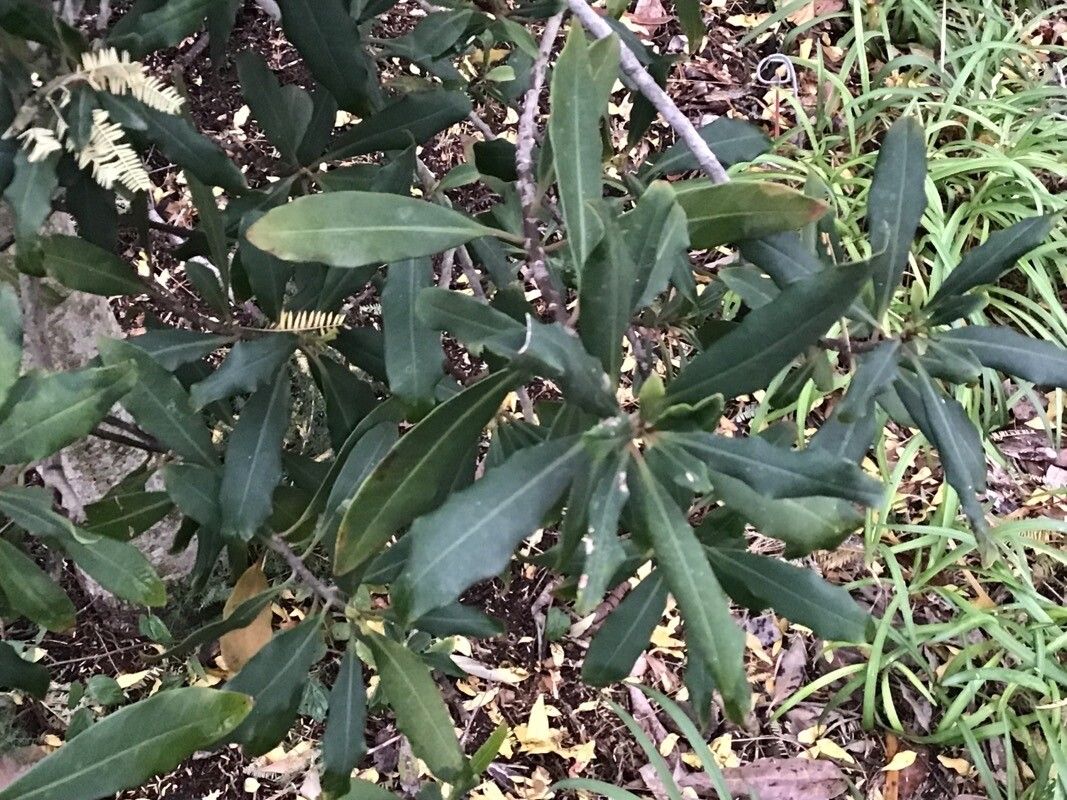
From One to Many: Propagating the Striking Myrsine melanophloeos
The Myrsine melanophloeos, with its rich, dark foliage and graceful habit, is a captivating addition to any garden. But what if you could share this beauty with friends or enhance your own landscape with more of these stunning plants? The answer lies in propagation, the art of creating new plants from existing ones.
Methods for Multiplying Myrsine melanophloreos
This particular species is quite versatile and can be propagated through several methods. Here’s a breakdown of the most commonly used:
1. Cuttings:
- Semi-Hardwood Cuttings: This method, favored for Myrsine melanophloeos, involves taking cuttings from mature stems that aren’t quite fully hardened yet. The best time for this is during the late summer or early fall.
- Process:
- Select healthy, disease-free stems with mature leaves.
- Cut the stem just below a leaf node, making a clean, angled cut.
- Remove the lower leaves, leaving 2-3 remaining.
- Treat the cut end with rooting hormone powder or gel.
- Insert the cuttings into a pot filled with a well-draining potting mix.
- Keep the soil moist but not soggy, and provide bright, indirect light.
- Apply a humidity dome to promote rooting.
- Roots should develop within 4-6 weeks, at which point you can gently pull the cutting to check. If resistance is felt, it’s rooted.
2. Air Layering:
- This method allows you to root a stem while it’s still attached to the parent plant.
- Process:
- Select a healthy, mature stem on the parent plant.
- Make a ring-cut around the stem (about 1 inch wide).
- Apply rooting hormone to the exposed wood.
- Wrap a layer of sphagnum moss around the cut area.
- Secure the moss with plastic wrap.
- Keep the moss constantly moist.
- Roots will form inside the moss within several weeks.
- Once the roots are well developed, you can cut the stem below the rooted area and plant it in a pot.
3. Seed Propagation:
- While possible, seed propagation for Myrsine melanophloeos is less commonly used.
- Seeds can take a long time to germinate, and the resulting plant may not be an exact clone of the parent plant.
- Process:
- Collect ripe berries and extract the seeds.
- Sow the seeds in a seed tray filled with a well-draining potting mix.
- Keep the soil moist and warm.
- Seeds may take several weeks or months to germinate.
Key Factors for Success:
- Sterile Tools: Always use clean and sterile knives or scissors to prevent disease.
- Appropriate Growing Medium: A well-draining potting mix is essential for preventing root rot.
- Humidity: High humidity is crucial for successful rooting, especially for cuttings.
- Temperature: Ideal temperatures for rooting range from 70-75 degrees Fahrenheit.
- Light: Provide bright, indirect light to your cuttings and newly rooted plants.
From Propagation to Propagation
By mastering the art of propagation, you can create a multitude of Myrsine melanophloeos to transform your garden. This process not only allows you to expand your collection but also provides a satisfying sense of accomplishment and a connection to the natural world. So, grab your gloves, gather your gear, and embark on your journey of propagation – the rewards are infinitely green!