
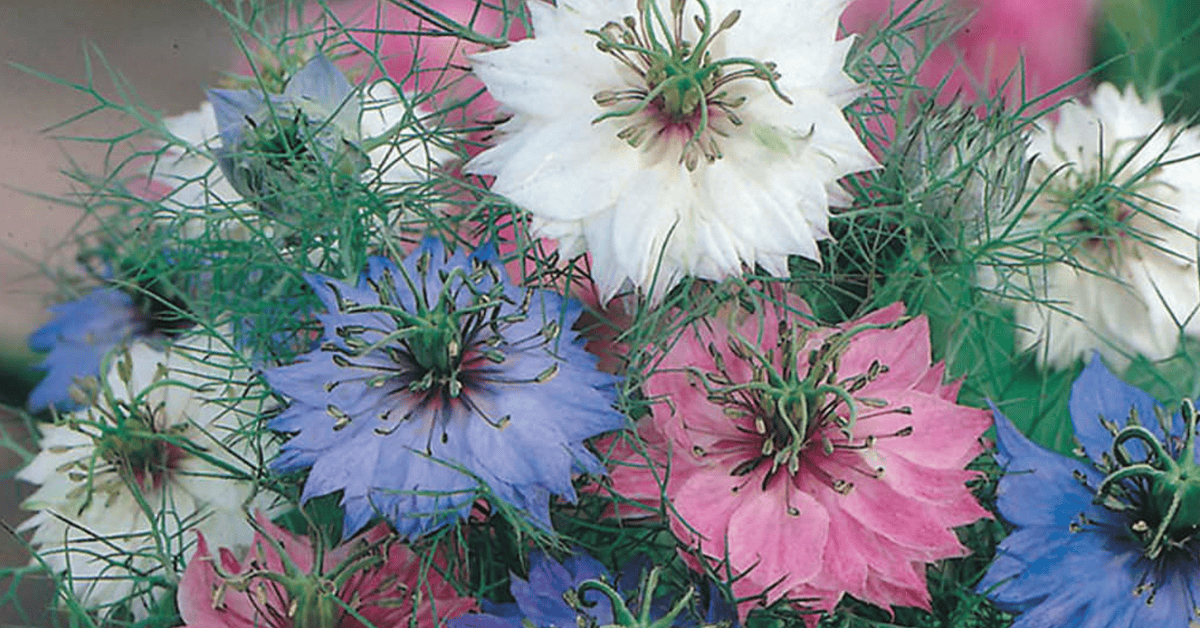
A Spotlight on Nigella Damascena:
Nigella damascena, a member of the Ranunculaceae family, is a hardy annual native to the Mediterranean region and western Asia. This charming plant boasts attractive, feathery foliage and captivating star-shaped flowers that come in a range of colors like blue, white, pink, and even purple. Following the blooms, Nigella produces unique papery seed pods that add textural interest and can be used in dried flower arrangements. Nigella damascena is known for its ease of care and self-seeding tendencies, making it a wonderful choice for beginner gardeners.
Sowing Nigella Damascena Seeds:
There are two main methods for sowing Nigella damascena seeds: direct sowing outdoors and starting seeds indoors.
Direct Sowing Outdoors:
- Timing: Nigella damascena seeds prefer cooler temperatures for germination. The ideal time for direct sowing outdoors is in late fall, winter, or early spring depending on your climate. Aim to sow the seeds after the danger of frost has passed in spring, or several weeks before the first frost in fall.
- Location: Choose a location in your garden that receives full sun to partial shade. Nigella damascena thrives in well-draining soil.
- Sowing: Prepare the soil bed by lightly loosening the top inch or two. Scatter the seeds thinly over the prepared area and gently rake them into the soil to a depth of about 1/4 inch.
- Watering: Water the sown area gently to settle the seeds and keep the soil consistently moist, but not soggy, until germination occurs.
Starting Seeds Indoors (Optional):
- Timing: If you’d like to enjoy earlier blooms, you can start Nigella damascena seeds indoors 6-8 weeks before the last frost date in your area.
- Materials: You’ll need a seed tray or small pots filled with a well-draining seed starting mix.
- Sowing: Sow the seeds similarly to direct sowing outdoors, by scattering them thinly on the moist potting mix and pressing them lightly into the surface.
- Light and Temperature: Place the seed tray or pots in a warm location (around 70°F) with good lighting, such as a sunny windowsill.
- Watering: Keep the soil moist but not soggy. You can use a mister to gently water the seeds.
- Transplanting: Once the seedlings have developed a few sets of true leaves, you can harden them off and transplant them outdoors to their permanent location after the danger of frost has passed.
Nigella Damascena Aftercare:
- Watering: Once established, Nigella damascena is fairly drought-tolerant. Water regularly during dry periods, but avoid overwatering.
- Deadheading: For continuous blooms throughout the season, deadhead spent flowers by removing them from the base of the stem. This will encourage the plant to produce more flowers.
- Self-Seeding: Nigella damascena readily self-seeds, so you may find new plants popping up in your garden the following year. You can choose to leave them in place or transplant them to a different location.
Tips for Success:
- Nigella damascena prefers well-draining soil. If your soil is heavy clay, consider amending it with some sand or compost to improve drainage.
- Once established, Nigella damascena is quite low-maintenance.
- The papery seed pods of Nigella damascena can be harvested once they have dried on the plant. Allow them to dry completely indoors before using them in arrangements.
With a little planning and these simple steps, you can enjoy the beauty of Nigella damascena in your garden for many seasons to come. Happy sowing!