
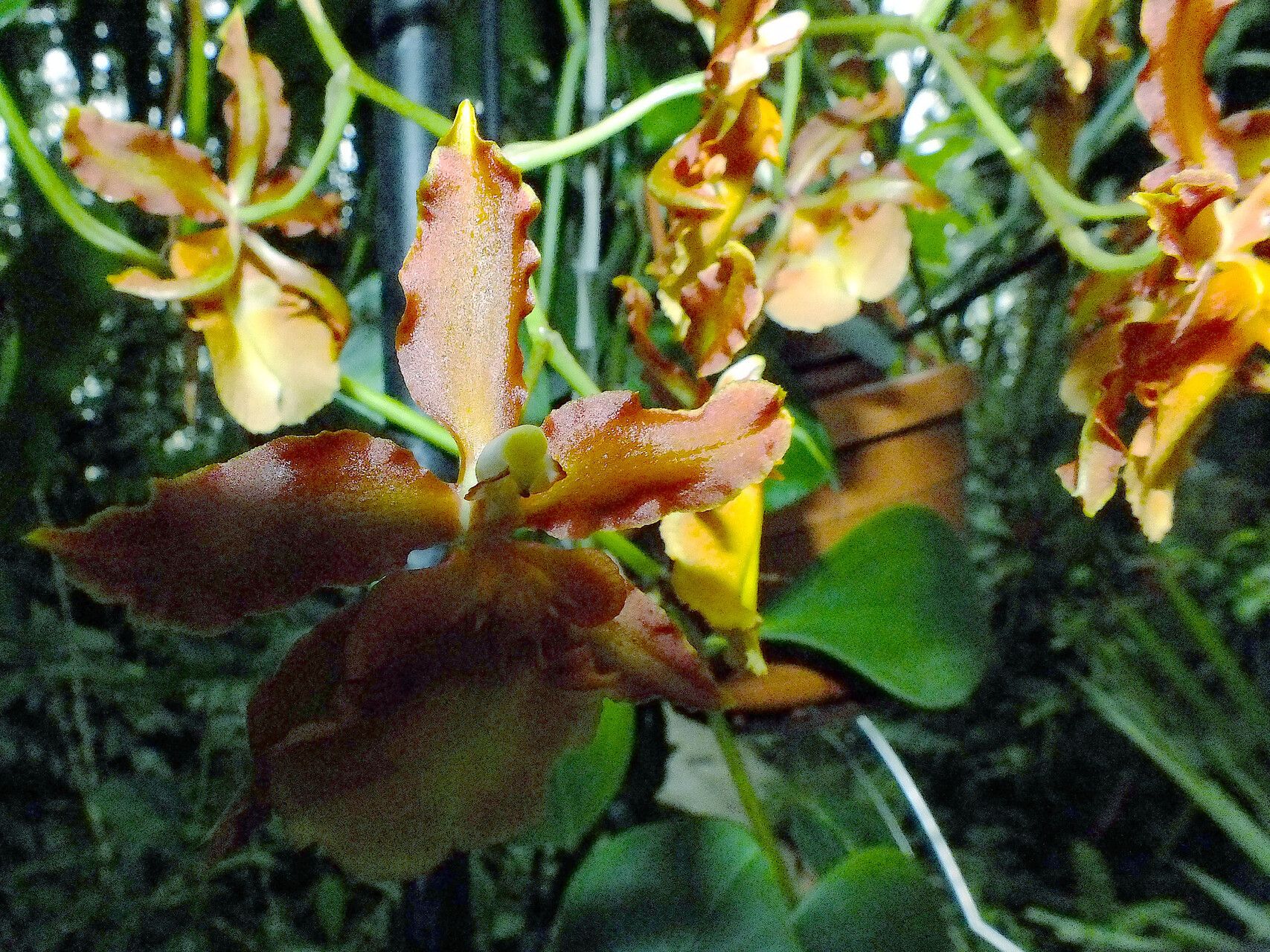
Propagating the Butterfly Orchid: A Gardener’s Guide to Oncidium crocidipterum
Introduction:
Oncidium crocidipterum, commonly known as the Butterfly Orchid, is a captivating species prized for its delicate, intricately patterned flowers that resemble fluttering butterflies. These orchids, native to Central and South America, boast vibrant yellow and brown blooms borne on arching inflorescences. Their relatively small size and prolific flowering make them popular among orchid enthusiasts, although propagating them presents certain challenges. The unique aspects of their propagation necessitate careful consideration of several methods.
Seed Germination:
Currently, there are no known reliable methods for seed germination propagation of Oncidium crocidipterum. Orchid seeds are notoriously tiny and require a symbiotic relationship with specific mycorrhizal fungi for successful germination. Establishing this symbiotic relationship in a controlled environment is extremely difficult, making seed germination for this species impractical for the average hobbyist. While research into orchid seed germination techniques is ongoing, it remains a specialized area requiring advanced laboratory conditions.
Cuttings:
Cuttings are not a viable method for propagating Oncidium crocidipterum. Unlike some other plant types, orchids generally do not readily produce new plants from stem or leaf cuttings. The lack of adventitious roots and buds on the cuttings makes this method unsuccessful.
Division:
Division is the most practical and successful method for propagating Oncidium crocidipterum. This involves separating mature plants into smaller sections, each containing several pseudobulbs and roots.
Challenges: The main challenge is ensuring each division has a sufficient root system to support itself. Premature division can weaken or even kill the parent plant and the resulting divisions.
Practical Tips: Division should be performed during the orchid’s active growing period, typically after flowering. Carefully inspect the rhizome (creeping stem) for natural division points where the plant can be cleanly separated. Make sure each section has several healthy pseudobulbs and a substantial root system. Use sharp, sterile tools to prevent infection.
Rewards: Division allows for relatively quick propagation with high success rates, preserving the genetic characteristics of the parent plant. It’s a straightforward method suitable for home growers.
Tissue Culture:
Tissue culture is a viable but complex method for propagating Oncidium crocidipterum.
Challenges: Tissue culture requires specialized equipment, sterile conditions, and a thorough understanding of plant tissue culture techniques. This method is expensive and time-consuming, requiring a controlled laboratory environment.
Practical Tips: This method involves placing small sections of plant tissue (meristems) onto a nutrient-rich agar medium. The tissue then undergoes rapid multiplication, eventually forming plantlets that can be individually potted. Selecting disease-free plant material is critical for success.
Rewards: Tissue culture allows for mass propagation of genetically identical plants, providing a large number of offspring from a single parent plant. It is also valuable for the conservation of rare or endangered orchid species.
Conclusion:
Propagating Oncidium crocidipterum, while presenting difficulties in some areas, is achievable. Division offers the most practical approach for home growers, providing a satisfying method with a high chance of success. However, it’s important to proceed cautiously, ensuring each division has adequate roots to thrive. Tissue culture, although requiring significant expertise and resources, presents the possibility for large-scale propagation. The challenges involved, however, only heighten the sense of accomplishment derived from successfully nurturing these delicate orchids from either division or tissue-cultured plantlets. For aspiring propagators, remember patience, attention to detail, and a commitment to providing the ideal growing conditions are key to success. The unique beauty of the butterfly orchid makes the effort well worth the reward.