
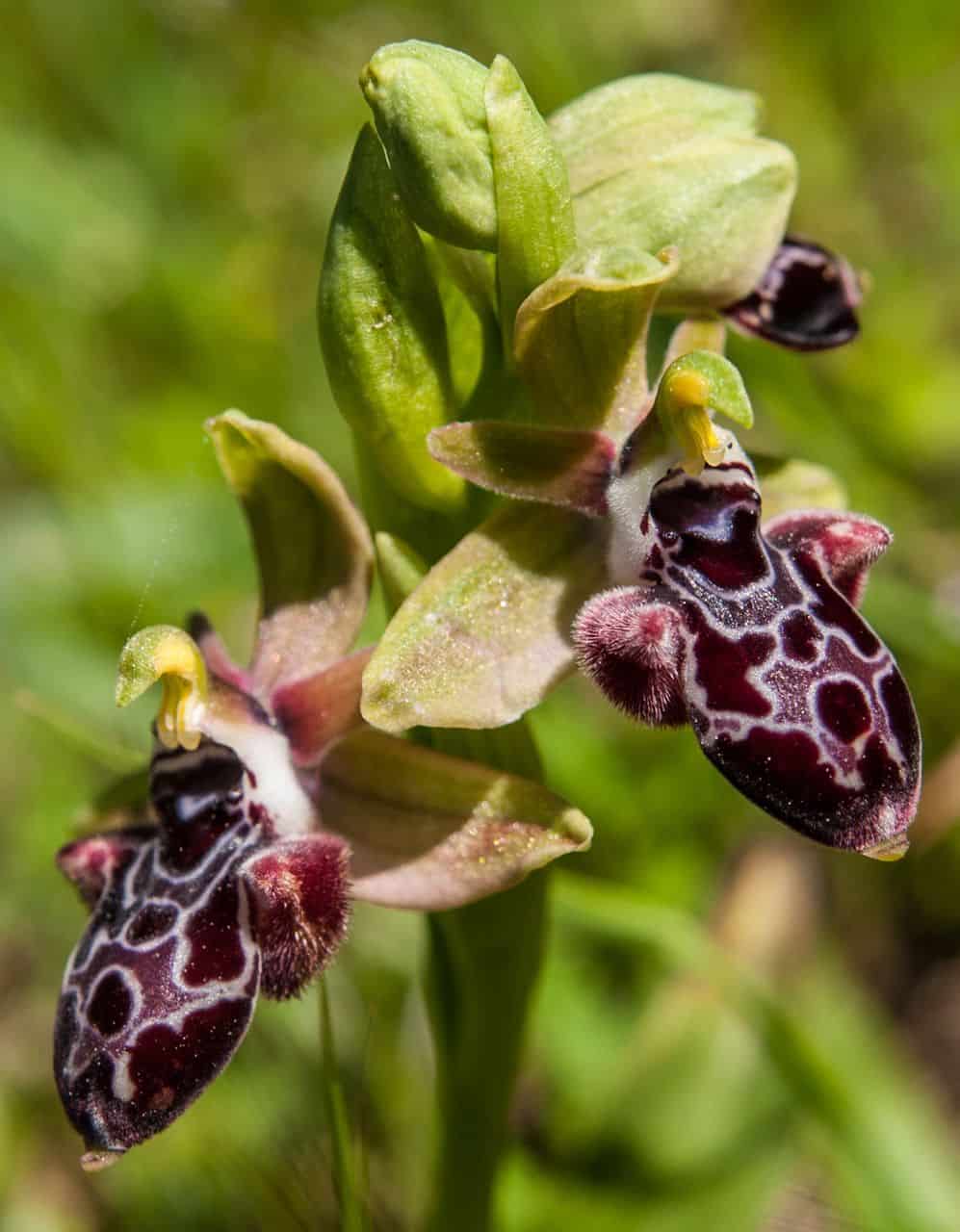
More Than Meets the Eye: The Tricky Propagation of the Cyprus Bee Orchid
The plant world is full of surprises, and the Cyprus Bee Orchid (Ophrys kotschyi) is a prime example. This fascinating orchid, native to Cyprus and parts of Turkey, is known for its unique appearance and even more unique method of reproduction. But for plant enthusiasts dreaming of adding Ophrys kotschyi to their collection, be warned: propagation is no easy feat. Let’s dive into the world of this captivating orchid and explore the intricacies of its reproduction.
A Floral Master of Deception:
Ophrys kotschyi isn’t your typical, showy orchid. It relies on trickery, rather than nectar rewards, to attract its pollinator: the solitary bee, Eucera kotschyi. The orchid’s velvety lip, adorned with intricate markings, mimics the female bee’s appearance and scent, luring unsuspecting males looking for a mate. This clever mimicry, known as pseudocopulation, is essential for the orchid’s survival. But how does this translate to propagation?
The Symbiotic Relationship: Key to Propagation
Unlike many plants that readily propagate through seeds or cuttings, Ophrys kotschyi relies on a symbiotic relationship with a specific mycorrhizal fungus to germinate and thrive. This delicate partnership is initiated when tiny orchid seeds, lacking their own food reserves, encounter the fungus in the soil. The fungus penetrates the seed, providing essential nutrients and water, while the orchid, through photosynthesis, supplies the fungus with sugars. Without this fungal partner, Ophrys kotschyi seeds cannot sprout, making propagation challenging, to say the least.
Challenges and Ethical Considerations:
Due to its complex life cycle and specific requirements, propagating Ophrys kotschyi in a home setting is incredibly difficult and often unsuccessful. Here’s why:
- Fungal Dependence: Replicating the specific soil conditions and the presence of the mycorrhizal fungus is a challenge even for experienced growers.
- Seed Viability: Orchid seeds are notoriously small and delicate, with a short viability period, making successful germination even more difficult.
- Ethical Concerns: Due to habitat loss and illegal collection, Ophrys kotschyi is classified as endangered in the wild. Removing plants or seeds from their natural environment is unethical and harmful to the species’ survival.
Conservation Through Appreciation:
While cultivating Ophrys kotschyi at home might be largely out of reach, we can still celebrate this intriguing orchid. Instead of attempting propagation, consider supporting organizations dedicated to orchid conservation and research. By learning about and appreciating the complex relationships within our natural world, we contribute to the preservation of these fascinating, yet fragile, species for generations to come.
Let’s leave the Cyprus Bee Orchid where it belongs – thriving in its natural habitat, a testament to the wonders of natural selection and a reminder of the importance of preserving biodiversity.