
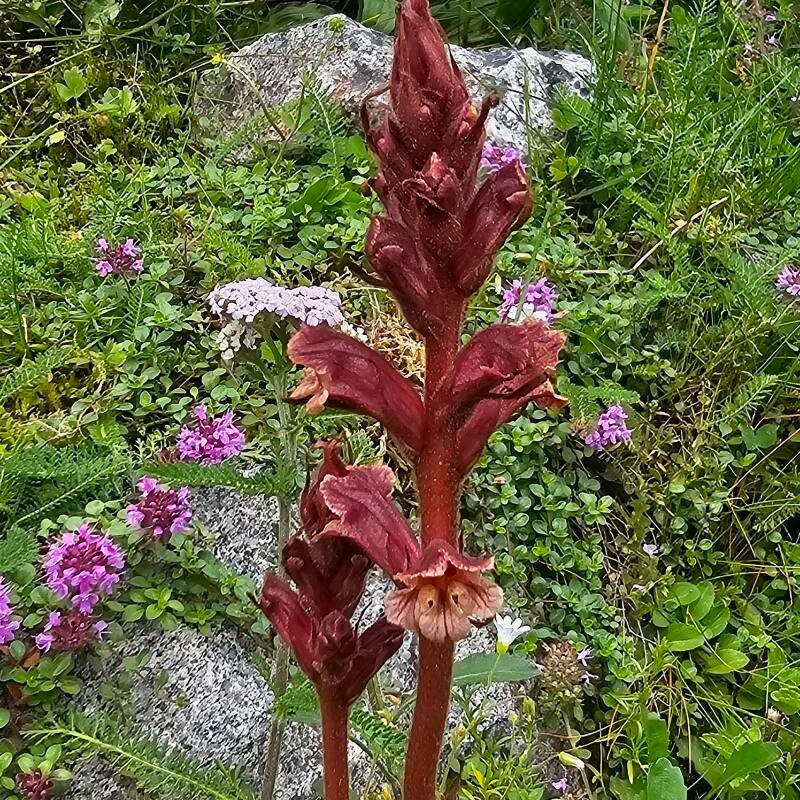
Propagating Orobanche alba: A Challenging but Rewarding Endeavor
Introduction:
Orobanche alba, also known as the White Broomrape, is a fascinating but challenging plant for the dedicated horticulturist. This holoparasitic species lacks chlorophyll and entirely depends on its host plant for survival, typically legumes like broom or clover. Its ivory-white to pale yellow flowering spikes, appearing dramatically from the soil, possess a unique beauty that captivates many gardeners. However, its parasitic nature and specialized life cycle make propagation a significant hurdle. While not widely cultivated, its unusual characteristics make successful propagation a source of considerable pride.
Seed Germination:
Currently, there are no known reliable methods for seed germination propagation of Orobanche alba. The seeds are notoriously small and require specific, often poorly understood, germination triggers related to the presence of host plant chemicals. Extensive research is needed to identify these triggers and develop a successful germination protocol. The very low germination rates observed in related Orobanche species suggest that this method is currently impractical for Orobanche alba.
Cuttings:
Cuttings are not a viable method for propagating Orobanche alba. As a holoparasite, it lacks the ability to produce independent roots or develop into a new plant from severed stem sections. The plant’s complete dependence on its host for survival means that removing it from its host will lead to immediate death.
Division:
Division is also not a viable propagation method for Orobanche alba. The plant’s structure, with its single stem arising from a subterranean network of haustoria (root-like structures penetrating the host’s roots), does not lend itself to division. Attempting to separate the plant would likely damage both the parasite and the host, leading to the demise of both.
Tissue Culture:
While tissue culture offers potential for propagating other recalcitrant plants, success with Orobanche alba has not been widely reported or documented. The parasitic nature of the plant and its absolute dependence on its host present significant challenges for establishing aseptic cultures and providing the necessary nutrients and growth hormones. Further research is needed to determine if tissue culture techniques can be effectively adapted for this species.
Conclusion:
Propagating Orobanche alba presents considerable challenges across all conventional methods. Seed germination, cuttings, and division are presently impractical. While tissue culture offers theoretical potential, practical success remains elusive. The rewards, however, are significant for those who manage to cultivate this unusual plant. Successfully propagating Orobanche alba, despite the difficulties, provides immense satisfaction. The achievement underscores a deep horticultural understanding and a commitment to pushing the boundaries of plant propagation. For aspiring propagators, focusing on research and exploring advanced techniques like tissue culture, while accepting the high possibility of failure, might ultimately lead to success with this unique and fascinating plant. Remember, thorough research into related Orobanche species’ propagation might offer valuable insights and potentially lead to breakthroughs in cultivating Orobanche alba.