
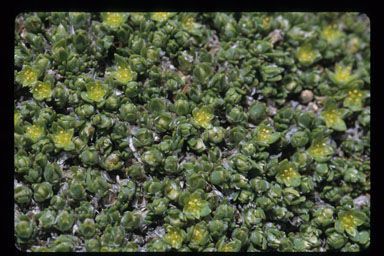
Propagating Paronychia pulvinata: A Cushion of Challenges and Rewards
Paronychia pulvinata, commonly known as cushion nailwort or cushion paronychia, is a charming, low-growing succulent prized for its dense, mat-forming habit and delicate, star-shaped flowers. Its drought tolerance and adaptability make it a popular choice among rock garden enthusiasts and those seeking hardy ground cover. However, propagating this resilient plant can present some unique challenges, making successful cultivation all the more rewarding. This article explores various propagation methods for Paronychia pulvinata, outlining the difficulties and successes associated with each.
Seed Germination:
Currently, there are no known reliable methods for seed germination propagation of Paronychia pulvinata. While the plant does produce seeds, germination rates are reportedly extremely low, even under optimal conditions. Further research into specific seed treatment protocols, including potential stratification requirements, is needed to determine if seed propagation is feasible.
Cuttings:
Cuttings offer a more promising approach to propagating Paronychia pulvinata.
Challenges: The success rate depends heavily on proper technique and environmental conditions. Cuttings are prone to rot if not allowed to callous properly before planting.
Practical Tips: Semi-hardwood cuttings taken in late spring or early summer are recommended. Allow the cut ends to dry and callous for several days before planting in a well-draining, sandy mix. Maintain a humid environment (e.g., using a humidity dome) and ample but not excessive moisture. Rooting hormones can increase the chances of success.
Rewards: Cuttings provide a relatively quick and efficient method for propagating established plants, ensuring the preservation of desirable traits. The process is comparatively straightforward once the proper technique is mastered.
Division:
Division is perhaps the most reliable method for propagating Paronychia pulvinata.
Challenges: This method is only feasible for mature, well-established plants. Dividing the plant too aggressively can damage the root system and severely stress the individual sections.
Practical Tips: Division is best performed in spring or autumn. Carefully dig up the plant and gently separate the root mass into smaller clumps, ensuring each division has sufficient roots and foliage. Plant the divisions immediately in well-draining soil, watering carefully to avoid overwatering.
Rewards: Division offers the most consistent success rate, ensuring rapid establishment of new plants, and it is a relatively low-effort technique.
Tissue Culture:
Tissue culture propagation is a less commonly employed method for Paronychia pulvinata.
Challenges: This technique requires specialized equipment, sterile conditions, and expertise in plant tissue culture. Establishing reliable protocols for Paronychia pulvinata may require extensive experimentation.
Practical Tips: Development of an appropriate growth medium and sterilisation protocols are crucial. While potentially high yielding, the initial setup and maintenance cost is significant.
Rewards: Tissue culture allows for large-scale propagation and the production of disease-free plants. This method holds the potential to overcome the limitations of other propagation techniques.
Conclusion:
Propagating Paronychia pulvinata presents varying levels of challenge across different methods. While seed propagation currently seems unfeasible, cuttings and, especially, division offer reliable avenues for successful propagation. Tissue culture holds future potential but demands significant investment. The difficulty inherent in propagating this plant, however, only serves to amplify the satisfaction of nurturing a tiny cutting or division into a thriving cushion of blooms. The unique texture and resilience of Paronychia pulvinata, coupled with the joy of successful propagation, make it a rewarding addition to any garden. Aspiring propagators should start with division if a mature plant is available and then experiment with cuttings. Patience and careful attention to detail are key to success.